

Jewish Politics & Power is published every other week. Sign up for our newsletter for updates.
1. A Deal, If You Can Keep It
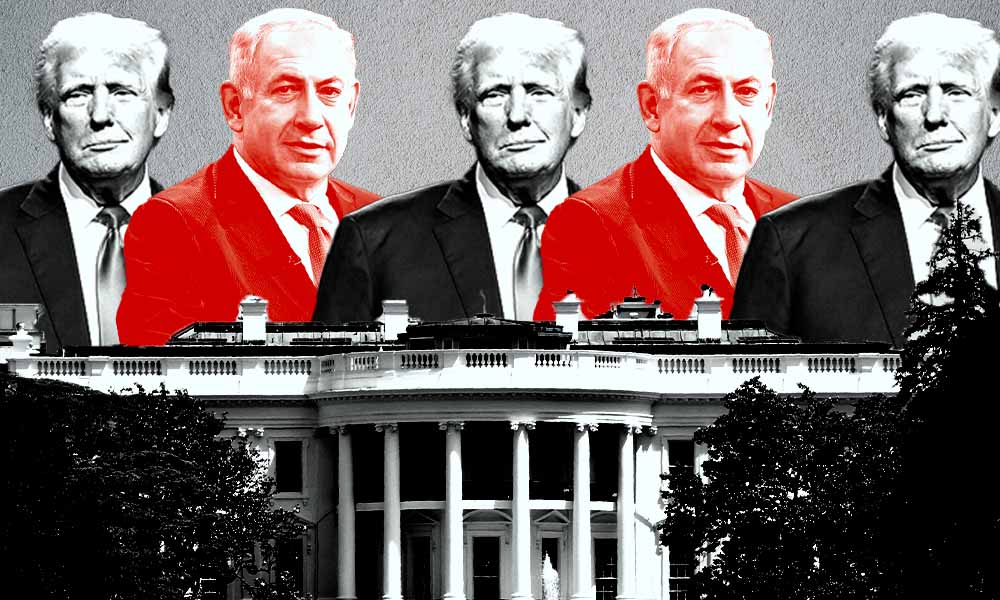
The White House did everything in its power to make this moment look historic. First came the well-choreographed comments, statements and social media posts in the days leading up to Monday, in which President Trump teased out the notion that a historic deal was in the works. Then came the obligatory last-minute frenzy of negotiations, with Trump’s advisers shuttling back and forth from Israeli PM Benjamin Netanyahu’s hotel in New York trying to iron out remaining differences while Israelis leaked to reporters that nothing was done yet. And finally, the cathartic moment in the beautiful White House State Dining Room, where the two leaders presented a plan to end the Gaza war, bring back the hostages and rebuild the Gaza Strip.
And it almost worked.
A deal was indeed struck, and after almost two years of the bloodiest war Israel has ever seen, an American-brokered solution is now within reach.
Of course it could have been even better if the rollout had taken place after Hamas signed on to the deal, instead of leaving the world guessing; it would have been nice if Trump had focused on the deal in his lengthy, rambling speech and not made his usual diversion to attack his Democratic predecessors Biden and Obama; and it also would have helped if Netanyahu hadn’t used the podium to deprive the Palestinians of any hope for future independent coexistence alongside Israel.
But the deal is still a huge step forward. Not for its details, which are very similar to each and every proposal presented ever since October 8, 2023, but because it succeeded in getting, for the first time, buy-in from Netanyahu.
Trump, in his over-the-top, damn-the-details approach and with his clear message that saying no to the deal will be saying no to his chances of winning a Nobel Peace Prize, left Bibi with no choice but to agree. It is easier, of course, for Netanyahu to do so at this stage of the game, when almost no one in the world, nor in Israel, believes anymore that there is “unfinished work” in Gaza and that the war must go on.
As this column goes to press, hours after the White House meeting, it is still unclear if Hamas will agree to sign onto this peace agreement. Will it try to add in new conditions or put back in place some that Bibi got removed? It’s also not clear when the deal would take effect. But one thing is clear, and this is what makes the deal so important: For the first time in nearly two years, 48 families have real hope that their loved ones, whether alive or dead, are coming home. It’s the first time since October 2023 that two million Gazans have hope they may soon not have to worry about finding the next meal for their starving children. And for the first time since that horrific day in October, all in the region can entertain—cautiously—the idea that this nightmare is coming to an end.
2. How Bibi Reads the Agreement
Trump, true to form, went for superlatives. “This is a big, big day, a beautiful day, potentially one of the great [sic] days ever in civilization,” the president said at the opening of the joint press conference with Netanyahu before trailing into an incomplete thought about “things that have been going on for hundreds of years and thousands of years.”
Netanyahu, on the other hand, delivered a much shorter and carefully thought-out speech. He started by paying the Trump-praise tax (“From Jerusalem to Tehran, from the Golan Heights to Gaza, you’ve proven time and again what I’ve said many times: You are the greatest friend that Israel has ever had in the White House. Mr. President, you and I both know it’s not even close.”) Netanyahu then went on to emphasize some aspects of the deal that Trump purposely left vague. “Gaza will be demilitarized. Israel will retain security responsibility, including a security perimeter for the foreseeable future,” Netanyahu said, adding his own spin to the language of the agreement, which actually states that “Israel will not occupy or annex Gaza” and that the IDF will eventually withdraw to lines “that will be agreed upon between the IDF, the International Stability Force, the guarantors, and the United States.” What Trump and the Arab nations supporting the deal see as an eventual withdrawal of Israeli forces from Gaza, Netanyahu views as a prolonged military presence inside the Gaza border. In a Hebrew video message he posted after the meeting (Netanyahu refused once again to take questions from reporters or to give interviews to the Israeli press) he stressed that “Israel got everything it asked for—releasing all our hostages while the IDF remains in most of the Gaza Strip.”


The Israeli PM also took the liberty of providing his own interpretation to the clause in the agreement stating that after the Palestinian Authority is reformed, “conditions may finally be in place for a credible pathway to Palestinian self-determination and statehood.” According to Bibi’s reading, this actually means “no” to a Palestinian state, even in the future. Such a state, Netanyahu said in the video, would “endanger Israel’s very existence.” Later, in Hebrew, he said that Israel would vigorously reject any attempt to create a Palestinian state.
Another, and perhaps even more substantial difference between the Bibi interpretation of the deal and the language itself, has to do with the role of the Palestinian Authority in running Gaza. The agreement talks about handing over some of the governing authorities to the PA after it completes its reform process, but Netanyahu stressed that “Gaza will have a peaceful civilian administration that is run neither by Hamas nor by the Palestinian Authority.”
Why do these details matter? Because they can derail the deal. These are exactly the carefully worded elements that are meant to somehow please both sides, and if Israel already is deviating from them, it will make the deal even more difficult to implement.
3. Selling the Deal in Jerusalem and in Gaza
There’s a reason Netanyahu is putting this spin on the deal. After the celebratory moment in Washington, he now heads home where he will have to sell this agreement to the Israeli public (an easy task given the overwhelming wish by a majority of Israelis to end the war) and to his political partners. And this is where it becomes a bit more difficult. His coalition, which is already in bad shape, includes far-right parties who oppose any deal that will end the war right now and are against any withdrawal of IDF forces.
To this audience, and to other skeptics in Israel who believed Netanyahu when he said the job is not done yet, the prime minister needs to stress the plan’s advantages: All hostages will be freed upfront; a certain IDF presence will remain in the Gaza Strip; the PA won’t be part of the governing body, at least in the beginning; and there is no commitment to a Palestinian state, at least according to his read of the proposed agreement.
Hamas, which has yet to respond to the deal, will also have to find the positives in it in order to get to a “yes.” These include a massive release of prisoners, including practically all those serving terror-related life sentences in Israeli prisons; full amnesty for all Hamas members, junior and senior alike, who denounce terrorism; and no forced deportation of Palestinians from the Gaza Strip.
4. Nobel Peace Prize?
Will all this win Trump his Nobel prize?
First, that’s not really how it works. The annual award is given to individuals or groups who played a unique role in advancing peace in the world; it doesn’t necessarily go to leaders who brokered peace agreements, especially when doing so is considered part of their job description.
But prizes aside, there are also a few questions relating to Trump’s dealing with the Gaza war: The exciting moment at the White House on Monday was preceded by nearly nine months of incoherent and inconsistent diplomatic blunders: Presenting a plan to take over Gaza and build a “Riviera,” while effectively advancing ethnic cleansing of the Gaza Palestinians, only to abandon this ill-fated plan weeks later. Turning a blind eye to Netanyahu’s decision to renege on the American plan—known as the “Witkoff plan”—half way through. Zigzagging between advancing a phased plan to insisting on a single-step one. Negotiating directly with Hamas, and then abandoning this questionable route. Not to mention getting the number of living and dead hostages wrong, each and every time he’s talked about them.
Trump’s name is on this deal, which all hope will turn into reality. If it does, he will go down in history as the U.S. president who ended an awful war. And he did so despite his diplomatic skills, not thanks to them.
5. Jared Is Back
It was just around midnight when Jared Kushner, in a white T-shirt and blue blazer, emerged from Netanyahu’s hotel in New York last week. He walked briskly alongside special envoy Steve Witkoff, both trying to avoid questions from reporters waiting outside.
Kushner, who served as his father-in-law’s top Middle East negotiator during the first Trump administration and who is credited with successfully brokering the Abraham Accords, initially avoided joining the new administration. Some saw it as a sign that he and Ivanka Trump wanted to distance themselves from what had become of the MAGA movement, while others pointed to Kushner’s multi-billion-dollar investment firm, which relies heavily on Saudi investments.
But as the Middle East and the Gaza war gradually emerged as a major headache for Trump, he began including his son-in-law once again in efforts to envision a better future for the region. Kushner showed up at a high-level consultation headed by the president last month in which participants discussed various models for the Gaza “day after.” By last week he was already accompanying Witkoff to his meetings with the Israelis and was described by people in Netanyahu’s circle as playing a key role in the negotiations. On Monday, he sat in the front row at the White House when Trump presented his peace deal and praised, from the podium, his son-in-law for helping get the agreement past the finish line.
Kushner’s reemergence may also indicate a lack of trust in Steve Witkoff. A close friend tasked with solving pretty much every conflict around the world, Witkoff has come under fire recently for the botched Alaska summit between Trump and Putin. With work on implementing the Gaza deal just at its beginning, Kushner is likely to become, once again, a regular in Trump’s White House.