
If you’re a Passover seder regular or even an infrequent guest, you’ve probably witnessed this scene: The leader declares the ceremony over, and suddenly, the assembled kids burst from the table like horses out of the gates at the Kentucky Derby.
There is no time to waste. Soon enough a victor emerges, triumphantly holding aloft a piece of matzah wrapped inside a napkin.
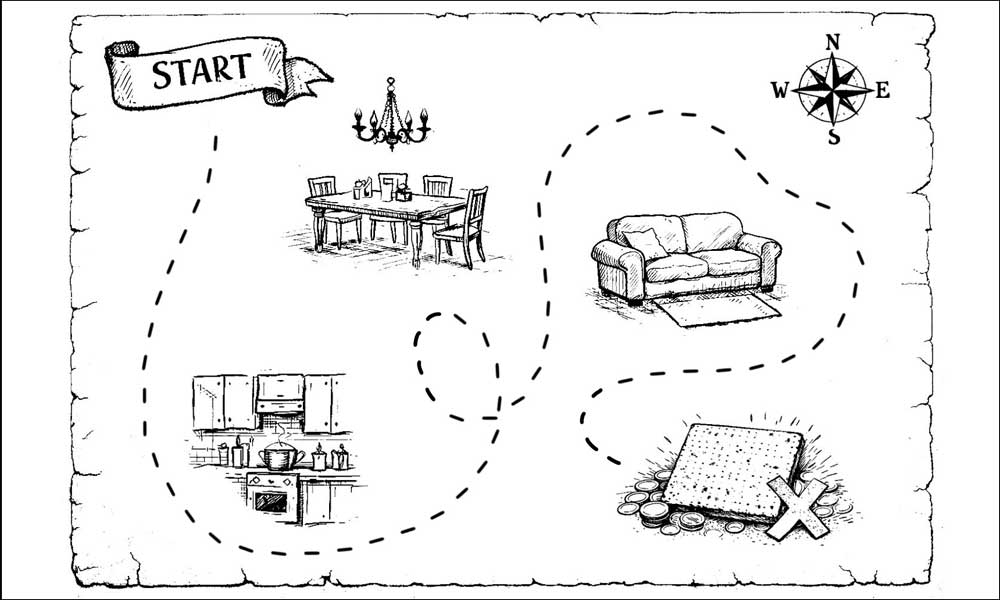
Accompanying grumbles could include “Grandpa always hides it under the sofa,” or an accusation that the winner was privy to inside information.
The search for the afikomen is Judaism’s premier treasure hunt. On the surface, it seems like an obvious gambit to keep children engaged in the reading of the Haggadah, a structured remembrance of bondage and escape that, no doubt, sounds to kids like an adult drone-on bore—from which they themselves are itching to be free. But the truth is that the search for the afikomen, much like the entirety of the seder, is suffused with hidden meaning.
“Every bit of food consumed at the seder is symbolic,” says Rabbi Helen Plotkin, founder and director of Mekom Torah, a Jewish learning website. “The Haggadah guides us through the process of eating a story.”
Some of the symbolism already is familiar: The unleavened matzah reflects the rushed escape from Egypt; the Hillel sandwich of bitter herbs and sweet charoset represents mixed emotions; the roasted lamb shank marks the Paschal lamb sacrifice in the Temple and the blood that enabled God’s “Passover” of Israelite homes.
But what about the afikomen? The word is derived from the Greek epikomion, variously meaning “dessert” or “that which comes after.”
Excessive carousing at neighboring seders evidently was a problem back in the day. So to limit making the rounds, the Mishnah (circa 200 CE) states: “One may not conclude after the [Paschal] sacrifice with an afikoman.” The idea was that once the lamb is consumed, the party’s over. Another explanation was that “afikomen” referred to the popular treats served at the end of regular meals, including dates, roasted grains, nuts and honey cake. But on Passover, the final bite was the lamb—real lamb, not a seder-plate symbol.
The destruction of the Second Temple occurred in 70 CE, and with it went the sacrificial altar. So with lamb gradually falling out of the rotation, the other most prominent food of remembrance, the matzah, stepped up. Although no one’s idea of a dessert food, matzah consumption maintained the serious purpose of ending the seder. It became the undisputed afikomen.
Taken as a whole, the seder clearly is the most kid-centric observance of Jewish culture. In addition to the afikomen, the seder features the Four Questions as well as a lesson about how to talk to different kinds of children (wise, scornful, simple and unable to ask). It’s all focused on getting children curious, asking questions.
And so, the authors of the Talmud and its constituent volumes (the Gemara and Mishnah) confronted a practical problem: keeping the kids stimulated. “In the Torah, it says on this night you’re going to tell your children, generation to generation, the story of Passover,” says Sue Parker Gerson, a veteran Jewish educator who serves as program director of the Central Division of the Anti-Defamation League, which covers 22 states in the central and southern United States. “But you can only tell them if they don’t fall asleep.”
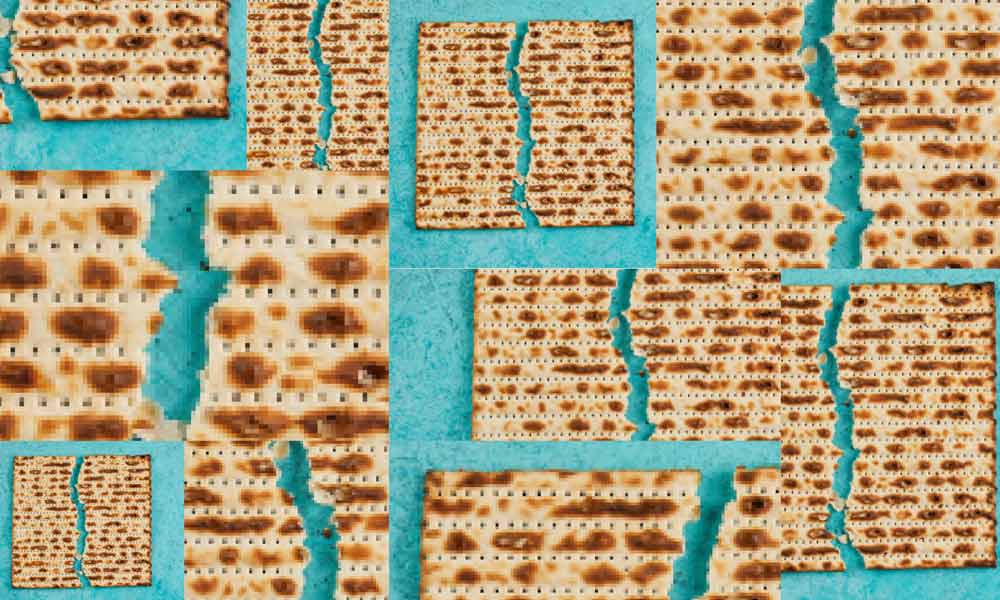
Rashi, the great medieval French rabbinic scholar, instructed that early on in the seder, the leader take the middle matzah from a stack of three placed on the table and break it in half. The larger half was the afikomen and was placed under the tablecloth. The hidden afikomen became the last bite. The idea was to provoke questions from the children.
But what if the curiosity of children is not piqued? The Talmud advises to “grab the matzah on Pesach night so that the children will not sleep.” Commentators interpreted “grab” differently—from eating quickly to moving the matzah around. Maimonides, the great scholar who lived in Spain and Egypt in the 12th century, wrote that “we snatch the matzah from each other”—suggesting more interplay than just grabbing it. Making a game out of the afikomen “is consistent with the seder’s general modus operandi,” says Rabbi Jack Abramowitz, who offered up a commentary on the afikomen on the Orthodox-oriented website Jew in the City.
In any case, the Talmud never specifically instructs hiding the afikomen and letting kids run wild through the house looking for it. Gerson, Plotkin and other scholars of afikomen history pinpoint the search concept to the Middle Ages. The age of Maimonides and Rashi was “a really robust time in Jewish scholarship,” says Gerson. But, she adds, scholars “were simply documenting what was already happening.”
In its earliest incarnation in the late Middle Ages, children would steal the afikomen and ransom it back for treats. Some Jewish scholars worried that the practice appeared to condone stealing, which of course was prohibited in the Ten Commandments. So although ransom takes place in many households, the predominant custom today is limited to the seder leader hiding and the children seeking.
Practices vary in different cultures, and even in different religions. Since the Christian Bible states the Last Supper was a Passover seder, Messianic Christians consider the afikomen to be symbolic of the broken body of Jesus, wrapped in white linen, buried and then raised up.

For Jews, some afikomen traditions have included dollops of mysticism. Jews from Iran, Afghanistan, Salonika, Kurdistan and Bukhara pocketed a piece all year for good luck. Some pregnant women in Sephardic cultures would carry an afikomen along with salt and hold on to them during delivery. In Eastern Europe, some Hasidim believed that if you kept the afikomen for seven years, you could throw it into a raging river to stop a flood. In American Jewish households, practices have varied as well. In Plotkin’s family, the grown-ups and kids do charades, word games and funny ransom notes to reveal the afikomen’s hidden location. Gerson considers herself “a master of hiding the afikomen.” One of her favorite spots was an empty freezer—“It took them a good 15 minutes.”
Clearly, there is more to the afikomen than simply a means of distracting antsy children. The Kabbalistic tradition holds that the afikomen and its discovery are investments in the future of humankind. The legendary Rabbi Menachem Mendel Schneerson played with the idea of concealed redemption, awaiting the “here-it-is!” finale. And who better to perform that task than children?
“We have no choice but to trust our kids with the future,” Plotkin says. “It gives me chills.”