
“B’Ivrit: A Hebrew Language Media Roundup” is a monthly look at the news through the eyes of Israeli media consumers.
1. A “bitter” public
Much of the June 17 morning show on Channel 14 was dedicated to the deal reached between the United States and Iran. A couple of days before the official signing of the Memorandum of Understanding (MOU), Israelis were in a frenzy. How could Donald Trump, crowned by Netanyahu and his supporters as the greatest friend the State of Israel has ever had, do this to Israel? How could he sign a deal that ignores Israel’s security concerns regarding Iran’s nuclear program, its ballistic missile capabilities and the support it provides to terror groups threatening Israel?
The morning show on Bibi’s favorite channel, sometimes described as Israel’s Fox News but in fact more of a mouthpiece for the prime minister, brought in two experts: One, a former intelligence officer, suggested that it all must be a trick, that Trump is just pretending to surrender, only to surprise Iran with a devastating military blow. The other, Yoni Ben Menachem, a veteran conservative commentator on Middle East issues, argued that there’s no trick up Trump’s sleeve. “It is a serious crisis in Israel’s relationship with the U.S.,” he said, moving on to share an anecdote with the viewers: “Yesterday, a guy stopped me on the street and asked me, ‘How’s Donald Hussein Trump doing?’” In pro-Trump, pro-Netanyahu circles, this is the ultimate insult—Trump has become Obama.
The president who was once compared by Israelis to King Cyrus is now described in the press as a false messiah.
“The Israeli public is very bitter,” Ben Menachem explained, describing Israelis’ general sentiment following the MOU. And this bitterness stems, to a great extent, from the way the Israeli media has portrayed Trump: The press, especially on the right, has hailed him as a strong leader and a staunch ally of Israel, unlike his predecessor Joe Biden who, according to the Israeli media, only tried to limit Israel’s military actions. Newspapers, TV shows and podcasts sang Trump’s praises when the deal he brokered brought home the remaining hostages from Gaza, depicting him as the only American leader who could have pulled off such an agreement. (“Welcome Donald Trump,” was the headline of a column on the right-wing website Arutz 7 on Inauguration Day. “If Kamala Harris would have won, all the Democrats’ hostility toward Israel would have erupted.”)
Now, the same Israeli public and press—both right and left—that celebrated Trump are turning their back on him.
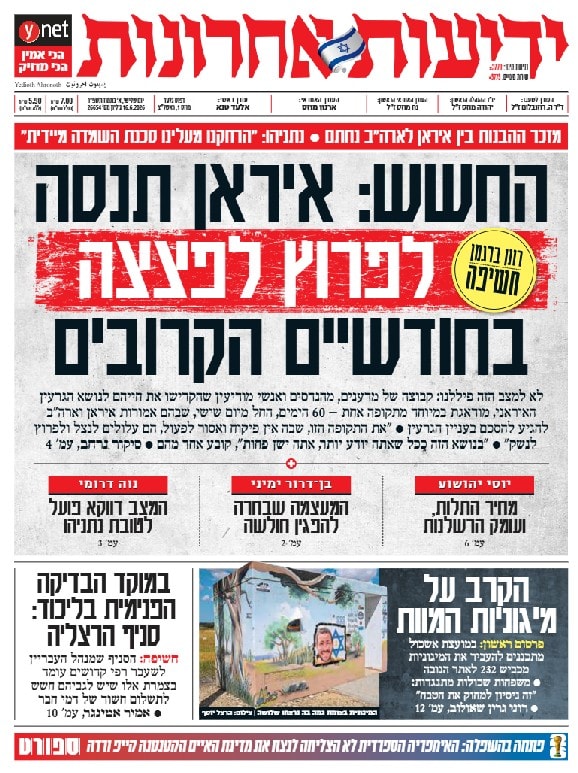
“We told Netanyahu: It’s too dangerous to trust Trump,” the centrist daily Maariv quoted unnamed senior IDF officers on its front page. The liberal-leaning Haaretz described Trump’s deal as a “fiasco.” Yediot Ahronot, Israel’s leading daily publication, wrote about “the superpower that chose to demonstrate its weakness” and in another column blamed Netanyahu for making Israel dependent on Trump. Even Israel Hayom, closely aligned with Netanyahu and owned by Trump megadonor Miriam Adelson, took aim at the president: “You could have been the greatest president of all, but you failed,” was the headline given to a scathing column by the paper’s diplomatic correspondent.
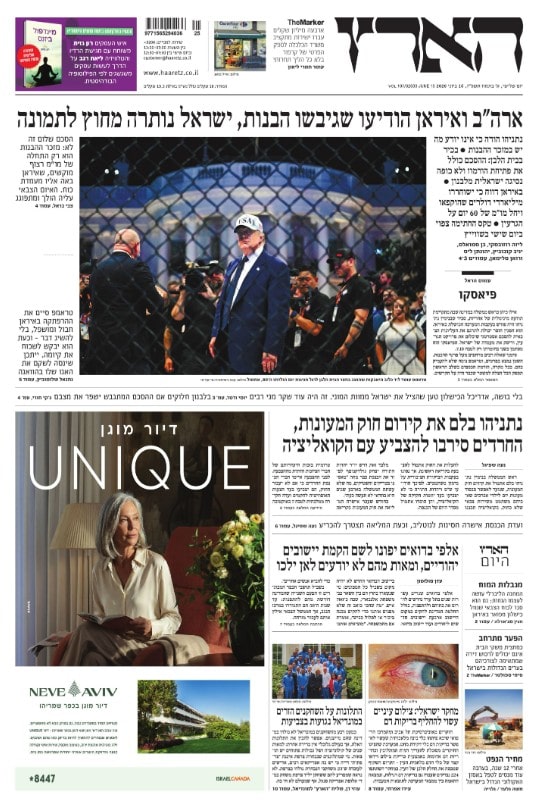
When you lose Israel Hayom and Channel 14, you’ve lost the Israeli right wing. And Trump lost them both. The president who was once compared by Israelis to King Cyrus is now described in the press as a false messiah.
2. First Iran, then Lebanon
The Israeli press unanimously decried Trump’s Memorandum of Underastanding with Iran. But what really got the Israeli public worked up was the following agreement with Iran that forced a ceasefire in Lebanon, basically dividing the job of enforcement between Tehran and Washington: Iran will deliver Hezbollah, and Trump will make sure Israel stops its attacks.
“Bypassing Israel in Lebanon,” read the Maariv headline. “Another diplomatic defeat. The U.S. and Iran established a deconflicting mechanism between the IDF and Hezbollah, without including Israel.”
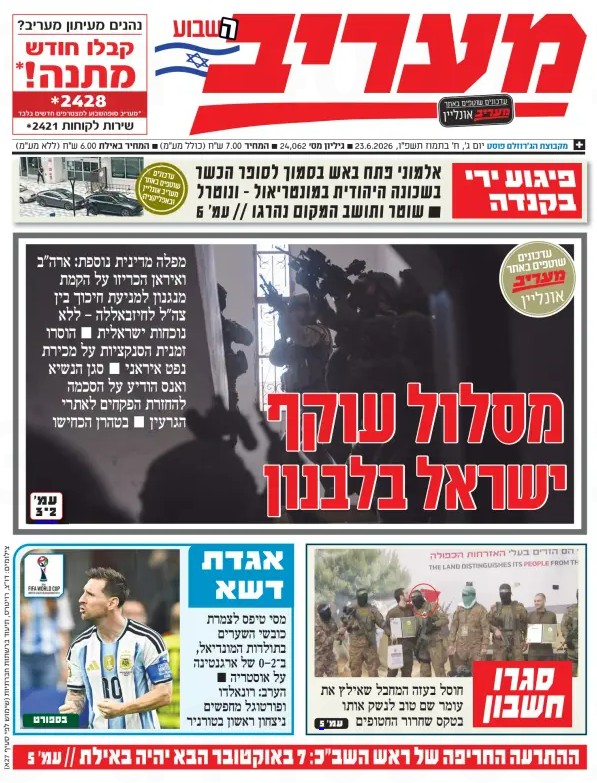
The Lebanese aspect of Trump’s Iran deal has been especially alarming for the Israeli public. While Iran’s nuclear capabilities pose a threat most Israelis see as existential, the idea of a forced ceasefire in Lebanon is viewed as an immediate threat to residents of northern Israel. Hezbollah’s ability to fire rockets and drones across the border on a daily basis has made most of the Israeli public supportive of military action inside Lebanon in an attempt to eradicate Hezbollah or at least diminish its terror capabilities. Now, Trump, alongside Iran, has decided to accept a ceasefire before these goals are met.
“Israel is watching with concern,” is how Yediot Ahronot described the American-Iranian deal on Lebanon in its front-page bold letter headline over an alarming red background. “The soldiers in the field are frustrated: Let us finish the job.”
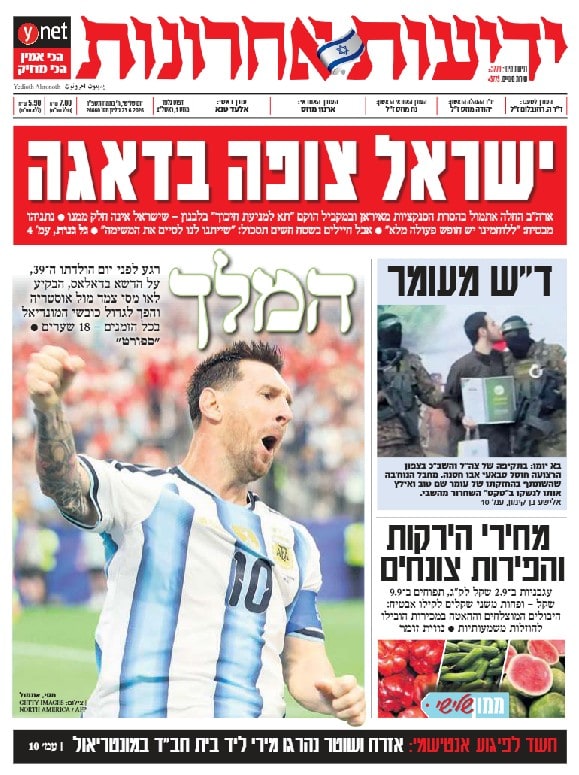
Israel Hayom sought to soften the blow delivered to Israel by highlighting policy differences within the Trump administration. Leading with the headline, “Speaking in two voices,” the paper noted that “Vance, Qatar and Pakistan” pushed for the exclusion of Israel in the Lebanon deconflicting system, while Secretary of State Marco Rubio opposed it. The publication, whose editorial line is supportive of Netanyahu, ran front-page blurbs of op-ed columns denouncing the Trump administration’s move and calling on Israel not to comply with the demand to lay down its arms in Lebanon.
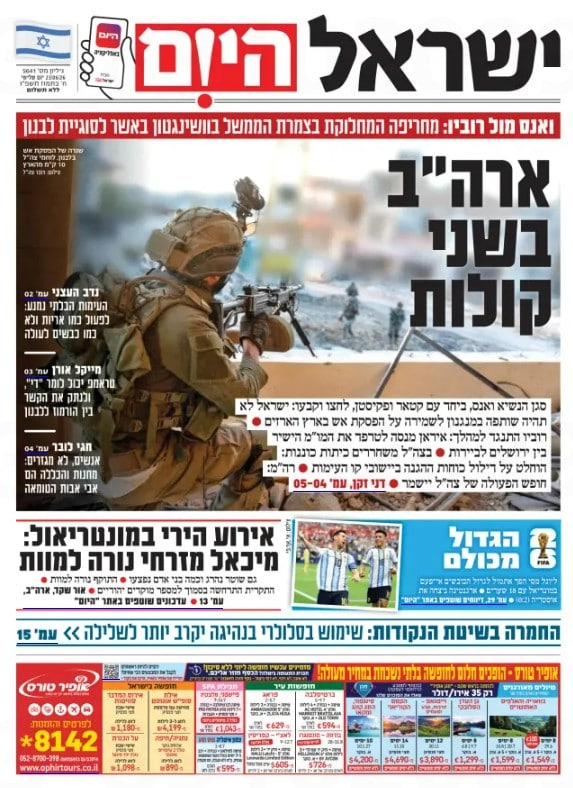
The idea of an internal power struggle within the Trump administration was echoed in another right-wing publication. Makor Rishon, a weekly aligned with the settler movement, devoted its cover story to the idea that Vice President JD Vance and Rubio are battling over foreign policy dominance and that while Vance believes in “peace through strength,” the vice president “is aiming at isolationism and withdrawal from involvement.” The cover image depicted a split portrait—half Vance, half Rubio.
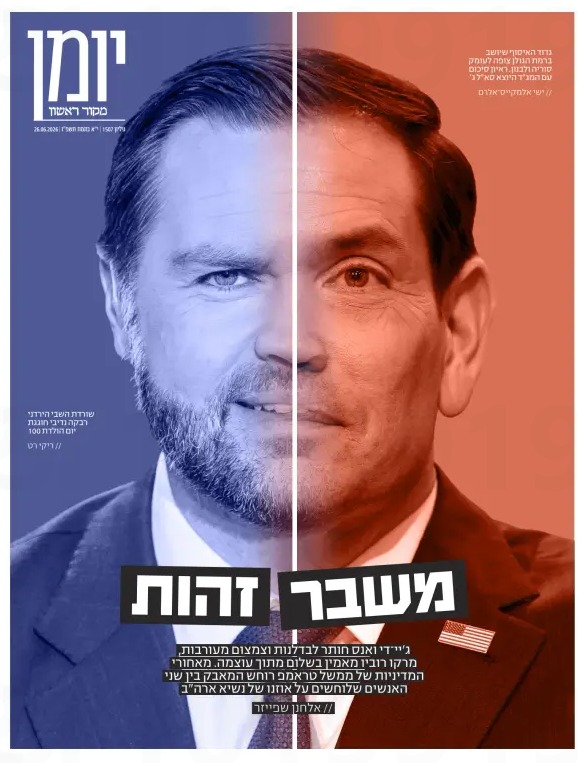
3. The haredi take to the streets
With all the disappointment over the way the Iran war is being negotiated, Israelis seemed to have been busier in past weeks with the seemingly endless debate over drafting ultra-Orthodox young men into the military.
As elections near, and with enforcement actions against haredi draft dodgers increasing, ultra-Orthodox Israelis began massive civil disruption protests, aimed at sending a message to the government that drafting yeshiva students and arresting those who resist is totally out of the question. Or, as thousands of haredi youth shouted in the protests: “We’d rather die than enlist.”
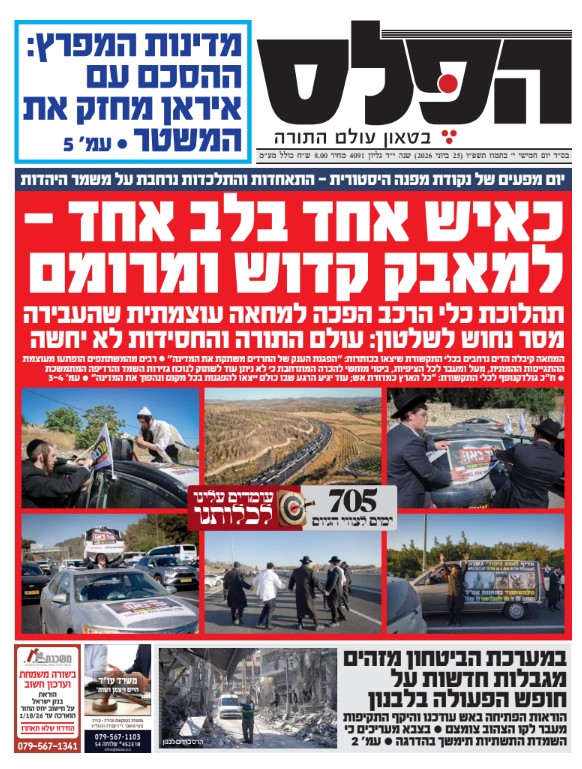
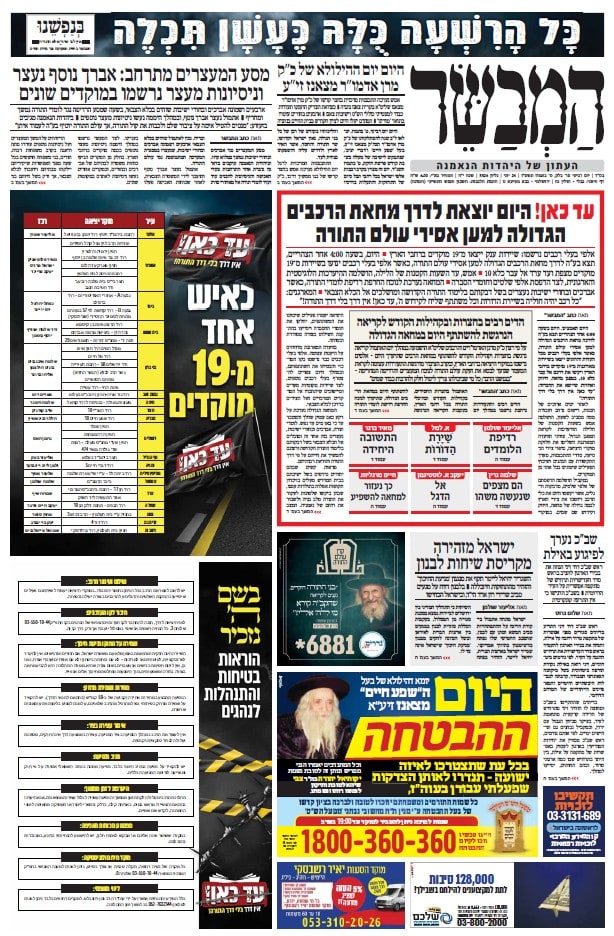
The ultra-Orthodox print dailies, which serve as the key means of communication for a society that limits use of smartphone and online news outlets, devoted their front pages to a call for action. “All as one for a holy and uplifting struggle,” read the headline of HaPeles, which is aligned with the Jerusalem haredi community. The front page was covered with photos from a massive rally on Israel’s major highways which led to hours-long traffic jams. Hamevaser, the publication of the Agudath Israel party, provided a list of the 19 protest spots where those opposing the draft should gather, calling it “a great vehicle protest for the prisoners of the Torah world.” It even published a list of safety instructions for the drivers and passengers going out to participate in the highway disruption.
The secular press, on the other hand, gave voice to the hundreds of thousands of Israelis who were stuck on the roads on a blazing hot June afternoon due to the protest, and also took a jab at Netanyahu for caving in to the demands of the haredi parties. “A few more days in power aren’t worth it,” Israel Hayom wrote in a rare rebuke of Netanyahu. The accompanying image showed young yeshiva boys blocking the streets.
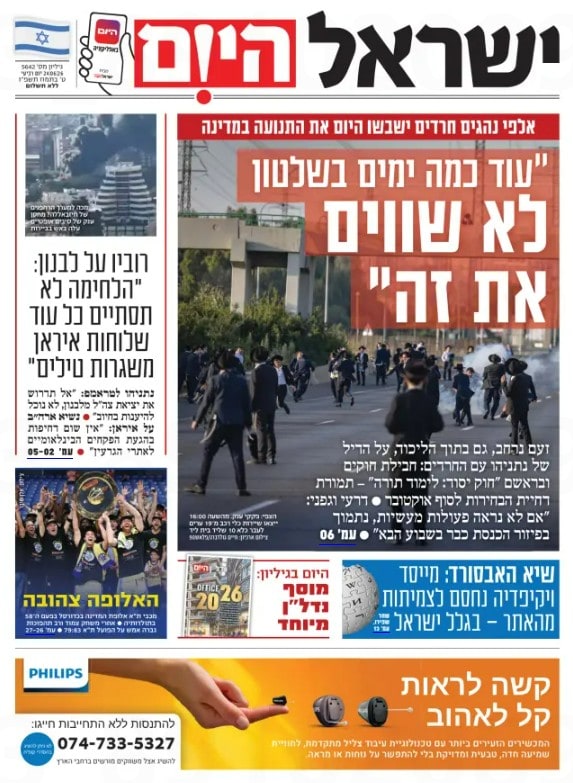


These same images led the coverage on Israel’s network evening news. All channels provided live reports from the scenes of the protests, alongside commentary that criticized the haredi protesters, not only for the disruption that they’ve caused but for the underlying principle of these protests—that while all Israelis are obliged to serve in the military, including the sons and daughters of TV commentators and pundits, there’s one group fighting to avoid this duty.
“Imaginethat a hundred thousand families of reservists would go out and protest,” wrote columnist Ruth Elbaz at Ynet, Israel’s leading news website, which is owned by Yediot Ahronot, giving voice to a widespread sentiment shared by most secular Israelis. “At a time when hundreds of thousands of Israelis left their homes, their work, studies, and families as soon as they got called up to serve in their reserve units, they are fighting to make sure that their children will not have to bear this burden. When mothers and fathers are sending their children to the military, there are those busy fighting the idea that their children will be drafted.”
4. It’s so hot—in Europe
With wars being waged across the region, and with political and societal disputes tearing the country from within, it’s harder than ever to find some good news. But luckily, mother nature—and man-made climate change—have brought moments of relief, or more accurately schadenfreude, to the Israeli public.
The historic heat wave engulfing western and central Europe received disproportionate coverage in the Israeli press.
“Europe is on fire,” reported Israel Hayom. “Record-breaking heat. At least 1,000 dead in France,” added Ynet. “The hottest June in history,” read a headline on KAN, Israel’s public broadcasting network.
The European heat wave is definitely a newsworthy story, but the Israeli media has seemed especially eager to report on it, making fun of those Europeans (who, they no doubt feel, have led the charges against Israel in recent years) for not having air-conditioning and for not showing the resilience and ingenuity Israelis have when dealing with similar temperatures.
Needless to say that, just like in the United States, any serious discussion of climate change causing these heat spells was nowhere to be found.
5. World Cup—the anti-Israel index
Like so many around the world, Israelis are glued to screens this month watching the FIFA World Cup. Not an easy task when you keep in mind the 7-10 hour time difference between Israel and North America.
The Israeli soccer team didn’t make it to the tournament, but this doesn’t mean Israelis don’t have their favorite teams and that Israeli media doesn’t have opinions about who Israelis should root for. Israel Hayom provided a satirical “Complete Zionist guide for the 2026 World Cup,” listing teams Israelis should root for, including the United States (“so Trump will send us more missiles and interceptors”), Argentina (“they still have some Nazis hiding there but their president danced so beautifully at Israel’s Independence Day ceremony”) or Morocco (“that despite the wars still remained friendly”). The guide also weighed in on who to avoid, including Canada (“we already got rid of their anti-Israel prime minister Justin Trudeau but will still be glad to see their team crash”) or France (“the most beloved team by Hezbollah”).
This is, of course, a satirical column, but the sentiments it reflects are real and come across in broadcasts and commentary on the tournament. The bottom line for many Israelis is: If you spent the past three years criticizing us, don’t expect our sympathy on the pitch.