

Jewish Politics & Power is published every other week. Sign up for our newsletter for updates.
1. Getting to Phase II
Israel is still in the euphoric stage of the Gaza peace deal. Every step taken by the 20 released hostages is a reason for celebration: a first Shabbat dinner, taking the kids to the beach, playing the piano for the first time in two years. It is impossible for Israelis to contain their joy at finally putting this war behind them.
But in between the bursts of happiness and relief, a more complex reality is seeping through. There’s still a lot to be done.
Some things have to do with the immediate challenges: Over the weekend, the ceasefire was put to its first test after an anti-tank rocket was fired at Israeli forces, killing two IDF soldiers. Israel responded with air and ground strikes, delayed the opening of the Rafah crossing, and threatened to block entry of aid convoys into Gaza. Hamas claimed it had nothing to do with the attack, and after the U.S. intermediaries got involved, the ceasefire was restored. Such incidents are bound to happen, challenging both sides to overcome them and keep the deal.
Hamas is still holding 16 bodies of Israeli hostages who were either killed on October 7 and kidnapped into Gaza or died in captivity. Phase one of the deal requires Hamas to return them all, and even though all sides recognize there are technical difficulties in locating all of the bodies, it is clear that the terror organization can and should do more to expedite the process. It is not only a demand of the Israeli government and of the nations sponsoring the deal, it is also the wish of the Israeli people, many of whom are still refusing to remove their yellow ribbon hostage pins until everyone is home, including the deceased hostages. These delays are also cited by Israel as impeding implementation of other parts of the deal, including the opening of border crossings to Gaza, more difficult.
The other hurdle has to do with Gaza itself, where Hamas has been ramping up its attacks against rival Gazan civilians. The killing spree has prompted a stern warning from President Trump and an unusual public statement by the U.S. State Department referencing “an imminent ceasefire violation by Hamas against the people of Gaza” and warning that the sponsors of the ceasefire (the United States, Qatar, Egypt and Turkey) will take steps to protect Gazan civilians.
Things get way more complicated when it comes to turning the second phase of the deal into reality. President Trump, for better or worse, got the parties to sign onto an agreement rich with intention and aspiration, but very thin on details. Led by the United States, the sponsoring countries are already discussing implementation of the second phase of the deal, but the potential pitfalls are endless. Hamas needs to disarm, but so far has refused to do so, and it is not clear to anyone how this process will be carried out and how it can be verified. Israel is required to gradually withdraw its forces, but no timetable has been set. A multinational stabilization force meant to take over from Hamas is still to be formed and will require major concessions from both Israel and Hamas. And above all, the vision of a Hamas-free Gaza Strip is still only an idea, leaving the sponsor states with a mountain of decisions to make on an extremely short deadline, since every day that passes only strengthens Hamas’s rule over post-war Gaza.
2. Will the Honeymoon Last?
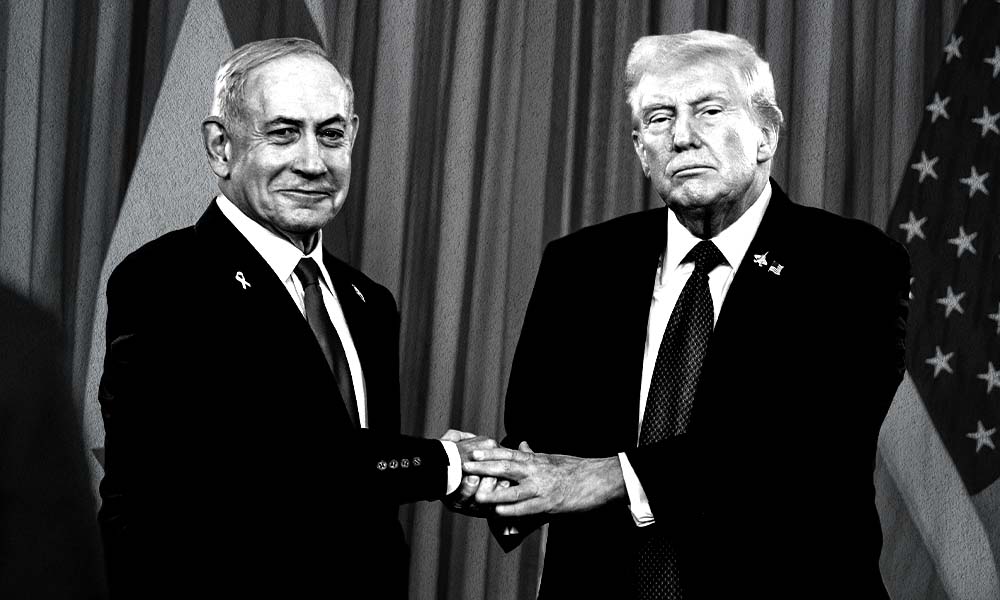
Trump’s relationship with Israeli Prime Minister Benjamin Netanyahu has had its ups and downs, to put it mildly. In his speech to the Israeli Knesset last week, Trump showered praise on the Israeli leader, at one point even turning toward Israeli president Isaac Herzog and urging him publicly to end Netanyahu’s trial on three counts of corruption charges. “Give him a pardon, come on,” Trump said from the Knesset’s podium. But there is also a lot of bad blood between the two leaders. Trump has suggested in recent months that Bibi has been disingenuous in his promises to end the war. Trump was especially outraged by Netanyahu’s decision last month to launch an Israeli attack against Hamas negotiators in Doha, Qatar. His top advisers, Steve Witkoff and Jared Kushner, made that clear in their recent 60 Minutes interview, in which Witkoff said they had felt “a little bit betrayed” and Kushner said that Trump felt “like the Israelis are getting a little bit out of control.”
What about the honeymoon?
Based on what we know from comments made by Trump and his advisers, the basis of the Trump-Bibi relationship is transactional. When Bibi delivers, Trump is happy. When he doesn’t, the U.S. president loses patience with him. The coming weeks and months will be challenging. Trump wants to move fast, to ensure the entire deal is implemented, and then build on it to expand the Abraham Accords. Netanyahu, famously cautious and a world-class procrastinator, will likely do everything in his power to delay the withdrawal of IDF forces from Gaza and to derail the prospects of the Palestinian Authority becoming part of Gaza’s future. Which means that sooner or later, Trump and Netanyahu will clash.
There is another possibility, however. Netanyahu just saw what happens when you get on Donald Trump’s wrong side. He may understand, especially with elections in Israel on the horizon, that the best course of action is to play it safe and agree with Trump, who, by the way, is much more popular among Israelis than Netanyahu.
3. Trump’s Negotiation Wingspan
The future of the Gaza peace deal hinges, to a great extent, on President Trump and his administration succeeding in maintaining the agreement and in fleshing out the details of the deal’s second phase.
This is a tall order for any administration, but even more so for Trump and his team. The president believes in blitz diplomacy, in high-stakes, result-oriented, make-or-break moments. That worked great in getting Israel and Hamas to sign the deal, but it is much less useful when it comes to filling in the details of phase two, in arbitrating disputes over implementation, and in keeping all sides—Israelis, Hamas, Palestinians, Gulf States, Egypt, Turkey and so many others—satisfied.


That’s where professional diplomats come in, but Trump has a very limited bench. Secretary of State Marco Rubio is too busy and was not closely involved in the negotiations; the professional echelons at the State Department and the National Security Council are understaffed and were out of the loop during the negotiations; and Steve Witkoff, Trump’s top negotiator, has way too much on his plate.
Diplomacy is tough, and diplomacy in the Middle East is practically impossible. If it’s not conducted successfully, Trump could easily lose interest and move on to the next challenge. He has already shifted his focus to the Ukraine war and is increasingly involved in trade negotiations with China. The challenge, going forward, is to keep Trump involved in the conflict, even as the moments of glory in Jerusalem and Sharm El-Sheikh, become a distant memory.
4. What Happens Now with Pro-Israel Politics?
These past two years—tragic, scary and stressful—brought the issue of Israel to the center of American politics. Traditionally, that would be bad news for pro-Israel activists. Nothing good has ever come out of mixing the interests of overseas countries in with political debates at home.
So far, however, groups across the American political spectrum have benefited politically from the tragedy of the Gaza war.
Pro-Palestinian groups got their voice heard after decades of being sidelined politically.
Centrist and center-right pro-Israel Jewish groups rallied their supporters behind a new cause: defeating the left-wing push to limit aid for Israel.
And left-of-center organizations got their moment to shine, as they watched their criticisms of Israel adopted by large swaths of the Democratic Party.
For the latter—think J Street and smaller pro-peace, pro-Israel organizations—the path forward is clear: They will be the ones pushing for full implementation of the deal and for adding that one missing ingredient in Trump’s 20-point plan: a two-state solution. They have more political cachet than ever to do so, and can expect to be, for the first time, the main voice on Israel-Palestine on the Democratic side of the aisle.
For AIPAC, with its center-right approach, the future is a bit more challenging. The Democrats they’ve lost aren’t coming back (look what’s happening with Rep. Seth Moulton, a Massachusetts Democrat, who publicly announced he is returning all the money he’d received from AIPAC and will no longer accept campaign donations from the lobby.) AIPAC will continue fighting against progressive Democrats running for Congress, but that’s a much harder battle to win in a post-Gaza war reality.
5. How to Praise Trump for the Deal
Mainstream Democrats also have their work cut out for them.
What exactly are they supposed to do now that the deal to end the war, an outcome they’ve been advocating for fiercely, has been achieved by none other than their arch-rival Donald Trump?
Some took the high road.
Joe Biden, the quintessential political gentleman, issued a statement commending Trump and his team for reaching the deal, as did Hillary Clinton.
Others tried to put Trump’s role in context. Former Secretary of State Antony Blinken, in a lengthy post on X, explained how the deal was in the works during the Biden administration and how the process was incremental.
The most interesting response, however, came from the Jewish Democratic Council of America. “Donald Trump’s efforts to end the war in Gaza are deserving of praise,” wrote the group’s CEO Haile Soifer, while adding that, “Trump, however, is not deserving of a Nobel Peace Prize because he continues to attack, degrade and jeopardize democracy.”
This statement can provide a roadmap for Jewish Dems who support Israel and want peace, but can’t bear the thought of giving Trump credit for realizing their dreams. They can thank him and praise him for the deal, but make clear that reaching a ceasefire in Gaza does not absolve Trump from the consequences of his domestic policy and conduct.
One thought on “And Now What?”
The Gaza ceasefire marks a hopeful step, but the situation remains fragile. Incidents like recent attacks and ongoing tensions show that maintaining peace will require constant attention and careful diplomacy