

Book Review | For Two Thousand Years by Mihail Sebastian

Iosef’s version of a “safe space” is a filthy, unheated Jewish dorm where students occasionally die of tuberculosis, or a lecture on a random topic in a hall where he can duck in and hide while running from his attackers—for a full five minutes, until they find him and drag him out. As Iosef puts it one afternoon, “I received two punches during today’s lectures and I took eight pages of notes. Good value, for two punches.” Microaggressions, indeed.

The Lost Magic of the Wooden Pickle Barrel

Blond and rather slender for its type, a pickle barrel stands by the takeout counter of the famous Washington, DC delicatessen Wagshal’s. Lined with plastic, it may satisfy a certain nostalgia but amounts to no more than a storage unit on the bulk-bin grocery aisle—a pale iteration of the big-bellied, oak casks I remember from my childhood.

Visual Moment | A Forgotten Ottoman Way Station

The Ottomans ruled what is now Israel for 400 years, and during that time they made some iconic contributions to the man-made landscape. Sultan Suleiman I (a.k.a. Suleiman the Magnificent) completed the current walls of Jerusalem’s Old City in 1541. The Jaffa Clocktower, finished in 1903, was built to celebrate the silver jubilee of Sultan Abdul Hamid II. Over time, innumerable Ottoman buildings have been lost, replaced by those of British or Israeli design, just as they in turn had replaced those of the Crusaders, Mamluks, Byzantines, Romans, Hasmoneans, Greeks, ancient Israelites, Babylonians, Assyrians and Philistines.

Jewish Word | Golem

Although such comparisons remain rare, for Jews and non-Jews the golem serves as a concept uniquely suited to expressing the fears and insecurities of the modern era. As Isaac Bashevis Singer wrote in 1984, “The golem story appears less obsolete today than it seemed one hundred years ago. After all, what are the computers and robots of our times if not golems?”

Opinion | Are Jews Historical Artifacts in Europe?

The future of Europe’s dwindling Jewish communities is bleak.

‘Broken Glass’ Shines at Theater J

Though a broken mirror foretells seven years of bad luck, Theater J’s production of Arthur Miller’s Broken Glass foreshadows nothing but promise from the riveting cast exquisitely directed by Aaron Posner.

What ‘Genius’ Gets Right—and Wrong—About the Jewish Einstein

In the popular imagination, Albert Einstein is a benign, whimsical and endearing old man. Yet of course, the real Einstein was more complex—though he was brilliant and had his fanciful quirks, in many ways he was also self-absorbed and careless, obsessive and absent-minded to the point of callousness.

Free eBook: Defining Moments in Israeli History: 1967–2017

Moment reached out to an eclectic group to ask: which event most defined the last half-century of the Israeli experience?

Memories of the Six-Day War—Fifty Years Later

I sat in front of our black-and-white 19-inch TV watching the progress of the war, my heart in my mouth the whole time.

How the Six-Day War Veterans Felt: Revisiting ‘Soldiers’ Talk’

The candidness and emotional vulnerability of Israeli soldiers is of such renown today that there’s even a pejorative for it: yorim ve'bochim, shooting and crying.

Interview | Yuval Harari

Born in Haifa to Eastern European immigrants, Harari now lives with his husband in a moshav outside Jerusalem. A vegan deeply distressed by the suffering of domesticated animals, Harari meditates daily (plus a 60-day silent retreat each year). He does this, he says, to understand more fully the nature of human consciousness and “human dissatisfaction.” Moment talks with Harari about the role of technology in politics and the rise of big data, as well as topics Harari does not usually discuss, such as Judaism and Israel.
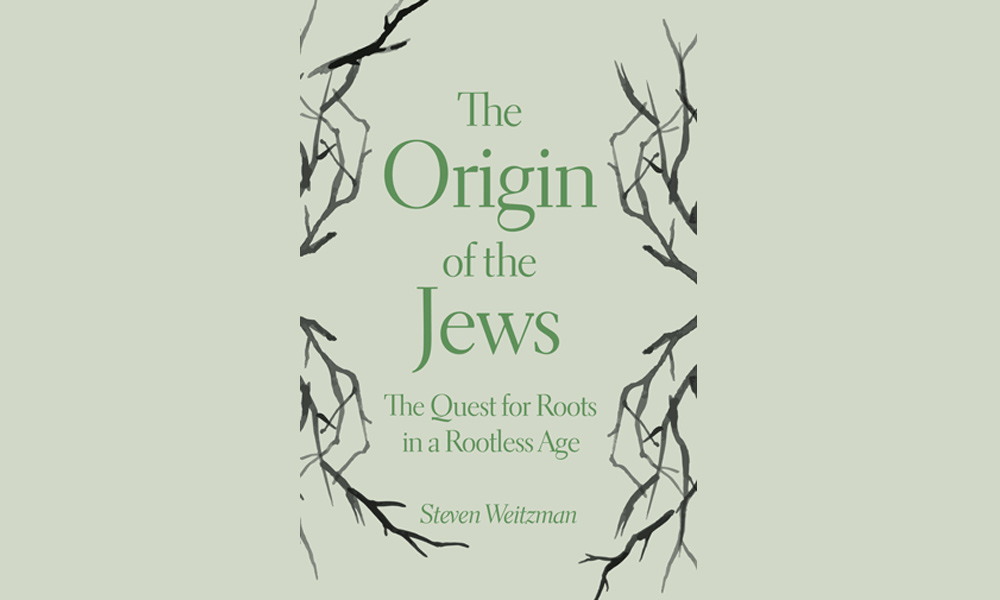
Book Review | The Origin of the Jews: The Quest for Roots in a Rootless Age by Steven Weitzman

As the subtitle of the book says, we live in a rootless age. People everywhere, not just Jews, seek their roots, their ancestry, their genetic makeup. We yearn to discover who we are; alas, our tools are not always up to the task. But there is pleasure in the pursuit, and we should be grateful to Weitzman for being a reliable guide.