

Jewish Politics & Power is published every other week. Sign up for our newsletter for updates.
1. Next stop, Iran?
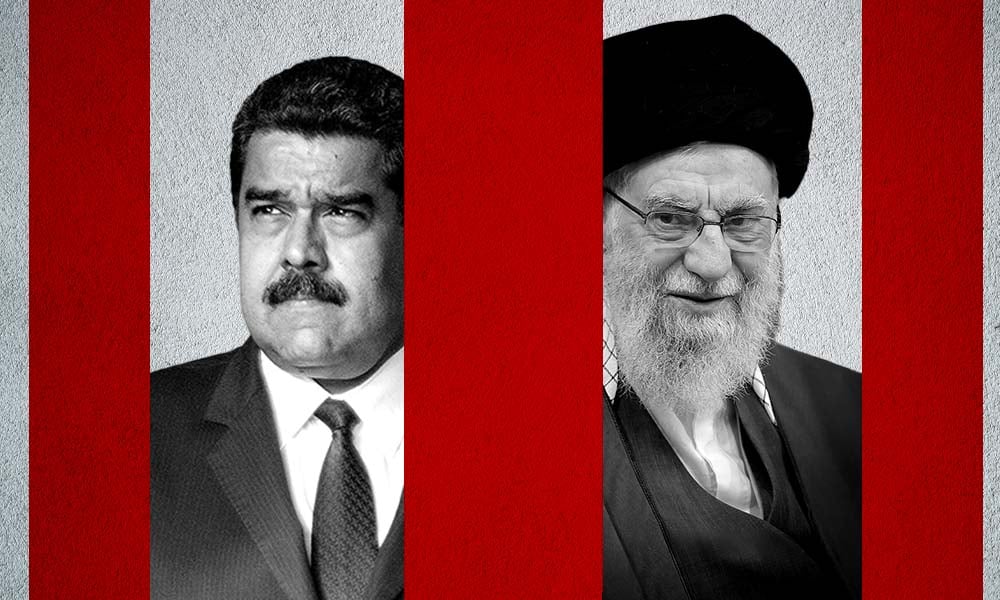
While America and the world were watching with awe the dramatic events unfolding in Venezuela and speculating about their impact on the future of the country and the broader relationship between the United States and Latin America, Israelis were looking at the impact the forceful overthrow of Nicolás Maduro will have in their own region.
“The regime in Iran should pay close attention to what is happening in Venezuela,” said Yair Lapid, Israel’s opposition leader, in a statement he posted on X hours after the attack. A commentator on Israel’s Channel 14, a popular media outlet considered at times as a mouthpiece for Prime Minister Benjamin Netanyahu, called Trump’s attack on Venezuela “the last exercise before Iran.”
This line of thought represents a popular sentiment in Israel’s current public discourse: that just as Trump, against all odds, took on Maduro, he can—and probably will—take on the ayatollahs and lead a regime change in Iran.
But it’s not only Israelis. “There is a new sheriff in town,” South Carolina Senator Lindsey Graham, a top Republican voice on foreign policy, told Axios, adding, “If I were the leader of Iran, I would go pray in the mosque.”
Is the Venezuela raid a precursor for a future U.S. attack on the Iranian regime? So far, much of this discussion remains in the realm of speculation. Iran and Venezuela share two key traits: both have large oil reserves and both have an undemocratic leader bent on fighting with America. But that’s about all they have in common. Iran, a country with a huge military force half the world away, is no Venezuela, and while Trump may wish for its regime to change, military intervention to advance this goal is all but unfeasible. Trump has warned in recent days that if the Iranian regime starts shooting at civilian protesters, it will feel the might of the United States, but as far as anyone knows, there is no serious thought in the administration about an actual invasion or of targeting Iran’s leadership.
This does not mean that the toppling of Maduro has no implications for the Middle East. By its action, the U.S. deprived Iran and its proxy terror groups of a key ally in the Western Hemisphere, a move that could impact Iran’s military buildup, its oil industry and its international standing.
2. Jewish lawmakers see pros and cons
Is there a Jewish take on Maduro’s kidnapping? Well, no. Naturally, it’s more of a political take.
Independent Senator Bernie Sanders of Vermont, a stalwart progressive, didn’t like the operation one bit. “The president of the United States does not have the right to unilaterally take this country into war, even against a corrupt and brutal dictator like Maduro,” Sanders said, going on to warn that Trump’s “brazen attack” will give a green light to any country wishing to attack another. “This is the horrific logic of force,” he said.
Mainstream Democrats expressed the same sentiment, though their words weren’t as harsh. “Maduro is a horrible, horrible person, but you don’t treat lawlessness with other lawlessness,” said Senate Minority Leader Chuck Schumer of New York in an interview with ABC. “We have learned through the years when America tries to do regime change and nation building in this way, the American people pay the price in both blood and in dollars.”
Rep. Debbie Wasserman Schultz of Florida, where many Venezuelan immigrants reside, was naturally a bit more cautious. “The capture of the brutal, illegitimate ruler of Venezuela, Nicolás Maduro, who oppressed Venezuela’s people, is welcome news for my friends and neighbors who fled his violent, lawless, and disastrous rule,” she began her statement, only then moving on to condemn Trump’s actions that were taken without congressional approval. She stressed the need to help Venezuelans and argued that Saturday’s attack was not the way of achieving that goal.
On the other side of the aisle, Jewish Republicans showed nothing but support for the president’s move. “Necessary and justified to protect the American people,” is how Tennessee Rep. David Kustoff described the kidnapping of Maduro. And Randy Fine, a Florida Republican and perhaps the staunchest Jewish MAGA supporter in Congress, posted on X: “Maduro f’d around and found out. The whole world is on notice now. You do not mess with President Trump and America.”
3. The Bibi-Trump lovefest: Mar-a-Lago edition
It was a wonderful holiday vacation for Israeli Prime Minister Benjamin Netanyahu. He ventured to Florida for a meeting with Trump at Mar-a-Lago and came back with a basket full of praises from the leader of the free world.
A few examples: “He’s a hero” and “He’s taken Israel through a very dangerous period of trauma. Israel, with other people, might not exist right now.” It’s hard to top these statements. Trump repeatedly said, in front of the cameras, that Israel would likely not exist if it were not for Netanyahu’s leadership.
Bibi couldn’t have asked for anything better. But there’s more. The president publicly and forcefully endorsed once again the idea of pardoning Netanyahu, who is on trial for three corruption charges.
“He’s a wartime prime minister who’s a hero. How do you not give a pardon?”
Trump even invited Netanyahu and his wife Sara to attend his New Year’s Eve ball at Mar-a-Lago, providing the prime minister with even more opportunities to showcase his close relationship with the U.S. president.
The only thing left for Netanyahu’s team to do now is to clip these soundbites and insert them into his campaign ads in the upcoming October elections.
4. The big issues still on the table
Parties at Trump’s gilded Mar-a-Lago ballroom are great, as are mutual statements of admiration. But what about the real issues?
Here’s a quick breakdown:
- Moving to Phase 2 of the Gaza deal: Bibi wanted to wait until Hamas is disarmed. Trump agreed on the need to disarm the terror group and even threatened to take action against them if they don’t do so, but he gave no promise on sequencing and on ensuring that the next phase will come only after full disarmament.
- Turkey’s involvement: Netanyahu was adamant about not allowing Turkish troops to play a role in the future Gaza stabilization force. He also asked that the United States not sell advanced F-35 fighter jets to Turkey. Trump listened, but made clear that he actually trusts Turkey and gets along great with its president, Erdoğan, basically turning down Netanyahu’s requests.
- Iran: Israel has asked for a green light to attack Iran, potentially with the aid of the United States, if Iran continues to develop ballistic missiles and if it tries to rebuild its nuclear program. Trump seemed on board, with an enthusiastic “yes” on attacking nuclear sites—hinting that America will do so itself—and a green light for Bibi to go after Iran to eliminate a renewed ballistic missile threat.
5. Mamdani’s executive orders: Questions for those who already have answers
In a mass celebration unlike any other previous mayoral inauguration ceremony, Zohran Mamdani took office on January 1. Once the festivities concluded and New Yorkers began getting used to the idea that the “Mamdani era” is actually here, the newly minted mayor took to his desk in City Hall and signed his first executive orders.
Two of them caught the attention of New York’s organized Jewish community and, quite frankly, of everyone else who has watched closely the fraught relationship between Mamdani and the largest Jewish community in the world outside Israel. Mamdani discontinued all executive orders signed by his predecessor after September 26, 2024, the date on which Eric Adams was indicted on corruption charges. The revoked orders included one recognizing the IHRA definition of antisemitism and one opposing efforts to boycott, divest from and sanction Israel, known as BDS.


For many of Mamdani’s detractors in the Jewish community, this was a perfect “we told you so” moment. Not only did Mamdani undo two measures relating to Jews and Israel, they claimed, he did so on day one. “A troubling indicator of the direction in which he is leading the city, just one day at the helm,” is how William Daroff, CEO of the Conference of Presidents of Major American Jewish Organizations, described Mamdani’s move. In a joint statement, several leading Jewish groups said that “Singling out Israel for sanctions is not the way to make Jewish New Yorkers feel included and safe, and will undermine any words to that effect.”
The Israeli government went all out, with Foreign Minister Gideon Saar posting on X about Mamdani’s actions: “This isn’t leadership. It’s antisemitic gasoline on an open fire.”
There’s much room for a real debate over the merits of the IHRA definition of antisemitism (which the Jewish community has been actively debating for years) and about the usefulness of anti-BDS measures and their impact on free speech. But here are just a couple of questions to consider when discussing Mamdani’s moves:
If an anti-BDS executive order is so important, why did Adams only sign it on December 3, 2025?
And if the IHRA definition is necessary to protect New York Jews, why was it enacted only in June 2025, close to two years after the October 7 attacks and after heated anti-Israel protests spread through the city, some of them tainted with antisemitism? Why didn’t the organized Jewish community demand action on these issues in the past four years?
As is often the case, the answer may have to do with politics and with virtue signaling. Adams and Mamdani have their own constituencies to think of, and at times, these considerations come before the actual meaning of the moves they make.
Top image credit: Eneas De Troya (CC BY-SA 4.0) / khamenei.ir (CC BY 4.0)