
This article contains spoilers for The Pitt Season Two finale, “9:00 P.M.”
There’s an elegant symmetry running through the second season of the critically acclaimed medical drama The Pitt (HBO Max), one that sharpens into focus only in the final moments of the finale, which aired on last Thursday. Season Two opens with Dr. Michael “Robby” Rabinovich (Noah Wyle) cutting through traffic on his motorcycle, sans helmet, headed for Pittsburgh Trauma Medical Center. At first it reads as adrenaline. By the finale, it’s something else. Robby names the cost in a devastating exchange with Dr. Abbot (Shawn Hatosy), admitting that every patient loss in the emergency department kills a part of his soul.
Abbot doesn’t deny the feeling. He reframes it, urging Robby to find a way to “dance through the darkness.” The episode offers no resolution. Instead, it asks what it means to keep living alongside loss.
That question is not abstract for Robby. Seized with panic and despair after he fails to save the life of his stepson’s girlfriend in Season One, he recites the Shema—Shema Yisrael, Adonai Eloheinu, Adonai Echad. It is the prayer Jews have carried into moments of rupture, fear, even death. It serves as a spiritual anchor, a way of locating oneself when everything else is slipping.
That anchor feels ominously absent for much of Season Two. Robby’s overhyped upcoming “spirit quest” sabbatical is a source of frustration and foreboding throughout the season, which, like Season One, is comprised of 15 episodes, each depicting a consecutive hour in a single day’s 15-hour ER shift. The planned escape suggests a yearning to outrun the accumulation of loss altogether. But the episode’s emotional structure pulls in another direction, one that feels almost liturgical. It echoes the progression in the Jewish calendar happening this month: from Yom HaShoah, Holocaust Remembrance Day (last Tuesday), to Yom HaZikaron, Israel’s day of remembrance for fallen soldiers and terrorism victims (this Tuesday) followed immediately by Yom HaAtzmaut (this Wednesday). Immersion in grief changes to shared mourning and then to the difficult—and dizzying—affirmation of life.
Robby’s admission of his struggle to cope belongs to that first space: raw, unmoored and unresolved. The exchange that follows with Dr. Abbot gestures toward the second, with grief and resolve held in dialogue. Finally, the image of Robby cradling a baby abandoned in the women’s restroom in episode one reaches toward the third.
In Pittsburgh, that progression has added poignancy. The Tree of Life synagogue shooting in 2018 remains acutely felt in the city, even as plans move forward to rebuild the site as both synagogue and memorial. In fact, earlier in the season, Dr. Robby treats a Tree of Life survivor (played by Irina Dubova) who, startled by fireworks, has spilled boiling water on herself.
But The Pitt complicates this arc through Dr. Baran Al-Hashimi (Sepideh Moafi). For much of the season, she and Robby have butted heads; eventually, they learn to respect one another. In the penultimate episode, she turns to him in a moment of trust and reveals her medical history.
“Patient is a 40-year-old female with a history of seizure disorder for the past 35 years,” Robby reads, trailing off. “Baran, is this you?”
“It began after a bad case of viral meningitis when I was 5,” she says. “No one’s ever noticed before. They just think I’m thoughtful.”
“How long between the seizure you had today and the last one?” Robby asks.
“It’s been well over a year,” she responds. “But I had two today.”
Robby struggles to process this news. The colleague he has been measuring himself against is suddenly rendered vulnerable.
She has offered him an opening, a moment of shared humanity. But his harsh response seals off that space. Our last glimpse of Dr. Al-Hashimi finds her sobbing in her car.
If Robby’s arc moves, however imperfectly, toward affirmation, Al-Hashimi’s lingers in that middle space, where vulnerability is revealed but not yet reciprocated.
This tension highlights a hinge point in medicine itself. In an era increasingly shaped by technology, algorithms and the promise of precision, it is tempting to imagine that the future of medicine lies in eliminating uncertainty, optimizing outcomes and reducing error. But The Pitt insists on something else: that medicine remains a fundamentally human practice. Not because machines cannot diagnose—in fact, they’re getting better at this each day—but because robots cannot absorb the emotional afterlife of care: the accumulation of loss, grief and memory that reshapes the person bearing witness to life and death. Machines cannot sit in ambiguity, navigate tensions or nurture bonds. (They will never karaoke with us like Dr. Santos and Dr. King, a scene tucked after the credits that surprised and delighted fans.) They will not challenge us in a way that snaps us out of self-pity. Like the AI that Dr. Al-Hashimi attempts to introduce to the emergency department, they do not inspire complete trust.


What the series affirms is that the most essential work of medicine is not only technical. It is relational.
When Robby holds Baby Jane Doe, he whispers: “I got abandoned too, when I was eight. But I got through all of that and so will you. I’ve got a good feeling you’re going to be just fine. Everything’s going to be just fine. You’ve got so many wonderful things to see and so many people to love ahead of you.”
The man who began the season toying with life is now reminding someone how awe-inspiring living can be. And yet, the episode refuses to pull its threads into resolution. Because even as Robby speaks of connection, Al-Hashimi sits alone.
The command to “choose life,” from the Book of Deuteronomy, is not a single, decisive act. It is a repeated one—and at times, it can feel like the harder choice. One can affirm life in one moment and fail to recognize it in another.
Robby has taken a step away from reckless momentum toward stillness, toward connection. (Dr. Abbot briefly suggests that the ambulance clipping his motorcycle might have been a kind of cosmic warning.) But the deeper work—the work of trusting others inside their fragility, and allowing himself to be held in return—remains unfinished.
Perhaps he has begun to dance “through the darkness,” as Dr. Abbot says. But he hasn’t yet asked anyone else to join him.
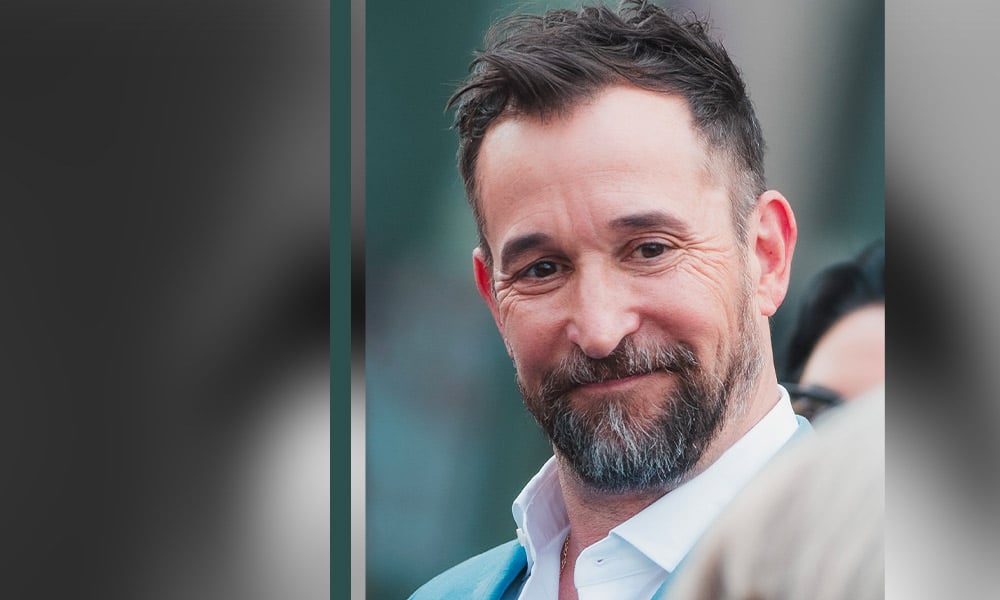
(Top image credit: Kevin Paul (CC BY 4.0))
One thought on “Dr. Robby Chooses Life”
Love the show and have watched each episode having your explanation enhances my feelings. I want him like my sons to have the insight to continue the journey.