
Book Review // Debriefing: Collected Stories
The Subject, Herself
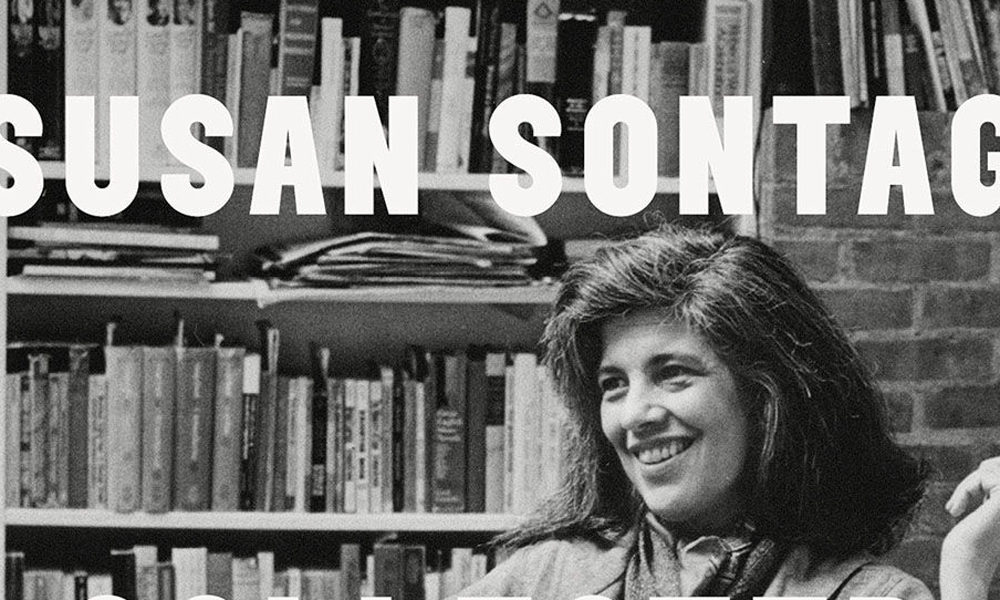
Debriefing: Collected Stories
Susan Sontag
Edited by Benjamin Taylor
Farrar, Straus and Giroux
2017, 336 pp, $27.00
Not long after the publication of her acclaimed 1992 historical romance The Volcano Lover, Susan Sontag had dinner in a small Italian restaurant on the Upper East Side of Manhattan with Norman Mailer and Gore Vidal. At the end of the meal, during which Vidal ate very little and drank an awful lot, Sontag suddenly asked him if he had read her novel. “A pained expression crosses Gore’s face as he reaches across the table and takes Sontag’s hands into his own,” Jay Parini recalls in his biography of Vidal, “then says, ‘I’ve read it, Susan. But you must make a promise to me. That you will never, ever try your hand again at fiction.’”
The author of touchstone collections like Against Interpretation and On Photography, Sontag was known primarily as an essayist; her fiction divided opinion. Although Vidal may have disliked it, The Volcano Lover was a critical and commercial success. “I find The Volcano Lover impressive, at times enchanting, always interesting, always entertaining,” the novelist John Banville wrote in his review for The New York Times. Sontag discovered historical fiction and characters she could make whole. “He is interested in everything,” she writes of her protagonist, whose passions and obsessions, intellect and worldliness Sontag embraces. By the end of her writing life, Sontag had written four novels—including 2000’s In America, for which she won the National Book Award—and several short stories, the best of which have been freshly reproduced in Debriefing: Collected Stories. In America was her final novel, the story of a great Polish actress who moves to southern California in 1876 to join a communal farm before returning to the stage when it fails. Its great theme is self-reinvention, and in writing about America, she was in fact writing about herself.
Sontag would be aghast at biographical explanations for her work, which she pointedly always referred to as the work, as if it were somehow disembodied. “The function of criticism should be to show how it is what it is, even that it is what it is, rather than to show what it means,” Sontag wrote in her most famous essay, “Against Interpretation.” But consider her life we must, for Sontag’s greatest subject throughout her life was always Susan Sontag.
Debriefing opens with “Pilgrimage,” an autobiographical essay masquerading as a short story. The journey in question concludes with Sontag’s afternoon tea in her teenage years with the German novelist Thomas Mann. In a larger sense, “Pilgrimage” is about Sontag’s intellectual journey during her isolated, alienated childhood that she worked determinedly to accelerate. Reading “Pilgrimage” makes Sontag’s fascination with her characters in the novel The Volcano Lover become clearer. They too were, as Linda Colley noted in her review of The Volcano Lover for the London Review of Books, “outsiders of a kind.”
“I felt I was slumming, in my own life,” she writes of her childhood in suburban Tucson and later Los Angeles’s San Fernando Valley. She escaped through literature: “Reading and listening to music: the triumphs of being not myself. That nearly everything I admired was produced by people who were dead (or very old) or from elsewhere, ideally Europe, seemed inevitable to me. I accumulated gods.” Mann’s The Magic Mountain was “a transforming book, a source of discoveries and recognitions. All of Europe fell into my head.”
Beyond the literary, Sontag’s attraction to Mann is obvious. In the 1940s, he was an exile and a public presence. He had “the stature of an oracle,” she writes, “proclaiming the absolute evil of Hitler’s Germany and the coming victory of the democracies…If there was a Great Writer, not at all an American notion of what a writer is, it was he.” As in her friendships—she had an “unerring eye for loners,” she says—Sontag seems perennially pulled toward the ones who don’t quite fit.
Sontag once told the Israeli novelist Yoram Kaniuk that “first she was a Jew, second a writer, and third an American.” At a screening of her panned 1974 documentary Promised Lands, filmed in Israel shortly after the Yom Kippur War, she referred to herself as an “international Jew.” Sontag was a Jewish thinker even if she didn’t think about Judaism. Her understanding of what it meant to be Jewish was a matter of consciousness, a way of being. It made her especially perceptive about the fate of outsiders and aware of the persecution of others.
“Nothing I have seen…ever cut me as sharply, deeply, instantaneously” as seeing photographs of Bergen-Belsen and Dachau in July 1945, at age 12, Sontag once wrote. That Holocaust consciousness was clearly alive when she spoke out about war and genocide in Bosnia during the 1990s, taking the side of the oppressed Muslim population.
In her fiction, her empathy is especially clear in the best short story in Debriefing, “The Way We Live Now.” In 1989, Sontag published AIDS and Its Metaphors, an extension of her 1978 treatise “Illness as Metaphor,” which probed the ways in which language stigmatizes the victims of disease. Three years earlier, she wrote on AIDS as fiction, with snatches of conversations about one unnamed friend (and AIDS patient) merging to form a singular thick, commanding narrative:
…Kate confirmed, that whatever happened it was over, the way he had lived until now, but, according to Ira, he did think about it, the end of bravado, the end of folly, the end of trusting life, the end of taking life for granted, and of treating life as something that, samurai-like, he thought himself ready to throw away lightly, impudently…
“The Way We Live Now” is particularly exquisite. It captures the details of AIDS, the fears and indignities, demonstrating at once Sontag’s powers of observation and responsiveness to suffering. “He fell down yesterday on the way to the bathroom,” Victor says. “He is reported to have said, I was afraid to sleep, …I slept every night with the light on.” Quentin notes the symptoms, “the bad taste in the mouth, the pressure in the head and at the back of the neck, the red, bleeding gums, the painful, if pink-lobed, breathing, and his ivory pallor, color of white chocolate.”
Critics of Sontag’s fiction have tended to miss that whatever her stylistic weaknesses, her work has an inherent value. To learn about Sontag via short stories such as “Pilgrimage” and “Project for a Trip to China”—with its layered autobiographical fragments and ruminations about her father, a fur trader who died in Manchuria when Sontag was five—is to understand her greatest creation, Susan Sontag, more fully. If there was one story Sontag could tell with ease, it was her own.
Liam Hoare is the Europe Editor for Moment. He lives in Vienna.