“B’Ivrit: A Hebrew Language Media Roundup” is a monthly look at the news through the eyes of Israeli media consumers.
1. Election fever
Israelis will go to the polls Tuesday for what commentators are describing as the nation’s most consequential election in decades. At its core, this is a battle over one question: Should Benjamin Netanyahu remain in power, following the October 7 attacks and Israel’s subsequent wars, or are Israelis seeking change in the form of an opposition bloc currently headed by Gadi Eisenkot?
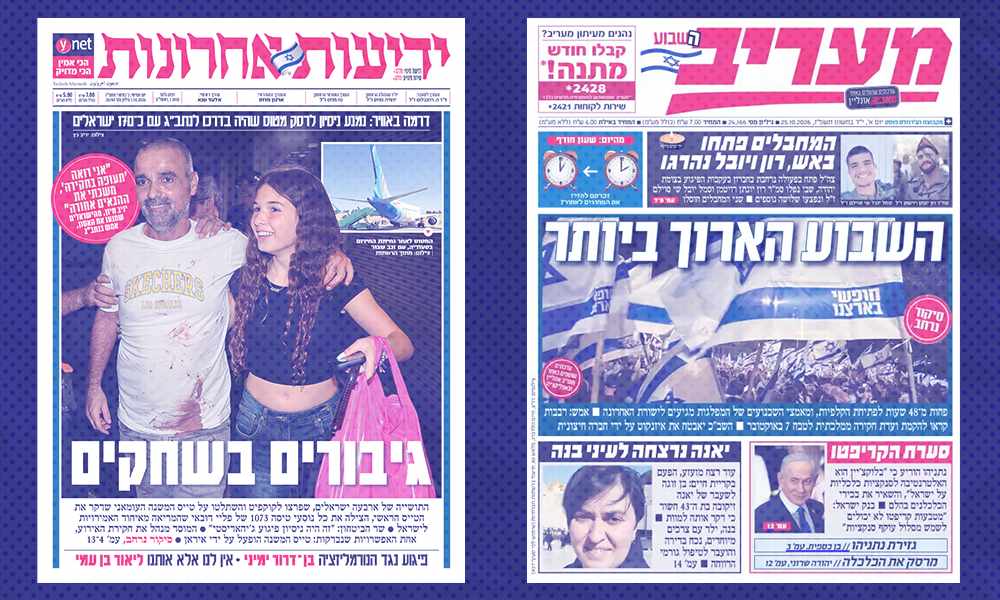
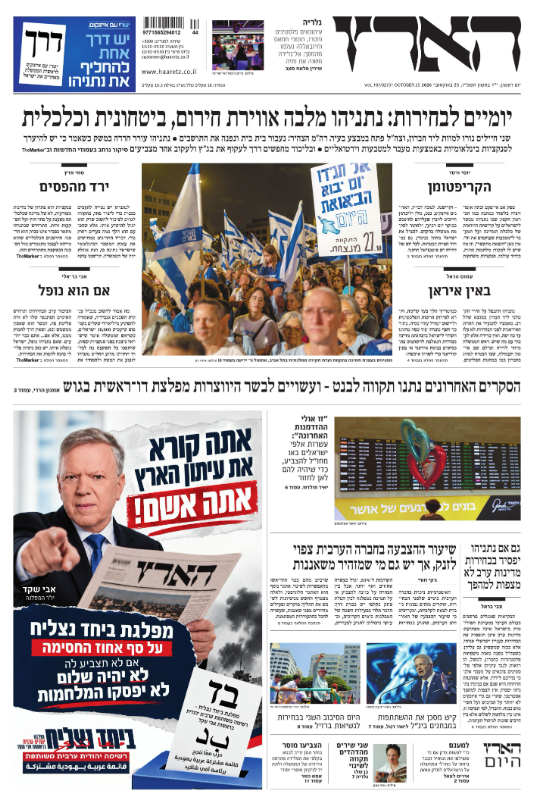
“The longest week” is the headline Maariv, a centrist daily, chose for its front page as the race enters its final days. TV networks have already placed a counter in the corner of the screen, counting down days, hours and minutes until the polls open. The liberal-leaning Haaretz led Sunday’s paper with an ominous tone: “Two days to elections: Netanyahu is inciting a sense of security and economic urgency.”
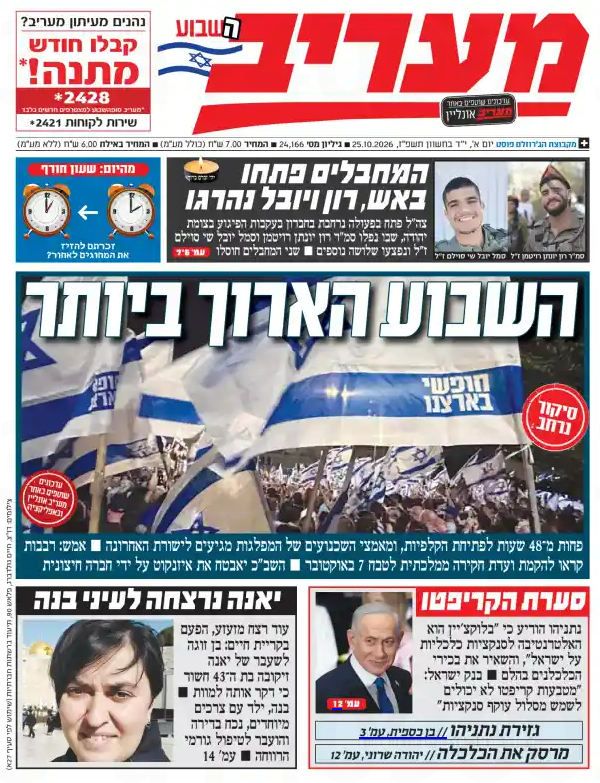
Israeli media consumers have become human calculators.
Elections are an all-consuming affair in any country, and Israel is no exception. The media, while still extensively covering Israel’s conflict hotspots (Iran, Gaza, West Bank, just to name a few) has been focusing primarily on weekly polls, coverage of campaign events, tactics, internal fighting within the parties and behind- the-scenes news of alliances and betrayals.
But election coverage in Israel is also quite different from American political reporting. Here’s why.
- No need to follow the money: Since campaign finance rules are very strict, effectively (well, almost effectively) blocking the influence of big money in politics, the media is less concerned with dollar amounts and with big donors.
- It’s the blocs, not the candidates: While American political coverage focuses almost exclusively on the candidates themselves, whether in presidential or in congressional races, Israel has an added layer of reporting. To understand the elections is to understand the possible coalition combinations that could lead either candidate to the prime minister’s seat. In practice, that means that Israeli media consumers have become human calculators, endlessly running through their minds scenarios such as “What if this small far-right-wing party gets in, how does that help Bibi? Are the Arab parties joining forces with the opposition bloc? Will members of the one centrist faction cross lines to join a rival coalition?” It sounds complicated, and it is. Following the news in Israel these days is all about a thousand tiny details that could influence future coalitions more than about what the candidates believe in and what shape their future policies take. Struggling with the coalition math? No worries, there’s an app for that.
- War and peace and politics: Reporting on the ongoing military conflicts, especially the Iran war, is not only about security and international relations. For the Israeli media, these are political stories. Resuming attacks on Iran is viewed as beneficial for Netanayhu; an outbreak of violence could mean delaying elections and help the current coalition; bad news from the front lines would potentially be detrimental for the current coalition.
2. Prediction? That depends on where you’re getting your news
As election day approaches, there’s a broad consensus among pollsters and political analysts. Most predict that neither bloc will reach the needed 61 seats but that Eisenkot is polling stronger than Netanyahu and holds a better chance of forming a coalition if he joins forces with the Arab parties.
But there are outliers, and they have a clear political slant.
Channel 14, a pro-Netanyahu right-wing TV network that enjoys tremendous popularity in Israel, has consistently put Bibi in the lead.
Its last pre-election poll gave Netanyahu an easy win, projecting his bloc will win 52 seats—10 seats more than in most other polls. Channel 14 also predicts that Netanyahu’s Likud party will win 30 seats, way more than the 20-22 that all other networks’ polls show.
Netanyahu can also draw some comfort from another channel—i24, a 24 hour channel that launched its Hebrew service two years ago and has only a small share of Israeli viewership. According to i24’s polls, Netanyahu is within striking distance of winning, with his party polling at 26 seats and the entire coalition bloc getting 59 seats, only 2 seats short of victory. And yes, i24 is also owned by a pro-Netanyahu businessman.
As results come in Tuesday night (polls close at 10 p.m., 4 a.m. here in the U.S.), Israelis will be able to see for themselves who got it right—the mainstream outlets known for being critical of Netanyahu who predicted his political demise, or those more supportive of the prime minister, with their very positive polling numbers. (The official results will be confirmed on November 4, but the process could take weeks longer.)
3. How to cover Trump’s endorsement?
Last week, Trump, somewhat surprisingly, issued a full-throated endorsement of Netanyahu.
The Israeli press was all over the story.
“Trump announces his support for Netanyahu. ‘He will never let you down,’” read the Haaretz report.
“Trump intervenes in support of Netanyahu,” reported Channel 13 news, focusing on language in the president’s endorsement message that indicated he expected Netanyahu to attack Iran, if needed.
The media seemed baffled by Trump’s timing and questioned his decision to endorse Bibi so late in the game, but focused on whether it would provide the prime minister with the needed bump in the polls. Most outlets waited a few days and concluded that there was no “Trump effect” and that his endorsement did not move the needle. Only pro-Bibi Channel 14 detected a change, arguing that according to its numbers, Bibi was “leaping ahead” thanks to Trump’s endorsement. (On Sunday, he repeated his call for Israelis to vote for the sitting prime minister via Truth Social.)
Fun fact: There’s no Hebrew word for “endorsement,” perhaps because the concept does not exist in the Israeli political system. Editors and reporters struggled to find a term to describe Trump’s move, settling on the equivalent of “expression of support.”


4. The war guessing game
Nine months into the war against Iran, the Israeli media is still trying to guess President Trump’s next move. Will he resume the war? And if so, when? These are the questions being discussed on Israeli news shows every day.
“Trump may give Netanyahu a green light for attack even before the elections,” reported KAN, the nation’s public broadcaster, two weeks ago. “The US is preparing a three-day attack against Iran,” Ynet, Israel’s largest news website, reported a day later. “Trump will only attack after the midterm, high alert is called off,” stated Channel 12 news the following week.
Maariv, perhaps giving up on figuring out where Trump is headed, just quoted the U.S. president: “Trump: We could either finish it quickly, or not.”
The media, like all Israelis, is blindly guessing its way through this crisis. Some look for signs: a surprise visit by Defense Secretary Pete Hegseth, a decision to move another aircraft carrier to the region—does this all mean Trump has decided to attack?
This is hardly the Israeli press’s fault. Trump’s unique style of decision-making has left everyone in the dark, as have his double-meaning comments in which he somehow manages to fit in a single sentence both a threat to imminently return to war and a hopeful promise of an upcoming deal.
For people watching from the outside, it could be amusing. For Israelis trying to figure out if missiles are about to land on their homes, less so.
5. How FlyDubai went from miracle to debacle
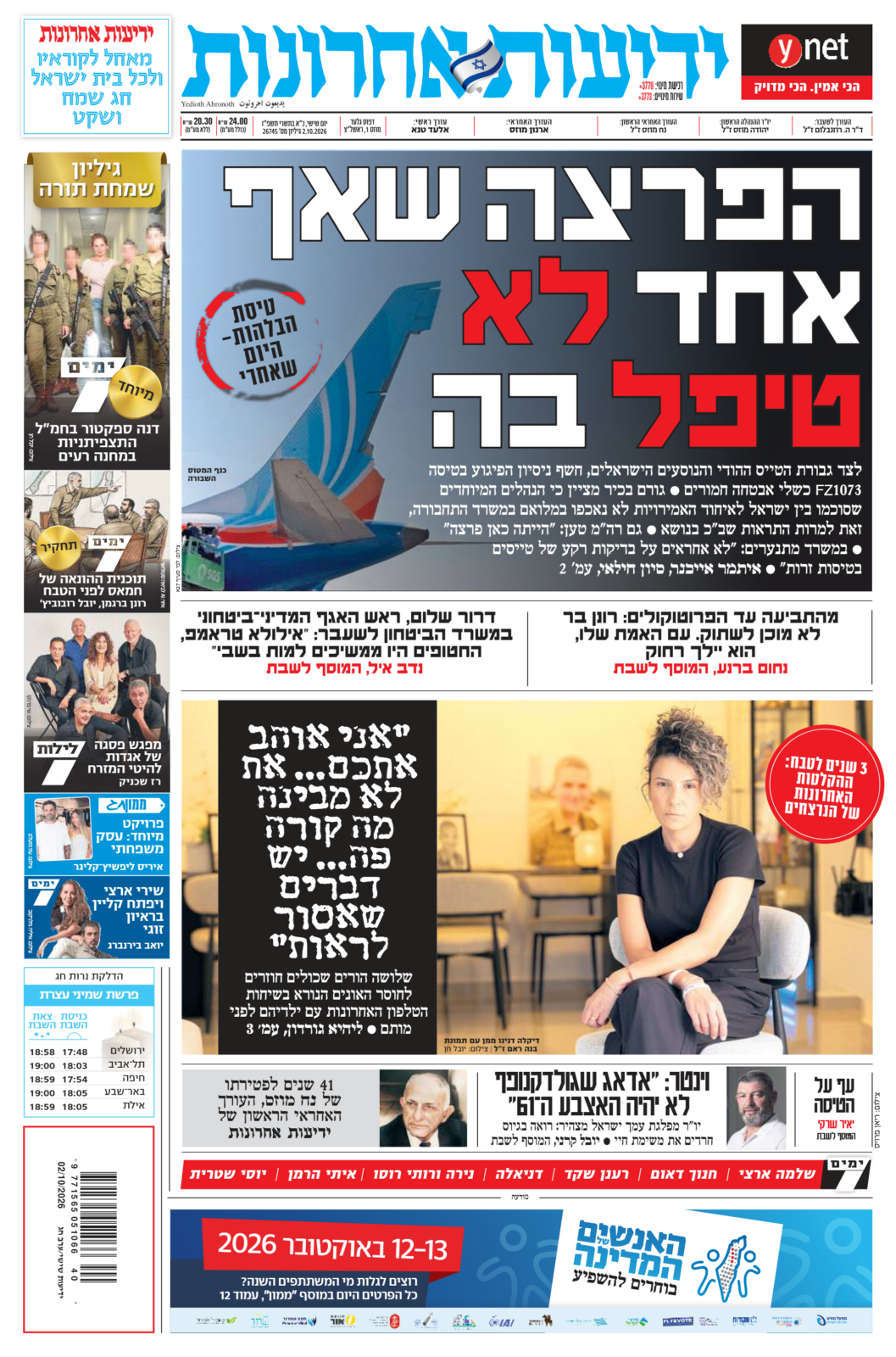
It was the greatest story of the year, with all elements of a true thriller: drama in the skies, international intrigue, a near tragedy, miraculous ending and, most important, a bunch of ordinary guys who saved the day.
That is the story of the FlyDubai flight from Abu Dhabi to Tel Aviv that was nearly hijacked by its Omani co-pilot, who stabbed the captain and turned the plane nose down to the ground, trying to crash it with all its Israel-bound passengers. Seconds before tragedy, the bravery of a few saved the lives of many: An Indian pilot who, though severely injured, managed to open the cockpit door; an Israeli plumber who rushed in and subdued the attacker, then pushed the stick upwards, as he had seen on a Netflix plane crash show; a businessman who used his earphone cable to tie the attacker down; a dentist heading to the front of the plane to save the life of the bleeding captain; and two alternate crew members who swooped in to land the plane safely in Saudi Arabia, without even having time to sit down behind the stick.
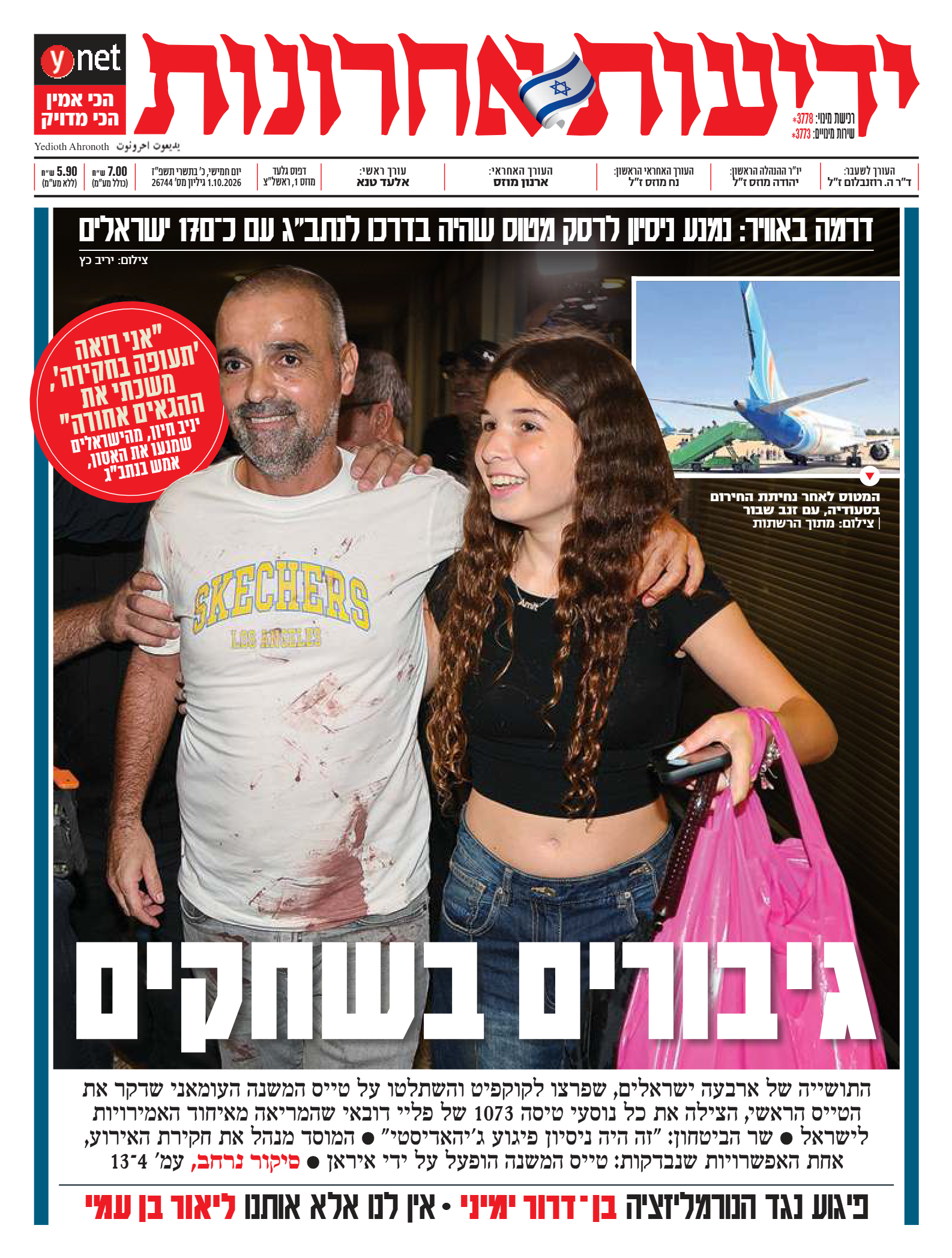
“Heroes in the sky,” read the Yediot Aharonot headline. Starring in the front- page photo was Yaniv Hayun, the plumber, as he stepped off the plane in his bloodied shirt.
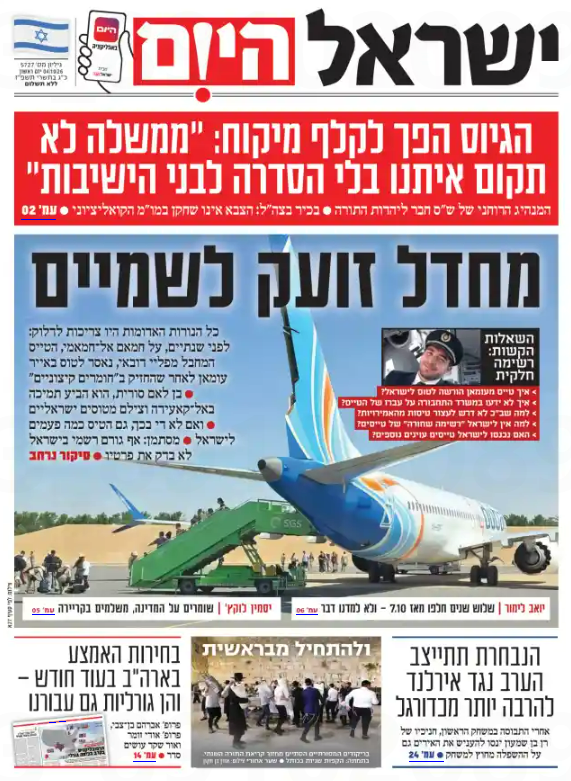
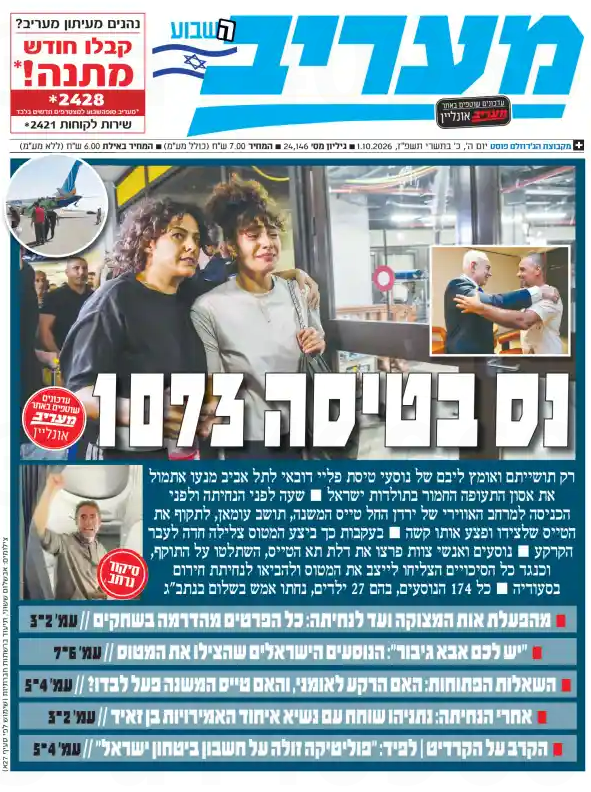
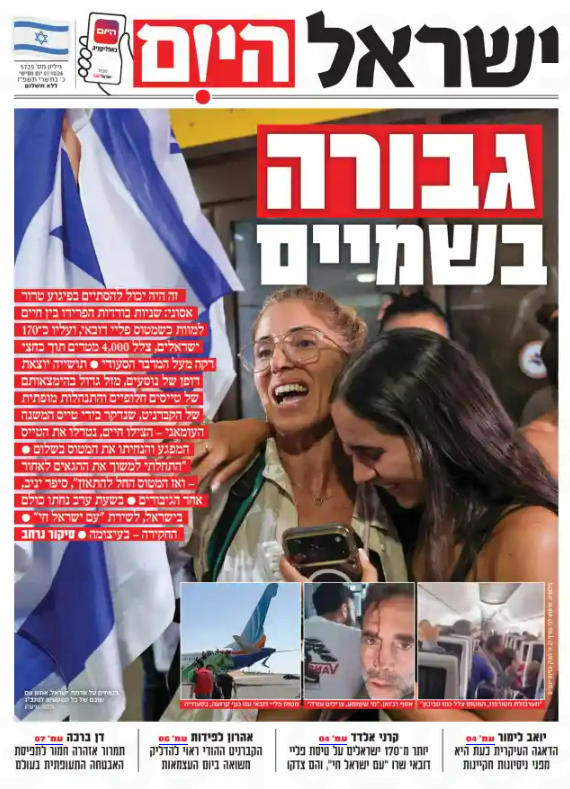
“A miracle on flight 1072” was Maariv’s front-page headline, which was fully devoted to coverage of the near disaster. Israel Hayom went with “Bravery in the skies” above a front-page opinion piece stating that “170 Israelis sang ‘Am Yisrael Chai’ when they landed, and they were right.’”
Haaretz, ever the killjoy, stuck to the fact: “An attempted attack on flight from Dubai to Israel. Co-pilot stabbed the captain, passengers subdued the attacker and prevented a crash,” the paper’s top headline dryly stated.
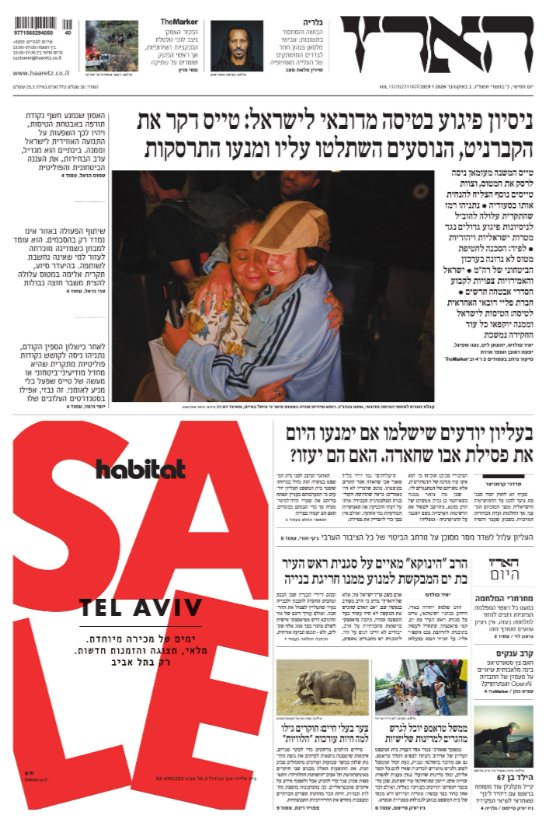
On the ground, an army of reporters awaited the plane, allowing passengers to share the story of their midair horror with the world. The heroes were rushed from one TV studio to another, repeating time and again details of their unbelievable actions.
But a day later, it became clear that alongside acts of amazing bravery, there was also a display of unimaginable negligence and ineptitude on the part of all government agencies that were entrusted with preventing exactly these types of scenarios.
The media’s tone changed.
“The loophole that nobody took care of,” read Yediot Aharonot’s headline of its widely circulated Friday edition. By Sunday, even government-friendly Israel Hayom chimed in: “An outrageous oversight” was the paper’s choice for its lead. “All the red lights should have flashed.”