
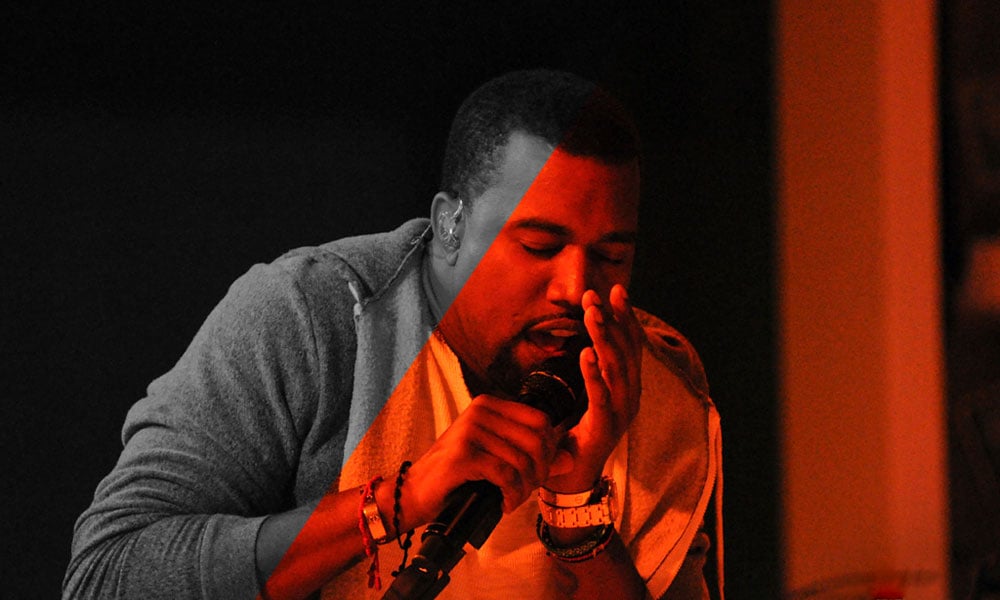
When I told my cousin I had listened to the new Kanye West album, BULLY, he was surprised. Ye is a no-go for many Jews who were, not without reason, put off by the rapper’s years of antisemitic words and actions, which include saying on Alex Jones’s podcast that he loved Hitler, selling $20 swastika shirts and releasing a song titled “Heil Hitler.”
But can you blame me for being curious? The once-legendary rapper’s first solo album in four years was sure to comment, even vaguely, on what had happened during that time—epecially after he took out a full-page ad in The Wall Street Journal in January, disavowing antisemitism and apologizing to “those I hurt,” blaming his bipolar disorder and dissociation from reality on a car crash that broke his jaw and injured his brain.
BULLY gets to it pretty quickly. “This that feelin’ we need more of,” he says on “KING,” the buzzing, industrial opening track, “The hatin’ just brought me more love.” He flippantly comments on his wife and his image and about losing both business deals and friendships, offering an indirect explanation for his behavior: “Guarantee my vices different than yours was / Drunk off power and I was pourin’ up.” The fame, he seems to say, made him crazy.
[Read: “It’s Time to Talk about Kanye West’s Antisemitism Again”]
It’s a weak justification of his long list of intolerable actions that surely won’t absolve him completely—as well as his threats against Jewish people, he’s said that slavery was “a choice,” defended both Bill Cosby and Sean “Diddy” Combs (the latter, he alleged, was being controlled by Jews), and wore a White Lives Matter shirt at Paris Fashion Week. BULLY, stylized in all caps, seems less of an album and more of a method to clear the air, a necessary step to get onto bigger and better things—the insincere “I’m sorry” a teacher makes you say to another kid whose feelings you hurt.
The weakest moments on BULLY paint Ye as a victim of persecution, not someone worthy of blame. And while it would be interesting to think about how the crash and subsequent mental issues entrenched himself in delusion, he seems to have a narrow view of how he got to this point: “When a masterpiece turn into catastrophe / They get mad at me for livin’ out my fantasies,” he raps on the title track. On “I CAN’T WAIT,” he suggests he was punished for getting closer to the truth, that the conspiracy is still awaiting discovery for those who seek. “They hatе to see the system actually figured out / Thеy want you caught up in distraction, fear, and doubt,” he says against a bizarre sample of The Supremes’ “You Can’t Hurry Love.” “Lot of pain, lot of hurt, but still, could’ve been worse,” he says elsewhere. Listening to the album completely stripped of context, you might even think he’s a wronged man. Returning to the furious beats of Yeezus (2013) or his chopped and pitched samples of his early albums is a placating distraction from his broad excuses (when he tries to make them, at least).
After the flimsy attempts to clear his name, it’s obvious Ye would like to move on. “They wanna back and forth, I’d rather not,” he sings on the smooth “WHATEVER WORKS,” the title almost an admission (whatever works to get you through this, I suppose). Other times, reinvention is as easy as a New Year’s resolution: “Bye-bye to my old self / Wake up to the new me,” he sings on the otherwise propulsive “FATHER.”

But it might not be so easy to simply become a new person. Ye’s baggage has followed him to BULLY, and it looks like it may linger past the album’s shelf life, too. In The New Yorker, Kalefa Sanneh suggested that he might’ve gotten some help from AI to create some of the backing vocals (and maybe for the lyrics, too) a decade after his use of electronic synthesizers and auto-tune made 2008’s 80s & Heartbreak a roaring success. On Tuesday it was reported that his invitation to headline London’s three-day Wireless Festival was revoked after the British government barred Ye from entering the country on grounds of antisemitism, saying “his presence in the U.K. would not be conducive to the public good.” The festival was subsequently cancelled. And James Blake, a British musician who worked with Ye on some of BULLY’s tracks, asked for his credits to be removed as his influence on the final product was absent. Yet Blake stressed it was solely a creative disagreement, and that it wasn’t personal.
These are big blowbacks to the record. But even so, anyone, I feel, can submit themselves fully to change if they work hard enough for it. Life is too long to remain the same forever. BULLY’s closer, “THIS ONE HERE,” is the most convincing application of this idea: “Kicked all the ego right out of the door / I’m going to work, babe, I’m going to work,” he sings on the chorus, holy voices surrounding him. Who knows if Ye is past the point of being absolved? It depends, he would suggest, on how you look at it. For his believers, the song is a rousing finale. For the skeptics, it’s a promise yet to be upheld.
(Top image credit: Jason Persse (CC BY-SA 2.0))