
Why My Play Didn’t Open in Chicago
Was I a victim of a newly hatched McCarthyism?
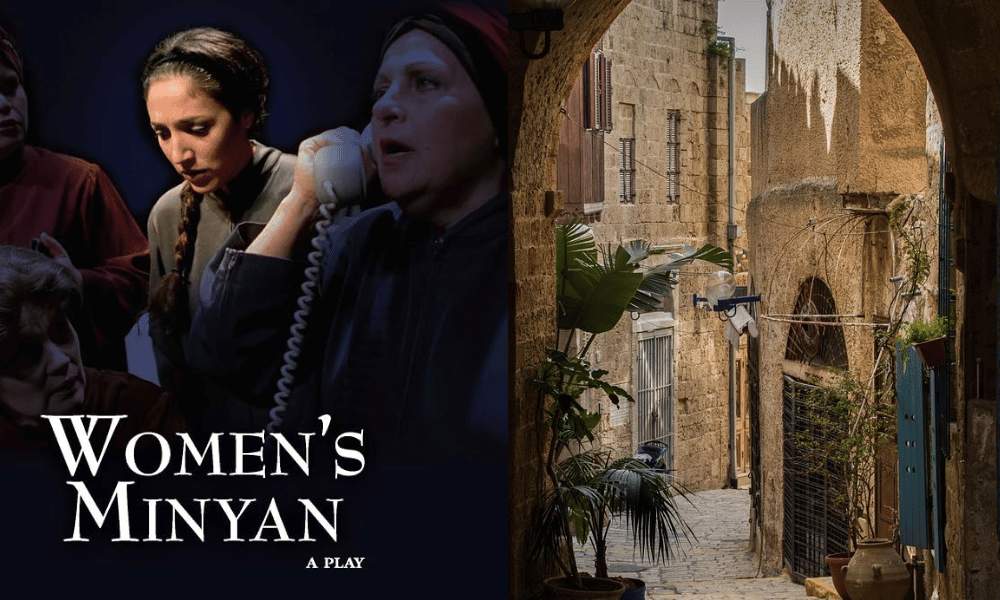
Back in July, I received an email from Elayne LeTraunik, head of Arts Judaica in Chicago, a tiny arts organization calling itself “the only Chicago area theatrical company which emphasizes Jewish history, culture and heritage on an ongoing basis.” She wanted to stage a few performances of my play Women’s Minyan.
A little background. Women’s Minyan was my first play, commissioned in 2000 by Yaakov Agmon, legendary head of Habimah, Israel’s National Theatre, as part of an initiative to encourage successful Israeli novelists to write original plays.
Ordinarily, I might not have agreed. But just then I was involved with the troubles of a Haredi woman, a mother of ten, seeking a divorce from her sexually abusive and adulterous husband, who was the scion of a powerful religious dynasty. With the collusion of rabbinical courts, she had been forcibly separated from her children, thrown out of her home and put in physical jeopardy by a “modesty patrol” trying to force her to shut up and go home.
I had seen her on television, after thugs broke the arm of the woman sheltering her, and had invited her to my home to discuss what I could do to help. She wanted me to write a book. But I was reluctant, having already written one about domestic abuse—Jepthe’s Daughter, in 1990. Then I suddenly realized it would be great material for a play. By revealing the truth of domestic abuse, not only among Haredim but in all patriarchal societies, it could be a powerful catalyst for change.
It was not a “Zionist” play. Au contraire. It was very critical of a particular segment of Israeli society. And it had nothing whatsoever to do with political agendas, or with the Arab-Israeli conflict.
When Women’s Minyan premiered in 2002, it was an immediate success, encouraging a renewed dialogue concerning women’s rights. It played in Israel for two years and was revived in 2022, where it again had great success. The play was also produced in Buenos Aires and various places in the United States, including a production in New York in 2011 directed by Tovah Feldshuh, where Ally Sheedy played the lead, Chanah, and Amy Stiller (Ben’s sister) played Chanah’s sister Gitte Leah.
This July, I told Elayne she could stage the play, and on October 1, 2026, she wrote me that she planned 13 performances in March 2027. But on October 5, I received the following email:
Naomi, I must sadly withdraw my intent to do the show. People were seeing you were a pro-Zionist Jew/Israeli and I was bombarded with actors, directors and designers who were actually afraid that doing a show with you as playwright would hurt their careers. I never have faced this before and I was stunned about all the accusations of ‘genocide’ flying around. As someone born the same time as Israel, we all raised money to plant trees, etc. In the past I have done plays about suicide bombers and never had a peep from anyone. This world is getting insane.
Perhaps once all this dies down (if it ever does) I will try again. I am so sorry. Elayne.
My response was Wow. Germany in 1938. Stay safe.
Later, I asked her what would happen if she fought back, finding actors, directors and designers willing to cooperate, perhaps enlisting the support of the Jewish community. She was close to 80, she responded, and “my theater is tiny and a lot of the funds have come from my small savings. I simply feel I don’t have the strength to keep going.”
Truly, I understood.
When I decided to publicize Elayne’s letter on Facebook to show the frightening inroads made by the “Free Palestine” Islamists and fascists into the American cultural scene, more than 80,000 people viewed the post, and hundreds responded with outrage and indignation. But there were some Jews albeit a tiny minority—who said that they understood and could sympathize with those refusing to participate. After all, I was a supporter of Bibi Netanyahu and a right-winger who wrote a weekly online diary about the war in Gaza that supported the Israeli narrative.
Was I a victim of a newly hatched McCarthyism, I wondered? Would I now be canceled for my political views, even if my creative work was unconnected to them in any way? And how was it that Jewish “progressives” were the new advocates of this kind of cultural censorship?
I don’t know the answer to that. What I do know is that if I let those considerations stop me from expressing myself freely, I will have succumbed to the same forces my country and my people have sacrificed so much to oppose and defeat. For a grandmother of Israeli soldiers now on active duty with the IDF and in the reserve units, that is never going to happen.
My conversation with Elayne ended with this post from her:
As a student of history, especially the Holocaust, I am terrified of how things are going. Jews being attacked for everything. It is exactly what the Nazis did. The people who say how could the Holocaust have happened are the ones doing it again.
Oh, Elayne, I agree. So dangerous. And so very sad.
Naomi Ragen is a novelist and playwright who lives in Zichron Yakov, Israel.
(Top image credit:Yochi Rappeport, CC BY-SA 4.0)