

A carefully saved photograph can become a mystery when nobody remembers the faces. That gap between keeping something and preserving its meaning raises a question: what should remain of a life, and what will those remnants tell the people who inherit them?
Choosing a legacy to keep and preserve can sound like a task for later, somewhere between retirement and clearing out cupboards. Yet family history takes shape in ordinary moments: the story repeated over dinner, the recipe brought out for a celebration, the possession nobody can quite explain.
With memories scattered across drawers, phones, and old albums, the question isn’t simply what deserves storage. It’s what deserves to remain understandable, and whose understanding might otherwise disappear before anyone thinks to record it.
The Short Answer: Legacy Is a Record of Values
Leaving a legacy is less about how many things survive us than about what we deliberately choose to carry forward. Those choices show future generations what mattered to us.
A good legacy combines three layers: tangible possessions, such as heirlooms, photographs, and a financial legacy; documented family stories and family history; and lived values, life lessons, and traditions. Together, they preserve more than belongings. They help explain the person behind them.
Your legacy in your family is already forming through daily habits, the experiences you discuss, and the practices you share. Teaching a skill or explaining a difficult decision passes experience onward without waiting for an inheritance.
That makes preservation a question of meaning as well as storage. A saved object needs enough context for someone else to understand why it received your attention. Otherwise, the possession may survive while its significance disappears.
The sections that follow approach objects, stories, and safeguards through that distinction. What connects them is deliberate choice: deciding what deserves to remain understandable, rather than leaving every decision to whoever eventually clears the house.
The Objects We Keep and the Stories They Need
An object’s significance rests partly in who owned it, when it entered the family, and why someone kept it. Without that context, a grandmother’s ring remains a ring, but its meaning stays out of reach.
Why Heirlooms Lose Meaning Without Their Stories
Family photos make this distinction clear. Six people outside a house may be unidentifiable to descendants. Names, approximate dates, places, and the identity of whoever supplied those details make the image interpretable.
Similarly, family recipes need more than ingredients. A note about the uncle who prepared a dish every winter explains its place in family life. His handwritten substitution or serving suggestion belongs alongside it.
A short provenance note records who owned a family heirloom, where it came from, and why it mattered. Labels such as “probably” or “recalled by” keep uncertain details from becoming facts through repetition.
Silver Eagle Coins as Keepsakes With Two Kinds of Value
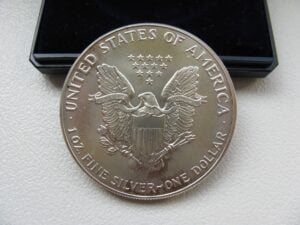
The American Silver Eagle, the U.S. Mint’s flagship one-ounce bullion piece, might mark a birth or graduation, combining personal meaning with material value. The occasion becomes part of its provenance alongside its place in a financial legacy.
Silver Eagle coins passed down as a collection need that same explanation. A note naming the original collector, why the collection began, and the occasions attached to particular pieces gives heirs more than an unexplained box of metal. It preserves family stories without assuming every recipient shares the collector’s interest.
Passing Down What Cannot Be Held
Patience, generosity, and resourcefulness don’t arrive in a labeled box. Like the meaning attached to heirlooms, these qualities need expression through accounts of past choices and experiences shared together.
Writing an Ethical Will for Your Values
An ethical will is a personal letter or document about beliefs, regrets, hopes, and life lessons, separate from a legal will. It explains what shaped someone’s judgment, what changed their mind, and what they hope will endure.
Specific experiences give it substance. “What I learned the hard way” can introduce a mistake and its consequences. “What I hope the family keeps doing” can explain why a modest annual gathering mattered more than an elaborate celebration.
There is room for imperfection, too. An account of an apology offers descendants more than a claim that kindness was always important.
Living Your Legacy While You Are Still Here
You can have a legacy while still alive. Teaching skills, maintaining family traditions, and explaining difficult decisions pass experience onward in real time.
Audio and video recordings preserve voice, expression, and personality. An ordinary working day’s story can reveal details absent from a formal life summary.
Gabrielle Oettingen’s WOOP framework (Wish, Outcome, Obstacles, Plan) offers a brief structure for arranging a recording. A wish to capture a relative’s stories becomes a plan tied to a visit, with a charged recorder ready before the conversation begins.
How to Protect a Legacy So It Lasts
Protecting a legacy means protecting both its condition and its context. Future generations need access to surviving material and enough explanation to recognize what it is and why it was saved.
Physical Safeguards for Objects and Papers
Store photos and documents in acid-free boxes, sleeves, and folders in a cool, dry, dark interior space, rather than an attic or basement. Put labels on enclosures, not across original documents.
Coins and metal heirlooms need appropriate storage. Original protective holders or inert capsules protect coins from repeated handling; handling by the edges avoids touching their faces. Keep provenance notes nearby, not against the objects.
An inventory connects items with descriptions and locations. “Wedding photograph, labeled envelope, bedroom cupboard” is more useful than “old pictures somewhere upstairs.”
Digital Backups and Documented Wishes
Scans need an equally clear home. Google Photos can hold photographs, while Google Drive groups scans, transcripts, and notes. A separate external drive provides another copy outside the same account.
Filenames should identify subjects and approximate dates, not automatic image numbers. A family tree on Ancestry.com connects names and relationships; accompanying notes distinguish documented information from recollection.
Written wishes identify intended recipients and explain attachments. They can accompany estate documents without replacing them: explaining why a clock belongs with a relative preserves meaning, while formal arrangements require separate care.
What Your Choices Will Say to Those Who Follow
A good legacy isn’t measured by the number of boxes left behind. It combines deliberately chosen objects, documented stories, and values made visible through everyday conduct. Within a family, that legacy is already forming through what receives attention, what gets explained, and what people continue to practice together.
Leaving a legacy doesn’t require every possession or memory to survive. It requires enough context for future generations to understand the choices represented by what remains.
A labeled photograph, an honest account of a mistake, or a familiar meal prepared together carries a particular message. Each says that something mattered enough to be shared, not merely stored.