
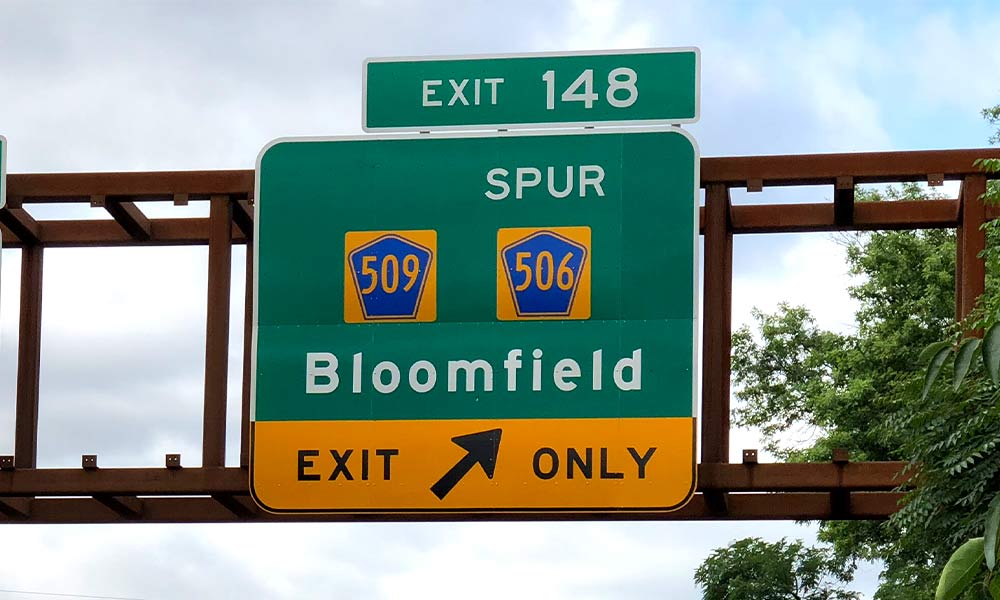
In late June, neo-Nazi hate music erupted in suburban Bloomfield, NJ. It took the form of a “black metal” revue called Vengeance Fest VII and unfolded at a rented Veterans of Foreign Wars (VFW) social hall just two miles from my home.
The Southern Poverty Law Center (SPLC) has identified the organizer of the June 27 multiband event, KEP Productions, as a central figure in a fringe “hate music” scene that exists across the country and promotes fascist ideology in their thrashing, high-volume performances. An estimated 300 people reportedly attended Vengeance Fest VII in Bloomfield after a venue in the nearby town of Garfield backed out in response to local outrage.
In images of the event posted on social media, attendees wear shirts of the neo-Nazi band Skrewdriver and do Nazi salutes, according to an article published at Idavox, the news site of the anti-fascist group One People’s Project based in New Brunswick, NJ.
Institutions must educate citizens about how to distinguish mere ear-splitting distortion from entertainment that encourages people to despise one another.
The Bloomfield Police Department got wind of the festival as it was happening and sent officers to investigate but took no action after the organizer “denied claims of any Nazi or white supremacist affiliation,” according to a statement from Police Chief George Ricci.
The vast majority of area residents didn’t know about Vengeance Fest VII until after it was over. Several people rose at a Bloomfield Town Council meeting on July 13 to lodge impassioned condemnations. Earlier, Mayor Jenny Mundell had issued a statement saying that the town “unequivocally rejects hatred, discrimination, racism, antisemitism, extremism and any ideology that conflicts with our values of inclusion, dignity and respect for all people.”
But at the council meeting, legislators seemed flummoxed as to what the town could have done about such an event, because it was held on private property. The local VFW quartermaster said he didn’t know about the festival’s white supremacist theme or about the prior cancellation in Garfield.
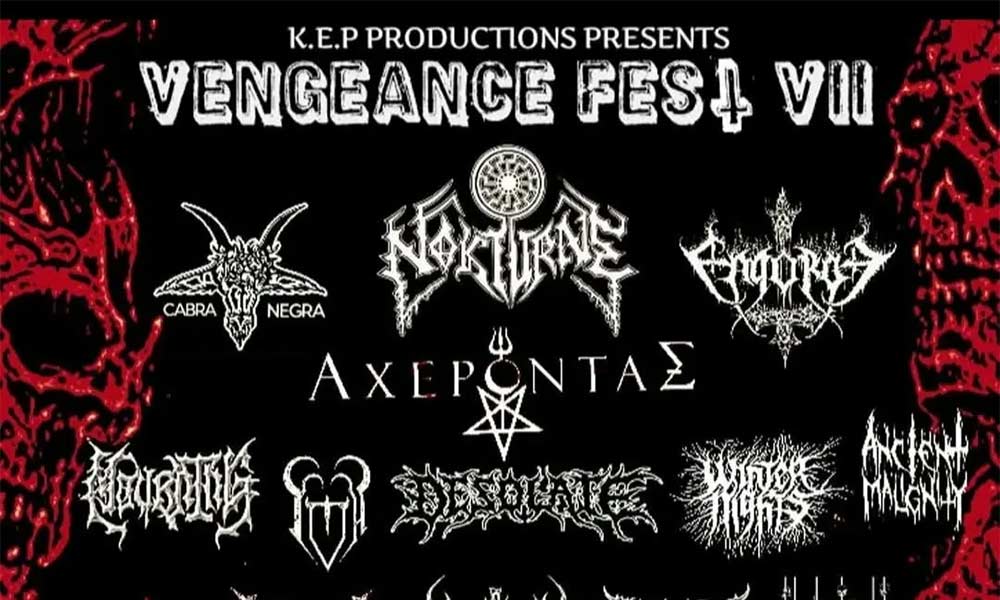
Poster advertising the June 27, 2026, show in Bloomfield, NJ.
“Hate music” is cacophonous music with lyrics characterized by themes of bigotry and/or white nationalism. It isn’t new, but I never considered it could crop up in my seemingly placid precinct, where, by the way, the mayor and town council are all Democrats and our U.S. congresswoman, Analilia Mejia, is a progressive Democrat endorsed by J Street. Our rabbi, Marc Katz of Temple Ner Tamid, wrote in an email to the congregation, “Like many of you, I am horrified that this event took place down the street.”
“Hate of this kind has no place anywhere,” he added, “but around the block from our synagogue makes it all the worse.”
What to make of all this? I believe that the xenophobic bigotry amplified on a daily basis by the Trump administration emboldens hateful actors like KEP Productions and fans of its events, bringing them out of the shadows even in towns like mine. American Jews, in particular, should observe the ripple effects of Trump’s white supremacism, as illustrated by his whipping up hatred of immigrants from what he calls “shithole countries” like Haiti and Somalia—outsiders whom he accuses of “poisoning the blood” of Americans. When the president of the nation speaks like that—and posts images of hijab-clad Muslim schoolchildren of Somali descent designed to elicit animosity from his followers on Truth Social—Jews should assume, based on history, that we, too, risk becoming targets of official oppression.
In this context, it’s worth knowing more about hate music and who brought it to Bloomfield.
The SPLC, based in Montgomery, AL, has tracked white supremacist advocates—and sometimes taken them to court—for decades. The center notes that the extreme subgenre of black metal (which is itself a subgenre of heavy metal) known as National Socialist black metal, or NSBM, had its roots in the 1980s British skinhead movement and spread among hardcore racists worldwide. By the 1990s, it had grown into a cottage industry generating millions of dollars from performances and recordings.
NSBM bands of note have included Aryan Blood, Der Stürmer, Gestapo SS, Gestapo 666 and Reich of the Black Sun. Song titles are no less subtle, e.g., “Reich Machine” and “Aryan Fury.” Lyrics can be obscure or quite direct, such as these from Black Magick SS: “We chant heil the Führer, mein Führer, king of truth. Beware the Aryan race.”
While the production and performance of hate music typically takes place outside of the mainstream, digital communication has made it more accessible. In 2022, the Anti-Defamation League (ADL) published a report identifying 40 white supremacist artists with a presence on Spotify, the world’s largest music streaming platform. “Music has long been an effective way to radicalize extremists, allowing artists to both entertain and indoctrinate vulnerable listeners,” the ADL noted. The watchdog group criticized Spotify for not filtering out such content from its privately owned platform.
The SPLC likewise identifies Spotify as a vehicle for spreading hate music but points out that to avoid being blocked by mainstream platforms, “many hate music labels also use such platforms as Telegram, Odysee and eBay to distribute their content.” In its most recent online update on hate music, the SPLC says that in 2025, KEP Productions, the group that put on the Bloomfield show, “played a central role in the racist music scene…significantly increasing its activity and visibility.”
The man behind KEP, Kyle Powell, is himself a member of a band called Engorge. In 2025, “KEP Productions sponsored multiple shows at local bars and music halls, while Powell and Engorge appeared at festivals and concerts across the country, helping keep a live network of hate music events intact,” the SPLC reports. Engorge’s 2024 album Semen Inis Uteruus Infernus includes the track “Awash in Holocaustic Ire.” A photo of Powell published at Idavox shows him posing in a black T-shirt that appears to bear an image of the Auschwitz death camp above the words “Refugees Welcome.”
A Newark native, Powell says in interviews that he does not promote Nazism or any other hateful ideology. But a Facebook promotion for a May 2025 KEP Productions show in Ontario, CA, includes the line, “ACHTUNG!! WE DEMAND YOU ATTEND!!”
Interviewed recently by the Bergen Record, Powell complained that the U.S. political climate has become “very woke.” He told the news outlet that he’s not racist or antisemitic. “I’m not trying to invoke hate or piss anyone off,” he said. “If you don’t wanna come, don’t come.” He added: “I was born and raised in this state, and it was never like this before. People who don’t even know me have made it a point to disrupt what I’m doing.” His aim as a producer, he told the Record, is to put on shows “where it’s all about music. We have upwards of 20 bands, and we get 250-300 people of all ages and of every ethnic background who come from all over the country.”
In an echo of President Trump’s obsession with his predecessor, Powell said that he “started having problems once President Obama was elected. People’s levels of sensitivity changed, and we had the rise of antifa…people get triggered over nothing.” But some familiar with this ugly corner of the music scene know better.
Not all black metal is racist. NSBM occupies only a small subset of black metal, and some of its practitioners don’t want to be associated with KEP Productions. At least one band announced on social media that it was pulling out of Vengeance Fest VII. “We want zero affiliation or association with any ideals of such nature, and certainly do not support or condone the spread of hate or racism in any form,” wrote Josh Hammond of the New Jersey-based black metal group Mourning.

To combat hate music, institutions from the White House to local city halls must condemn it and educate the citizenry about the distinction between ear-splitting distortion that’s merely a perplexing form of entertainment and that which encourages people to despise one another. Here in Bloomfield, Mayor Mundell has promised to bring the issue to an interfaith council of clergy—and that’s fine, although the congregants who listen to those clergy don’t seem to me the kind of people likely to consider attending or hosting the next Vengeance Fest.
The single most powerful change we can collectively accomplish, of course—not a comprehensive solution, but a start—is to replace a national and world leader who bases his political brand on hatred of the vulnerable with one who, like Abraham Lincoln, appeals to “the better angels of our nature.”
Paul Barrett, a former journalist with The Wall Street Journal and Bloomberg Businessweek magazine, is currently an adjunct professor at the NYU School of Law.
Opening image credit: Famartin (CC BY-SA 4.0)