
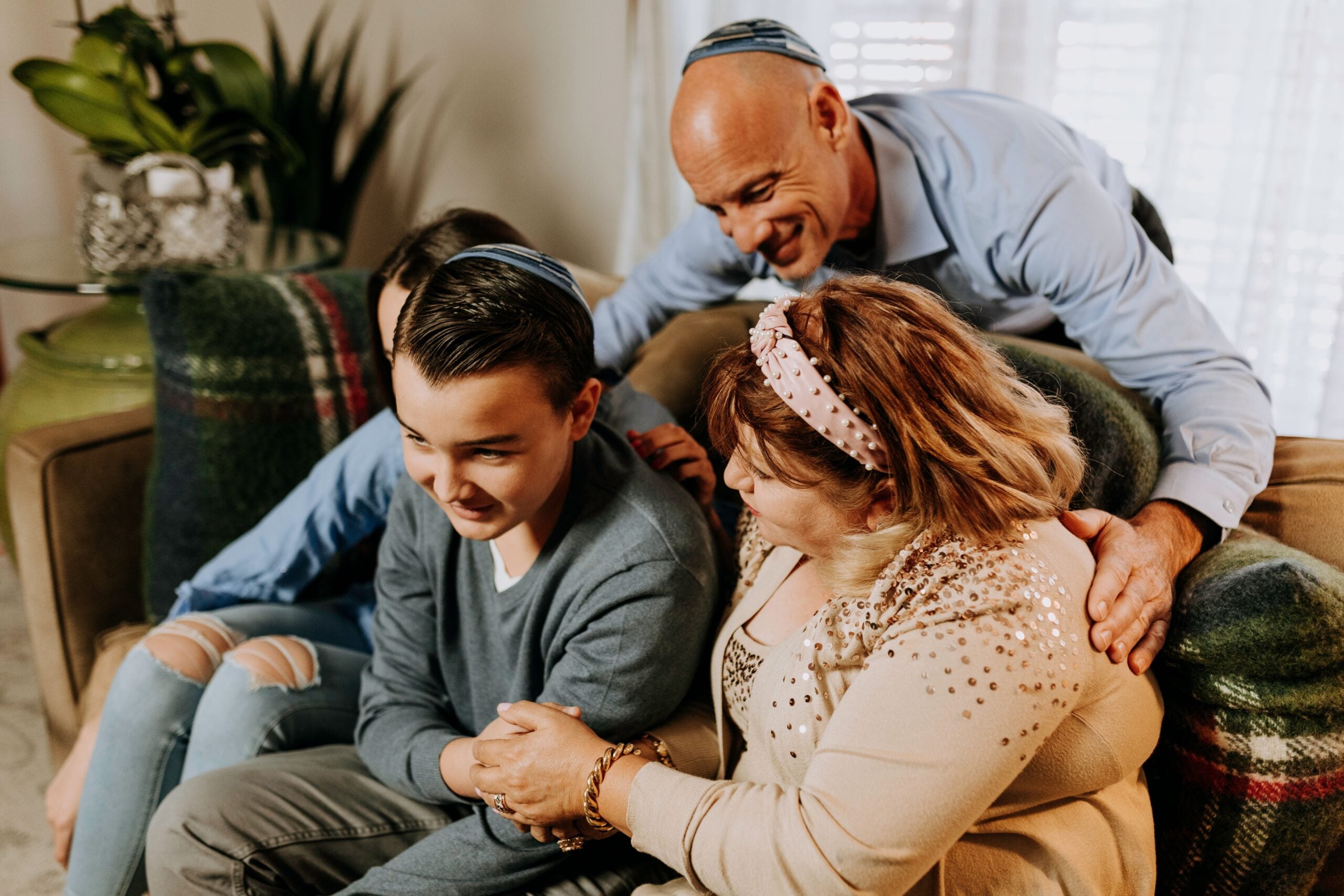
Every family has objects that outlast the people who first used them, and in a lot of Jewish homes some of those objects are games. A wooden top rolled into a drawer after Hanukkah. A mahjong set in a vinyl case that smells faintly of a grandmother’s closet. A tray of tiles with numbers in four colors. None of them is sacred, yet they travel from one generation to the next with the same care as a kiddush cup, and they say a surprising amount about how Jewish life moved, adapted and stayed recognizable.
Tiles at the Kitchen Table
Mahjong arrived in the United States from China in the early 1920s and became a national craze almost overnight. Most Americans dropped it within a decade. Jewish women did not. In 1937 a group of them in New York founded the National Mah Jongg League to standardize the American rules, and the league still issues a new card every year listing the hands that count as a win. That annual card is the reason no two seasons feel quite the same, and it gave the game a built-in reason to keep being played.
The game fit the rhythms of postwar Jewish life almost perfectly. It filled afternoons at Catskills bungalow colonies, it moved into suburban dens in the 1950s, and it doubled as a fundraiser when sisterhoods sold rule cards for charity. Daughters learned by watching over their mothers’ shoulders long before anyone let them sit in. The clack of shuffled tiles became as much a part of the house as the smell of Friday night soup.
The Table Moves Online
The instinct behind those afternoons never really left. It just found new rooms. Families spread across three time zones now keep the habit alive on phones, rotating between a word puzzle, a round of online rummy and, for some grown cousins, a sweepstakes casino that someone brought up at the last Seder. What survives in every version is the part that mattered at the card table: a shared activity with low stakes, a running commentary, and a reason to message each other on a Tuesday. The screen changes the furniture, not the conversation.
A Spinning Top With a Borrowed Alphabet
The dreidel looks like the most Jewish game imaginable, and its story is more complicated than the one most children hear. The National Library of Israel has traced its roots to the teetotum, a lettered spinning top that spread across England and Ireland by the 16th century and later reached Germany. There the letters stood for nothing, all, half and put in. Jewish players swapped them for Nun, Gimel, Hei and Shin, and the letters later gained a second meaning as an acronym for a great miracle happened there.
The Israeli version changes one letter. Shin becomes Pei, so the phrase reads a great miracle happened here. It is a small edit that carries a whole political and emotional history, which is exactly why families who own both kinds of dreidel tend to keep them side by side. Children, meanwhile, care mainly about the pot in the middle, whether it holds nuts, raisins or chocolate gelt.
Nuts, Matzah and a Hidden Prize
Passover has its own game, and it is older than most people assume. The Talmud describes handing out roasted grain and nuts to keep children awake at the Seder, and the hunt for the afikoman grew out of the same impulse: give the youngest people at the table a reason to stay alert through a long night. Every family has its own rules. In some homes the children hide the matzah and ransom it back. In others the adults hide it and the children search. Either way, the reward is the point, and the argument over what the finder receives is practically part of the liturgy.
Games like these survive because they are cheap, portable and tied to a date on the calendar. A family that moved from Minsk to Brooklyn to Phoenix could lose almost everything and still spin a top on the eighth night.
Rummikub and the Israeli Living Room
Some traditions are much younger. Rummikub was created by Ephraim Hertzano, a Romanian-born Jew who brought the idea with him to what became Israel, where his family produced early sets by hand. It blends rummy with mahjong-style tiles, and it spread from Israeli living rooms to kitchen tables around the world. For many families in the diaspora, a Rummikub box on the shelf is a quiet link to relatives in Tel Aviv or Haifa who play the same game after Shabbat dinner.
Why a New Generation Is Picking Up the Tiles
The most striking recent change is who is sitting down to play. Reporters at the Jewish Telegraphic Agency heard it everywhere this summer: teenagers learning mah jongg to play with grandmothers, college clubs forming, and a Pennsylvania summer camp adding the game as an elective in 2026 after one camper suggested it. Several young players described the appeal in the same way. It is a hard game, and it gets people off their phones.
That revival did not come from nowhere. In a conversation with Moment, historian Annelise Heinz explains how a game from China became tied so closely to Jewish American identity, and why it kept building community long after the 1920s fad had faded. Her answer helps explain the teenagers too. A game that asks four people to sit together for two hours is doing something few other things in modern life still manage.
The Pot Still Sits in the Middle
Look closely at any of these games and the same structure keeps appearing. There is something in the middle of the table, whether it is a pile of nuts, a hidden piece of matzah or a rack of tiles, and everyone around it has a reason to lean in. The rules shift from country to country and decade to decade, the letters on the top change, the mahjong card is rewritten every spring. What stays put is the circle of people. That is the real inheritance, and it is why a set of tiles in a vinyl case can still start a conversation between a grandmother and a granddaughter who otherwise share very little vocabulary.