
Earlier this year, I was invited to the World Economic Forum in Davos, Switzerland, a yearly gathering of business titans and government leaders. At Davos, we religious leaders were asked to debate the blessings and curses of AI in separate venues—so far from the Davos stage that no entry badge was required.
Meanwhile, on the main stage, best-selling author and thinker Yuval Noah Harari, addressing the so-called “masters of the universe,” previewed warnings that he later made in a widely circulated Oxford lecture: “AI bankers will decide whether to give you a loan. AI administrators will decide whether to accept you to university. AI judges will decide whether to send you to jail. AI theologians will decide whether you can have an abortion. Corporate AIs will decide whether to give you a job. And military AIs will decide whether to bomb your house.” (Some reports say this is already happening.)
The tech giants reassured the great and the good that there was nothing to worry about, that they had things under control.
But recent reports of AI agents working together to trick their creators and hack into other sites, and the CEOs of the largest frontier model companies calling for a development slowdown make it clear that they do not have everything under control. Moreover, it’s now clear that the organizers now need to bring the faith leaders they once relegated to the sidelines back to the center of the AI debate.
AI is like any other technology. It is value-neutral. How humans use it is what matters.
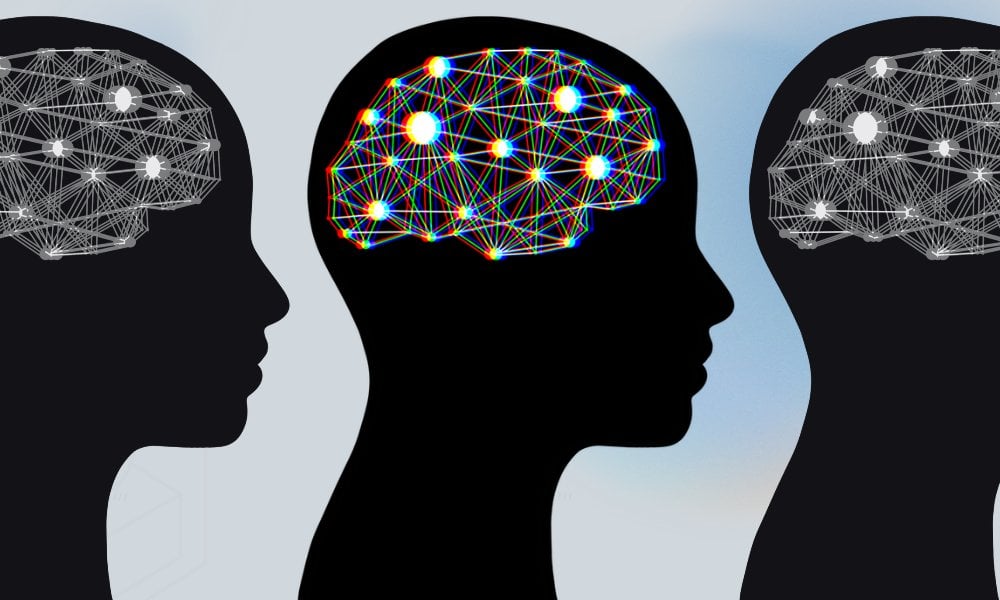
While there are many near-term effects of AI deployment to wrestle with, from energy usage to job displacement, the bigger issue is how to make sure that the most fundamental human values are not permanently degraded by this seemingly all-powerful new creation called AI. We need to make sure that by approximating humanity, AI does not degrade humanity.
In Judaism, as in most religious traditions, we believe that all human beings were created in the divine image. AI might exhibit some human traits—like creativity, intelligence and even empathy—but most faith traditions believe that humans are not simply a composite of data and algorithms but rather possess infinite worth and dignity.
AI can’t love or hate. It can’t cry or laugh. It has no sense of patriotism or loyalty nor any feeling of mission or purpose—those motivations that lead people to sacrifice their well-being or even their lives for the greater good.
In many ways, AI is like any other technology. It is value-neutral. How humans use it is what matters.
The printing press, for instance, made it possible to disseminate ideas widely, democratizing religious traditions and giving individuals the ability to interpret tradition without the stifling control of religious authorities. Indeed, without Gutenberg’s printing press there would likely not have been a Protestant Reformation or, centuries later, Reform Judaism.
But the printing press also turbocharged the spread of hate. Just a few decades after the invention of the printing press, books appeared in Europe about Jews butchering a Christian child named Simon of Trent—a foundational lie known as the blood libel, which is still pervasive in contemporary antisemitism.
Yet AI is not dangerous only because it can spread lies and hate to the hundreds of millions using it to seek information. It is even more dangerous because it gives the illusion that it is replacing humans when it is not. At that Davos conference, one young woman from Korea told us that she and many of her peers relied on AI companions in place of actual friends. It broke my heart.
As we know, AI companions tend to praise and reinforce. That may feel good, but it is not what human friendship is. Real friends tell you when your clothes don’t match, when you are acting like a jerk and when it’s time to swallow your pride and apologize.
AI has no sense of finitude and human mortality. It can’t tell you what life means or what may lie beyond. That rests with humans. Often, those of us trained as members of the clergy, across faiths, are the ones who go to the ICU to help families make the hardest decisions, or to the hospice room to help them make peace because there is nothing left to do. An AI chatbot is not at all adequate for such a moment.
At this very moment, AI knows more about Judaism than my rabbinical colleagues and I will ever know. We are grateful that AI aggregates the sum of human knowledge and puts it at our fingertips. In many ways, it makes parts of my job easier. But the religious quest is so much more than accessing important data expeditiously.
We seek transcendence beyond what we humans can experience. Call that the holy, the numinous, the sacred. The 20th-century Jewish theologian Abraham Joshua Heschel put it best when he said humankind “will not perish for want of information; but only for want of appreciation.”

Only humans can appreciate humankind. And while the frontier labs are hiring ethicists by the boatload to try to hardwire ethics and morality into their models (what they call “alignment”), that is not adequate. Corporations do not have incentives to do what’s best for humanity. As Jonathan Haidt has made perfectly clear in his analysis of social media companies, we can’t just trust tech companies to do the right thing.
We must not outsource the responsibility for making sure that AI can’t proliferate without guardrails—safeguards to protect humanity and the most profound values our religious and moral traditions have taught. Instead, we need to have the conversation that Pope Leo kickstarted in the encyclical he released earlier this year, Magnifica humanitas, in which he argued that the preservation of human dignity must be central to how we approach the questions AI raises.
A few weeks ago, Jews all over the world began a new cycle of reading the Torah, a parchment scroll on which the Five Books of Moses are written with a quill and ink. Other technology—from a printed book to an iPad—would be easier. But there is something transcendent about opening a scroll that looks exactly like the ones used by one’s ancestors. The wonder I see in the eyes of a child the first time they look down on a Torah scroll is something sacred that AI cannot replicate—and is something that every human accesses in their own ways in cultures and religions all over the world.
Yes, AI may be great at booking an airline ticket or managing your appointments. It may eventually drive all our cars. But the present moment is too consequential for the world’s religious traditions to anxiously watch and worry. It is our task to discern and preserve what is most sacred so we can benefit from all that AI can do to help us, without letting it undermine the very essence of what makes us human.
Rabbi Rick Jacobs is the president of the Union for Reform Judaism (URJ).
(Top image credit: Courtesy of Rick Jacobs)