
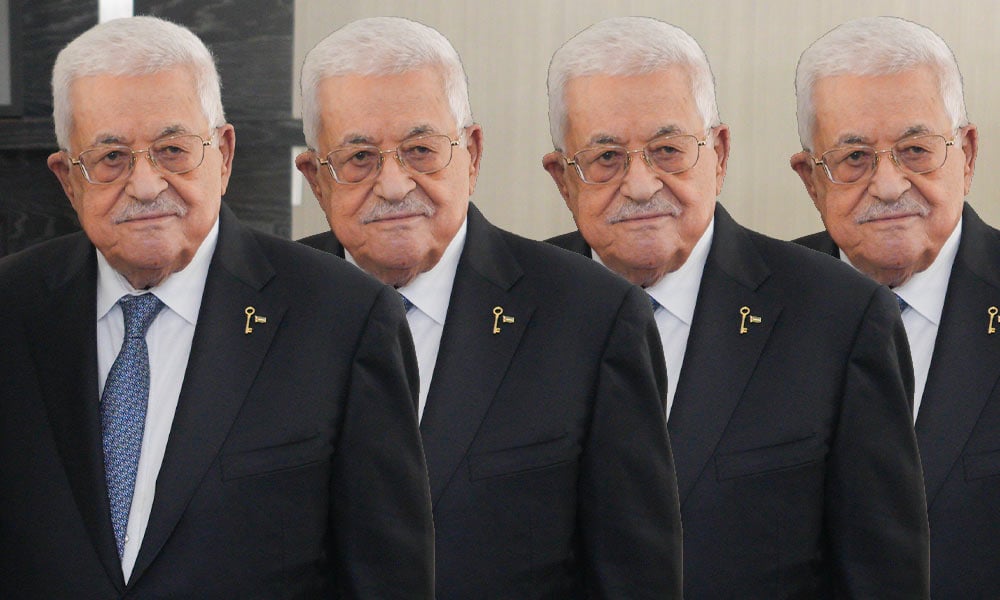
Palestinian Authority President Mahmoud Abbas has touted 2026 as the year Palestinian democracy will be revitalized with a series of elections. In February, he announced that Palestinian National Council (PNC) elections will take place November 1 and more recently confirmed that the Palestinian Authority presidential election will take place in early 2027.
While many Palestinians are skeptical that these elections will actually occur, their scheduling reflects an effort by Abbas to reassert his personal relevance and to insert the multiple institutions that he leads into the deliberations surrounding the future of Palestinians in Gaza and the West Bank, from which he has seemingly been marginalized. And by scheduling PNC elections for November 1, Abbas is positioning them between those of Israel, which must take place before October 27, and the November 5 midterm elections in the United States—two elections in which the condition of Palestinians will be directly or indirectly a factor.
The PNC is a legislative body, which is a core component of the Palestine Liberation Organization’s (PLO) institutional structure, but Palestinians have never voted directly for PNC members; instead, since the PLO’s founding in 1964, PNC members have been appointed through an opaque process involving consensus recommendations. By contrast, under the Oslo Accords, which led to the establishment of the Palestinian Authority (PA), Palestinians living in the West Bank, Gaza and East Jerusalem voted for a Palestine Legislative Council (PLC) in 1996 and again in 2006.
On June 2, Abbas ratified approval of the legal framework for the PNC elections. The PNC will include 200 elected members from the West Bank, Gaza and East Jerusalem with seats allocated through a territory-wide proportional representation system. In addition, 150 members will be elected from the Palestinian diaspora “where possible,” and the rest, as has been the case until now, will be “selected through an electoral assembly or by consensus among the components of the Palestinian community in that area.” The PNC elections will be administered by the PA’s Central Election Commission (CEC), which until now has been responsible for elections only within the Palestinian territories.
Holding elections would provide a much-needed sense of empowerment and demonstrate the democratic bona fides of the Palestinian cause.
Abbas’s June announcement follows the relatively successful conduct of Palestinian municipal elections. On April 25, Palestinians in 183 West Bank municipalities and villages and one Gaza municipality went to the polls to elect local council members, who are responsible for managing public services, local infrastructure and community development as defined by the Palestinian Local Authorities Law. Despite the continuing Israeli occupation, ongoing violence and a weakened PA, the elections were conducted in an administratively credible manner. While neither national issues nor national figures were prominent factors, the elections served as proof of concept for the feasibility of conducting future elections, even under less-than-ideal political circumstances.
The candidates were either affiliated with Fatah, long the dominant party in Palestinian society, or ran as independents; Hamas and several small parties declined to participate. The candidates competed primarily on local issues, including quality of municipal services such as road improvements and licensing of businesses. According to the CEC, 53 percent of eligible voters cast ballots in those municipalities where elections took place, which was consistent with the turnout in municipal elections in 2017 and 2022. The votes were quickly counted, the official results were announced soon after the polls closed, and those elected were duly recognized as members of the new municipal councils.
It’s significant that municipal elections were also conducted in Deir-al-Balah—the first such electoral exercise in Gaza since 2006. Given the massive destruction in Gaza during the past 30 months and the PA’s limited presence, holding this election was an administrative challenge. Ultimately, four lists competed in the election, and the turnout was 23 percent; however, the limited turnout may reflect more an out-of-date registry rather than a lack of interest.
Elections were always part of the international discourse surrounding the future of Palestine. The 1978 Israeli-Egyptian Camp David Accords included plans for the establishment of an elected self-governing authority in the West Bank and Gaza, but negotiations regarding its formation did not come to fruition. Ten years later, Israel sought to revive the idea of Palestinian elections as a way to create a local leadership distinct from the PLO, which at the time Israel refused to recognize.
Following the Oslo Accords and the formation of the PA, elections were held in 1996 for president—which Yasser Arafat won with 87 percent of the vote—and for a legislative council. As part of an effort at reforming PA institutions and to conform with international best practices, an independent election commission was established in 2002 and, after Arafat died in November 2004, the commission quickly organized presidential elections in January 2005, which Abbas, Arafat’s long-serving deputy, won with 65 percent of the vote.
The following year, legislative elections were held in which Hamas attained a majority of the seats in the PLC. Within a year, a mini civil war broke out between Hamas and Fatah in Gaza; Hamas ended up assuming full control of Gaza and the writ of the Abbas-controlled PA was now limited to the West Bank.
National elections were scheduled for May 2021 per negotiations between Fatah and Hamas, but Abbas postponed them indefinitely a month before they were to occur. The ostensible reason was the failure to obtain Israeli approval for the participation of Palestinians living in Jerusalem, although the general assumption was that Abbas feared that, given factional divisions within Fatah, Hamas would again emerge as the victor.
As part of Abbas’ effort to reenergize Palestinian institutions, the eighth Fatah general conference convened in May 2026, reelected Abbas as its leader and elected his son to the 18-person Fatah Central Committee. Notably, the leading vote-getter among the Central Committee members was Marwan Barghouti, who is serving multiple life sentences in an Israeli prison but remains popular among a broad swath of the Palestinian public.
On June 14, Abbas issued a new decree expanding the PLC to 200 members from its current 132 to correspond with the 200 members allocated to the Palestinian Territories for the PNC. The decree envisions the November 1 elections within the Palestinian Territories leading to the elections of individuals who would serve simultaneously as representatives of the PNC and PLC.
Public opinion surveys in both the West Bank and Gaza consistently show a strong Palestinian desire for national elections. Rami Hamdallah, the current head of the Central Election Commission, has indicated that the CEC is “prepared, technically capable and committed to transparency and fairness” in the conduct of national elections, whenever scheduled and for whatever institution. Nonetheless, Palestinians must consider five overriding questions as part of any electoral planning exercise.
First, can the expenses and diversion of attention associated with a full electoral exercise be justified given the many other needs Palestinians face in the West Bank and Gaza? Or conversely, would the failure to hold elections make it impossible to form a legitimate governing body to address those needs and to negotiate on behalf of the Palestinian people?
Second, assuming elections are deemed necessary to revitalize and legitimatize Palestinian leadership, is November 1 a realistic time frame? Election experts typically advocate for adequate time to revise the legal framework, to prepare voter lists, to nominate candidates and to allow for campaigning, which would suggest a timeline of more than six months. However, the need for a legitimized and revitalized Palestinian leadership may dictate an abbreviated schedule. And the actuarial reality of having a 90-year-old individual serving simultaneously as the leader of Fatah, the PA and the PLO inevitably requires planning for various succession scenarios with unpredictable schedules. The good news is that the CEC is seen as a credible and capable body by most Palestinians and, for many years, has been preparing to administer elections under different scenarios.
Third, are elections in Gaza logistically feasible? Located in Middle Gaza, Deir Al Balah was less impacted by the destruction that has made other Gazan cities and villages unlivable. A Gaza-wide exercise would inevitably require cooperation from both Israel, which controls all crossing points, and Hamas, which remains the primary security force in the areas of Gaza where 90-plus percent of the population lives.
Fourth, the eligibility criteria for submitting a party list or running as a candidate remain controversial. In 2006, the Israeli government advocated for excluding Hamas from the electoral process. The U.S. administration rejected the Israeli argument, believing that it was better to have Hamas within the legislative tent than outside acting as a spoiler. However, when Hamas won the election, the United States refused to engage with Hamas unless it renounced violence and accepted the Oslo framework.


Internally, Palestinians are divided over how to address this issue. Some fear that if the law bans specific actors, the process will lose legitimacy and reproduce a political system dominated by Fatah. Meanwhile, the rules governing the PNC elections require those competing “to abide by the political and national program of the PLO”; to date, Hamas has declined to make such a commitment. Regardless, in the lead-up to national elections, Palestinians will face enormous international pressure to exclude Hamas and other parties and individuals that do not renounce violence.
Fifth, figuring out how to enfranchise Palestinian residents of Jerusalem creates further complications. Post-October 7, it is hard to imagine Israel allowing any Palestinian voting in Jerusalem. Hence, to avoid Israel having a veto over whether the elections occur or not, Palestinians will have to rely on creative mechanisms to allow interested Palestinians living in Jerusalem to participate in the elections.
For both political and logistical reasons, many analysts are skeptical that the November 1 date will hold. And yet for the majority of Palestinians, both in the Palestinian territories and in the diaspora, who have never had an opportunity to vote in a Palestinian election, holding elections would provide a much-needed sense of empowerment and demonstrate the democratic bona fides of the Palestinian cause.
Larry Garber, currently a J Street Policy Fellow, is the former USAID West Bank/Gaza Mission Director and served as an observer for the 2005, 2006 and 2022 Palestinian elections.
(Top image credit: Official photograph of the Presidency of Colombia)
3 thoughts on “The Elections You Aren’t Thinking About”
Illuminating, Larry. I was heartened to hear about the prospect of elections, but your piece was a reminder of how challenging the current environment is
Excellent survey of the state of affairs.
Very insightful, thank you Larry.