
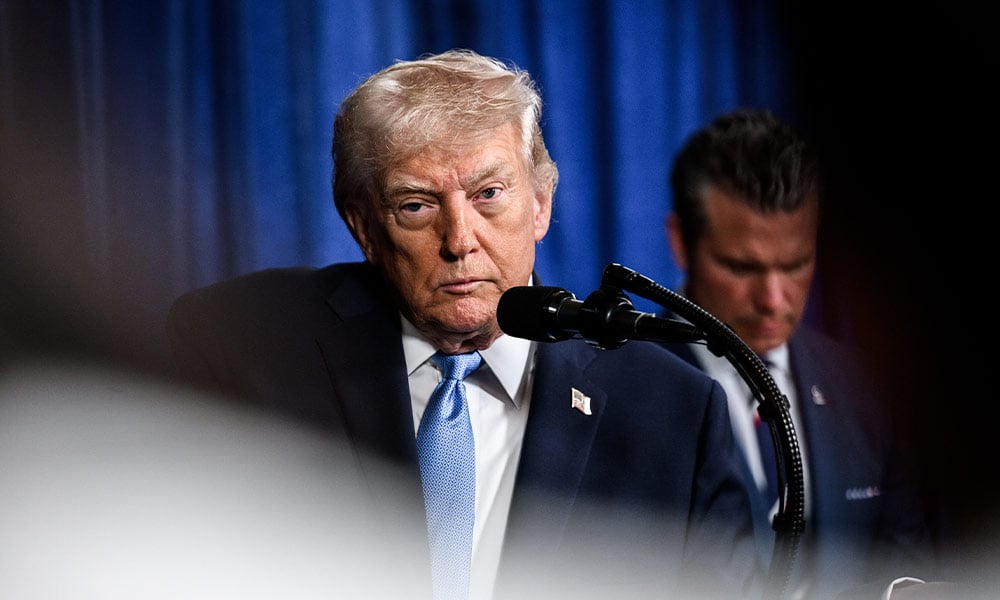
Donald Trump is not known for his pinpoint accuracy, so we shouldn’t take him literally when he says he has “99 percent support in Israel.” Trump also has remarked that he could run for prime minister of Israel, and on that point, he might actually be right. Israelis trust Trump far more than any of the leaders currently being offered to them for the premiership. This is partly because support for Israeli leaders is fiercely tribal—divided into a Benjamin Netanyahu camp and a camp supporting other candidates, leaving no single contender able to cross the 50 percent popularity mark—whereas trust in Trump here manages, to some degree, to cross political camps.
This trust rises and falls simultaneously across all factions. Back in March, just after the outbreak of the war with Iran, a large majority of right-wing Likud voters, as well as half of Yesh Atid center-left voters, agreed that “Israel’s security is a central consideration for President Trump.” By April, with both countries deep in the war campaign, most Israelis who define themselves as “left-center” still trusted Trump, as did a massive majority of “right-center” supporters. May brought a sharp drop in trust in Trump across all political camps. When a ceasefire was declared with Iran not yet defeated, trust in the American president fell across the right, center and left. No, not from 100 percent to 99 percent, as Trump claims. In a Jewish People Policy Institute (JPPI) poll from the beginning of May, the percentage of Israelis who trust Trump dropped by 8 percent compared to the previous month, following a 5 percent drop the month before.
Yet overall trust in him remains higher than the public’s trust in Netanyahu, Naftali Bennett, Gadi Eisenkot, Avigdor Lieberman or other potential candidates for prime minister. So perhaps Trump really could be elected to Israel’s highest office.
“Israelis recognize Trump’s bullying streak and actually like it.”
Of course, Israeli trust in Trump is a rollercoaster—it stays on the tracks, generally high up, but passengers feel every sharp rise and fall. We mirror the president’s own erratic and volatile nature: hoping, getting disappointed, marveling, complaining, being impressed and being disillusioned.
In January 2025, when Trump reentered the White House, he undoubtedly could have walked right into the prime minister’s residence in Jerusalem. Netanyahu had waited for Trump, and the Israeli public waited too. The previous president, Joe Biden, had stood by Israel immediately after the October 7, 2023 attack, visited in person and declared his administration would aid its war against Hamas. However, in the months following the attack, signs of disagreement between him and the Israeli government multiplied. Trust eroded rapidly; while Israelis appreciated the initial American backing, a significant portion later concluded it was insufficient. By July 2024, shortly before Biden dropped his reelection bid, a majority of Israelis (58 percent) believed he did not support Israel to a satisfactory degree, and a clear Israeli majority already preferred a change of guard in Washington.
Israelis are a bit spoiled in their attitude toward the U.S. president, and more than a bit self-centered. What do they want from him? Unconditional support. What do they reject? Any interference with their own plans. When it appeared Trump was considering an imaginary plan to remove Gaza residents from the Strip, excitement mounted. When it turned out Trump was forcing Israel to halt an attack in Lebanon, disappointment set in. When Trump sent U.S. jets to bomb Iran, trust skyrocketed. When he entered negotiations with stubborn Iranians who, at press time, seem shrewder than he is, trust began to plummet.
An analysis of more than 20 polls tracking trust in Trump alongside other questions about Israel’s situation reveals a near-perfect correlation between Israelis’ confidence that Israel is winning the war and their level of trust in Trump. It’s the ultimate litmus test for our collective wartime morale, as if we have convinced ourselves that Trump is running the military campaign and is responsible for its success or failure.

This was easily visible over the three months from March to June 2026, where the continuous decline in trust in Trump, following the peak at the start of Operation Epic Fury, was accompanied by a parallel decline in confidence of victory. In a May poll by the Institute for National Security Studies, close to a majority (49 percent) stated that Israel will lose or has already lost against Iran, and a similar percentage stated that Trump only supports Israel “when it serves his own interests.”
Israelis recognize Trump’s bullying streak and actually like it, hoping it will be unleashed upon Israel’s enemies. Deep down, of course, they understand that a bully is a bully and volatility goes both ways, yet they find it hard to accept those traits when they are used to restrain Israel. For example, both Biden in the summer of 2024 and Trump in the fall of 2025 presented Israel with a fairly similar (though not identical) plan aimed at ending the fighting in Gaza and returning the hostages. Israel rejected Biden’s plan but accepted Trump’s. The difference was not between the plans but between the leaders. True, support for Trump’s outline was initially higher, but not by much (35 percent thought Trump’s outline was good, compared to 30 percent for Biden’s). What stood out most was the public’s overwhelming assessment that Israel simply had to accept Trump’s deal because “there was no other choice.” We don’t like having no choice, but we must learn to live with it, and this tension accompanies us, breeding fascinating paradoxes.
Who connects most with Trump and his bullying nature? Right-wingers are the ones who trust him most—yet many of them also support a policy of “keeping the war on no matter what Trump says.” They are the ones who say in polls that “Trump is the best president ever” while simultaneously complaining that “Israel is too obedient to American positions.”
Is this a contradiction? Not necessarily. It is Israeli egocentrism—or rather, typical human egocentrism. We want to enjoy what Trump has to offer, without being burdened by what he occasionally tends to demand.
Shmuel Rosner is editor of themadad.com, an Israeli data journalism initiative, and a senior fellow at The Jewish People Policy Institute.