
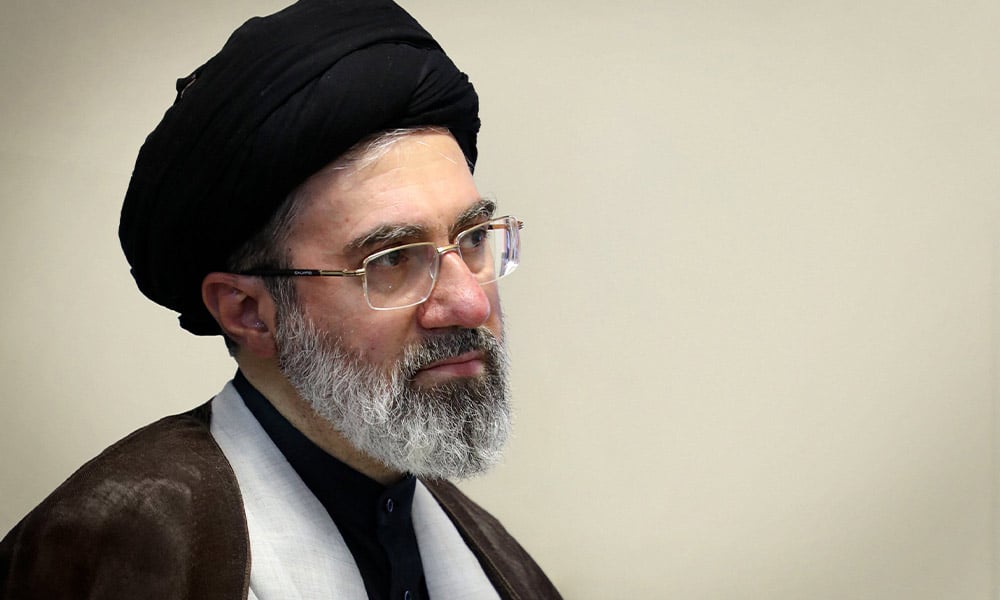
When Israel and the United States launched their military offensive against Iran in late February, President Trump offered a clear reason why: Iran’s radical regime, he said, had attempted to rebuild its nuclear program and was developing long-range missiles that could threaten allies in Europe or even the American homeland. What the campaign wasn’t about, he emphasized, in the same remarks, was regime change, since it ultimately remained up to the Iranian people themselves to “take back” their country.
Despite the hopes of many, they still haven’t done so. Whatever the war did or did not accomplish, regime change has not been an outcome; instead, in the months since the start of Operation Epic Fury, the world witnessed a consolidation of power by the regime’s most significant strategic actor, the Islamic Revolutionary Guard Corps (IRGC).
The results have been pronounced. In form, Iran remains a theocracy, complete with a new (albeit absent) Supreme Leader. In practice, however, the country has transitioned to something resembling a hardline military dictatorship.
How durable that structure ends up being depends on the ability of Iran’s government to manage several variables.
Foremost among them is the health of the national economy. Ahead of the most recent conflict, Iran’s economy was already in freefall. The value of the national currency, the rial, had cratered in preceding months, dropping by nearly half to approximately 1.3 million to one U.S. dollar—and wiping out the purchasing power of ordinary Iranians in the process. That decline wasn’t exactly a new condition; back in 2018, the World Bank had assessed that, after four decades of clerical rule, Iranians were one-third poorer than their counterparts in 1979, before the Islamic Revolution, in spite of the fact that the country possesses enormous energy wealth. Over the years, this “failure to thrive” has bred widespread discontent and fueled round after round of popular protest.
Fixing that state of affairs will be a critical test for Tehran’s new rulers. Of course, in the near term, the regime has had the excuse of the war to mask its economic problems. Over the longer run, however, it will need to come up with real solutions for the soaring inflation, declining wealth and plummeting living standards that afflict Iranians. If leaders don’t do so, and soon, they will set the stage for the sort of privation that has led Israeli officials to predict the current regime could fall by the end of the year.
But even if Iran’s new leaders figure out a fix for their economic problems (presumably through some sort of compromise with the United States), another key factor is in play as well: political legitimacy. Before the war, Iran’s regime was already on a path of protracted decline, as more and more people abandoned its precepts.

The extent of this disaffection was captured in an internet poll of Iranian public opinion published last year by the Netherlands-based Group for Analyzing and Measuring Attitudes in Iran (GAMAAN). That survey found that an overwhelming majority of the 20,000 people polled supported a transition to democracy (89 percent) and opposed military rule (71 percent). In total, only about 20 percent of those polled supported a continuation of the Islamic Republic. Those figures are a clear challenge for the IRGC, which is widely (and correctly) viewed by Iranians as an integral part of the old order.
Both before the war and during it, the regime has relied on a number of key methods to prevent a sustained uprising: widespread repression, a sweeping internet blackout and shows of force such as public executions and the mass killing of protesters. None are designed to lessen the disaffection of the Iranian people or to address their very real concerns. And because they are not, they are liable to set the stage for precisely the type of future opposition that could finally bring down the Islamic Republic in favor of something qualitatively different.
That doesn’t necessarily mean true regime change is around the corner. Revolutions tend to have a rhythm and a cadence all their own. Iran’s new IRGC-dominated government might manage to right the country’s economy through some sort of compromise with the West, or sway a segment of the Iranian people through more effective governance. What the fundamentals tell us, though, is that the potential for change within Iran persists—although the mechanism and timing for such a change are still unclear.
Ilan Berman is senior vice president of the American Foreign Policy Council in Washington, DC.
(Top image credit: Khamenei.ir (CC BY 4.0))
One thought on “Opinion | Are Iran’s New Rulers Stronger Than Ever?”
I agree with Trump!! End the Iranian insanity and just wipe out the e siting regime in whatever way possible! The people are not the problem —it’s the insane Iranian gov! Just bomb the gell out if them!