
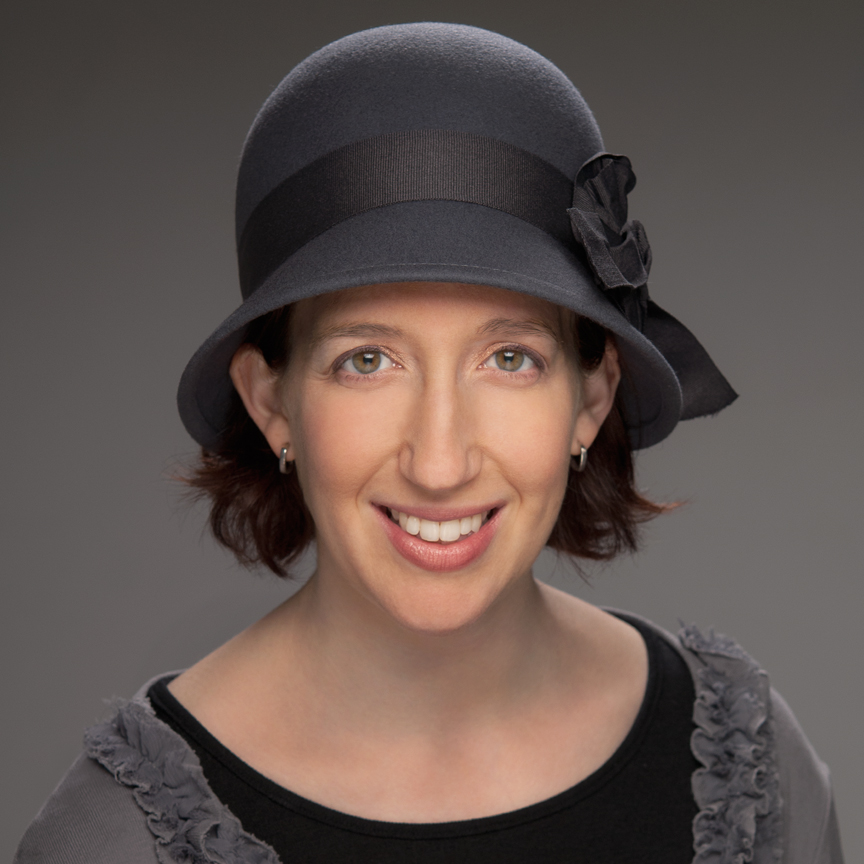
Yesterday, Moment published an interview with Ruth Balinsky Friedman, who will graduate next month from the first school to train Orthodox female clergy. Today, Moment speaks with fellow classmate Rachel Kohl Finegold. Finegold is a graduate of the Drisha Scholars Circle and currently serves in a pastoral capacity as the Education & Ritual Director at Anshe Sholom B’nei Israel Congregation in Chicago. After her graduation, Finegold will become director of education and spiritual enrichment at Congregation Shaar Hashomayim, an Orthodox synagogue in Montreal.
Were you always interested in religious leadership?
Not necessarily. When I came out of college I knew I wanted to work in Jewish education and knew I didn’t want to be in the classroom. I never imagined a synagogue role. I looked at Hillel jobs, I looked at high school jobs. I was looking at all sorts of models and happened upon this path by accident. I realized that a shul allows you to interact with a broad swath of the population and have your hands in so many aspects of Jewish life.
What was the reaction of the Anshe Sholom community when you were hired in a pastoral capacity?
I have been surprised how many people have readily accepted me. There were some questions—people who were hesitant and wondering what it would look like or be like. There was a little bit of fear in terms of entering into something that was unknown, but within a few months a lot of that completely turned around. People realized I’m truly deeply Orthodox and was not coming to drastically change anything but rather to be a resource.
What are your functions at the synagogue?
A variety of things: Either I give a sermon or speak before the Torah reading. It can be helping a woman who just had a baby say Birchat HaGomel or standing with the bat mitzvah families. It also involves just being there and welcoming someone new or greeting congregants. Sometimes I’m not saying a whole lot, but just my presence changes the dynamic of the room. In addition to these ritual moments, I also am responsible for all of our educational programming—for children, families and adults—as well as teaching in various settings and running our mikvah.
When people visit the synagogue are they surprised by your extended role?
We recently had an influx of guests and I heard over and over again comments like, “Wow, it was so moving to see you up there with the bat mitzvah girl.” One weekend a man came up to me after shul and said that hearing me do the quick introduction of the parsha—which is only two and a half minutes—completely changed his outlook. He realized that otherwise he doesn’t hear a female voice for the whole three-hour morning service. It changed everything for him.
Why did you decide to enroll in Yeshivat Maharat?
Sara Hurwitz invited me to her conferral ceremony as a woman who was also a synagogue leader. It was so inspiring to see that moment when she really came into her own as a leader. Later, she was the one who approached me and said this might make sense for me. I had finished the Drisha scholars circle program and had a job where I was functioning as clergy. But I felt like the Maharat program would give me a different type of education. There is learning for the sake of learning and learning for the sake of leading.
Do you consider the program revolutionary?
This is something new and exciting, but it’s a new form of a whole bunch of elements that have already been done by women. Women’s learning is happening in every segment of the [Orthodox] population. Even in more right-wing communities, women’s learning is valued more than ever before. So on the one hand it’s groundbreaking and on the other I have already been speaking and leading and teaching. This next step—which is an important one—is formalizing it.
How will your position change as you receive the title and move to the Montreal synagogue?
I’ll be the director of education and spiritual enrichment. A similar role for a much larger congregation with bigger needs.
And you will be going by the title Maharat?
It’s up to each hiring institution and up to each graduate. It’s basically a conversation I had with the synagogue and we both felt that it would be the most appropriate title. I have always said it is much less about title and much more about function.
What are the most pressing issues facing Modern Orthodoxy today?
Across the board there are questions about keeping teenagers involved and connected when they are in the insanity of high school and college—as well as men and women in the Odyssey years after college. Other issues include fertility problems, being single later in life, people who feel marginalized and don’t feel heard. I think Yeshivat Maharat students will come out and be more sensitive to hearing those issues.
What are your hopes for women’s Orthodox religious leadership in the future?
I hope it will become the norm to see Orthodox women in religious leadership. What motivates the graduates of Yeshivat Maharat is simply to use our talents and skills to serve the Jewish people. I look forward to the day that I’m not newsworthy.
One thought on “Meet the Maharats: Questions for Rachel Kohl Finegold”
Mazel tov, Ruth. You are an inspiration and a wonderful role model.