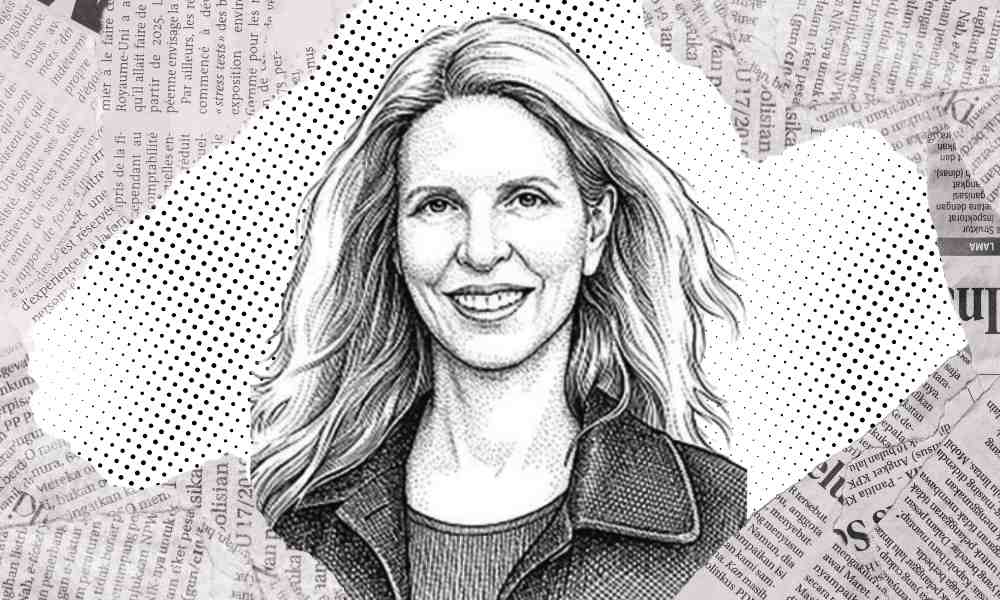
I’ve been a journalist for more than four decades. There were my cub reporter years racing around Chicago covering politics, crime, the Nation of Islam, Jesse Jackson and the tragedy of AIDS. There were my years reporting on extremist groups (from the original far-left German Greens to rifle-lugging right-wing militiamen out West), my U.S.-Mexico border years, my Maya years, my body-mind relationship years, my rural America years, my science and technology years. The first magazine story I ever wrote was on Le Minitel, a French proto-Internet network, that with youthful hubris I reported and sold to The New York Times Magazine. I’ve seen the journalism profession from many angles: as a reporter at Chicago’s legendary City News Bureau (with stints as an editor on the night and broadcast desks), as a stringer for The New York Times, as an editor of a (too) early online magazine, as a roving freelance correspondent, a journalism fellow, an editorial illustrator, a book author and an adjunct professor trying to convey the meaning and rituals of journalism to undergraduate and graduate students. I have had the great fortune to travel to far-flung places and to meet the wise and unwise and absorb how they view the world. All this was before I gravitated to spiritual topics, history and religion and took over Moment, which I have been leading for almost two dozen years. (Wow, time flies!)
One lesson I’ve learned along this journey is that journalism is not the simple profession many people—including journalists—imagine it to be. It’s not only the Fourth Estate keeping democracy safe by holding the powerful accountable and illuminating injustice. Journalism can be demagogic and polarizing. Today there are countless influencers masquerading as journalists and attention-hungry journalists masquerading as cultural influencers, all sowing confusion. Even many people I consider true journalists compound the problem without realizing it. Stories in highly respected publications claim to be nonpartisan but are often riddled with assumptions that set off my journalistic alarm bells. In most of these cases, these journalists mean well but unconsciously assume that their audiences share the same values and the same reference points that they do. Assumptions like these backfire by weakening trust and interest in the media. They certainly never expand the thinking of anyone who doesn’t agree with them.
Moment is a path through the noise to a place where you can think.
So how we journalists frame stories and conduct ourselves in interviews is critical. We need empathy to anticipate how readers, listeners and viewers will perceive what we write and say. We need to stay humble enough to remember that people we don’t agree with are not necessarily fools and may have points worth addressing. We need to take the time to tell the whole story, even if we think everyone knows it, and to weave in context and history. We need to avoid self-righteous, incendiary language that drives people back into siloes where they feel safe. At its core, journalism is a vast educational enterprise, one that lays out knowledge necessary to participate in democracy. It helps people think so they can steer the world wisely into the future.
Moment, with its small budget and nimble, hardworking team, has been ahead of the journalism curve for years—leading the way forward in a chaotic and confusing time for the profession. At Moment we always ask: What can we bring to our diverse community of readers and participants that no one else brings? There’s our creativity, no doubt, but Moment’s strategic value at this moment, no pun intended, is to portray the complexity of the world we are living in. To be clear, conveying complexity is not the ultimate goal; acknowledging it and truly considering it is the essential step toward deeper thinking. (In fact, contemplating complexity is a kind of meditative practice.) Moment is a path through the noise to a place where you can think.
How do we do this? One way is by presenting informed opinions in context. In 2005, I launched our “Ask the Rabbis” feature, where rabbis from multiple denominations answer a contemporary question, revealing disagreement, as you’d expect, but at times surprising alignment. This beloved section provides a panoramic view of Jewish thinking that’s hard to find elsewhere, as well as insights from Jewish texts that can help us navigate important issues.
A few years later we launched our signature “Big Question” project, for which we search out and interview a range of interesting people to expose you to a comprehensive landscape of thought so you can discern what you agree with and don’t. (I find that even when I think I know a lot, I learn more.) In other words, our Big Questions set the stage for thinking. So does “Moment Debate.” Opinion Editor Amy E. Schwartz is not just throwing down two slapdash opinions, she’s taking the time to focus and sharpen them so that differences, similarities and nuances shine through. (Our new collection, Great Debates of Our Time, can be downloaded for free at momentmag.com.) Our articles are carefully edited, not just for grammar, historical context, storytelling and fact-checking (which they are!) but to make sure they are not kneejerk partisan or knee-jerk anything. We don’t assume everyone shares our values or even that there is one set of Jewish values everyone agrees on. We don’t lace our work with snark and insider references, because we know people who engage with Moment come from many different backgrounds and age groups. We’re committed, as our new tagline says, to wise journalism for unwise times.
None of this is easy, but it’s important because by practicing wise journalism, Moment has become an island of sanity in the American Jewish community. Right now, our community is a raucous place. People are in pain and scared and angry and confused and are shouting at one another, all while trying to figure out how to respond to the incessant drumbeat of antisemitism and reconcile wildly conflicting views about Israel. So much journalism in the Jewish world has become shrill and partisan, even when it claims otherwise. What we’re doing at Moment directly fortifies both the Jewish community and the country that we live in, the United States (While we cover Israel and the world and have readers everywhere, we were founded to be a magazine for America’s Jews.) I learned several new Hebrew expressions in this issue’s fascinating “Ask the Rabbis” section, and one of them is mikdash ma’at, a small sanctuary. Moment is a mikdash ma’at.
This issue’s Big Question asks how journalism can bolster democracy. It’s not a uniquely Jewish question, but it is very relevant because Jews have always been an integral part of American democracy, and history has taught us that Jews thrive when democracy thrives. We interviewed media experts, including Tom Rosenstiel (whose new book, The Next Journalism: How the Press Must Change to Serve Democracy, I recommend), who discuss everything from bias to the mind-blowing impact of AI, all subjects that desperately need open and honest exploration.
I know there are many American Jews who don’t trust the media or think we’d be safer in a less democratic country. Others believe we are living in our Weimar period and are soon to be, or already have been, overtaken by enemies. But as I’ve said before, I don’t believe this is the time for Jews to give up on American democracy. Democracy is a work in progress, and challenges should be expected at the 250-year or any-year mark. With elections just behind us and technology transforming our lives at a breathtaking pace, we are in the throes of transition for the foreseeable future. Regardless, I plan to remain calm and open to learning. One question that I’m curious to ask the rabbis soon: What wisdom does Judaism offer for embracing change?
