
A kosher kitchen can be run with great care and still have a blind spot in the medicine cabinet. Vitamins, fish oil and gummy supplements sit somewhere between food and medicine. Many readers swallow a capsule each morning without ever checking it the way they would check a box of crackers.
That question is settled long before the bottle reaches a pharmacy shelf. Most supplement brands do not own a factory, and their products are made by a contract firm such as Superior Supplement Manufacturing. Its site lists Kosher and Halal among the certifications its partner facilities can hold, and it notes that certifications vary by facility. That detail matters, because kosher status belongs to a specific plant and a specific run.
Why Would a Vitamin Not Be Kosher?
The active vitamin is rarely the problem. The trouble usually sits in the parts nobody thinks about. A guide from OU Kosher on supplement certification says both the ingredients and the production process must be kosher. That includes solvents and inactive ingredients, not only the vitamin itself.
Three ingredients cause most of the questions:
- Gelatin. It can come from pork, from non-kosher beef or from fish, and it forms most softgels and many gummies.
- Glycerin. It keeps gummies and liquids soft, and it can be made from animal fat or from vegetable oil.
- Magnesium stearate. It is a flow agent that stops powder sticking to machines, and its stearic acid may come from tallow.
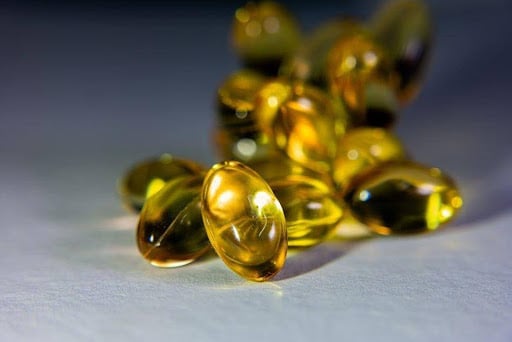
A softgel is a capsule with a soft gelatin shell, usually holding an oil. A typical bottle holds 60 or 90 of them, and every shell is made from the same gelatin. That makes fish oil, vitamin D and vitamin E some of the most common products to check.
Gummies deserve a second look as well. Many get their chew from pork gelatin, while kosher versions often switch to pectin, a gelling agent made from fruit. The ingredient list will usually say which one is inside. Halal certification also cares about gelatin, but it is a separate standard. One symbol on the bottle does not imply the other.
Does a Swallowed Capsule Count as Eating?
Here the halakhic answer is more layered than many people expect. The Star-K’s guide to medications, vitamins and supplements treats a swallowed capsule as a non-standard way of eating. A sick person may therefore take a gelatin capsule in some cases.
The same guide is stricter for healthy people. It says someone in good health should consult a rav before taking a gelatin capsule. It also says a non-certified chewable multivitamin should not be taken under normal circumstances, because a chewable is eaten like food. Flavored liquids raise the same concern.
This is the point to bring your own rabbi in. Practice differs between communities, and nothing here is a ruling.
Where Is Kosher Status Decided?
It is decided on the factory floor. A plant that makes products for many brands may run a non-kosher softgel on Monday and a kosher tablet on Wednesday. The OU guide explains that shared equipment must be kosherized between runs. That process uses hot water, labor and lost production time.

A certifying agency typically sets terms before any symbol goes on a label:
- A contract and an annual fee.
- Review of every raw material and its source.
- Unannounced inspections by a mashgiach, an agency supervisor.
- Checks of production records.
- Limits on which products may carry the symbol.
For a brand, the simplest route is often to choose a certified facility from the start. Superior Supplement Manufacturing has a page on helping brands make products that meet OU Kosher standards. Because its certifications vary by facility, the useful question is which plant will run your product.
What About Passover?
Year-round kosher certification is not the same as kosher for Passover. Starches, grain-based fillers and some flavorings can raise chametz questions. The Star-K guide notes that it is not a Pesach guide and points readers elsewhere.
Agencies publish separate Passover lists each spring. The holiday runs 8 days outside Israel and 7 days in Israel, so a daily vitamin means up to 8 doses to think about. If a vitamin matters to you during the holiday, check it in advance rather than the night before the seder. One hidden ingredient can reshape a whole category, as rennet once did for kosher cheese.
How Can You Check a Bottle?
Reading the label takes about 1 minute, even on a 90-count bottle with small print. Start with these steps:
- Look for a recognized symbol, such as the OU, OK, Star-K or Kof-K.
- Check for a “D” beside the symbol, which marks dairy.
- Read the capsule type. Vegetarian capsules are usually made from cellulose.
- Ask the brand which agency certified the specific product, not the company in general.
- Ask whether the certification covers Passover.
Plant-based capsules remove the gelatin question, which is one reason demand has grown. Moment has followed that same shift toward greener kosher choices on the dinner plate. None of this is medical advice, so speak to a doctor before you start or stop a supplement.
Frequently Asked Questions
Are Vegetarian Capsules Always Kosher?
Not automatically. The shell may be plant-based, but the contents and the production line still matter. Look for a certification symbol on the bottle.
Is Fish Oil Kosher?
It can be. Kosher fish oil must come from kosher species, and its softgel shell must also be kosher. Check the symbol rather than the word “fish.”
Can a Brand Call Itself Kosher Without an Agency?
A label claim without a recognized agency is hard to verify. Most observant shoppers rely on an agency symbol on the specific product.
Should I Ask My Rabbi About Medicine Too?
Yes. Prescription medicine is treated differently from optional supplements in many communities. Your rabbi and your doctor should both be part of that decision.