
Every Sunday at ten, a woman in suburban Maryland calls her mother in Cote Saint-Luc. Her mother is 84, widowed, and proud of the apartment she has kept for forty years. The calls are warm and a little rushed. Lately the daughter has started listening for something else: a pause on the stairs, a story about a slip near the bath.
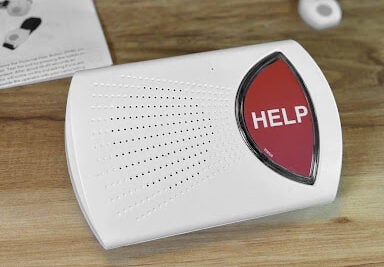
Many American Jewish families know this pattern, because so many have roots or relatives in Montreal and Toronto. For a parent who still lives in Canada, Life Assure’s fall detection devices are one practical way to make sure a fall does not go unnoticed. Life Assure is a Canadian company, and its monitoring service is available to customers in Canada only. That limit happens to fit this family’s situation exactly.
What Did the Rabbis Mean by Honor?
The commandment to honor father and mother is famous. Its practical meaning is less widely known. The Talmud spells it out in Kiddushin 31b, and the list is strikingly physical.
Honor, the rabbis taught, means giving a parent food and drink, clothing and covering, and helping them come in and go out. Reverence is a separate duty. It means not sitting in a parent’s place and not contradicting their words.
Read today, the two duties pull in different directions:
- Honor asks children to make sure a parent is cared for in body.
- Reverence asks children to respect a parent’s authority over their own life.
- Both apply at once, even when a parent is frail.
That tension is where most families get stuck. A daughter wants to protect her mother. Her mother wants to stay the adult in the room.
Why Is Distance the Hard Part?
“Helping them come in and go out” was simple when three generations shared a street. Today the street is often a border. Montreal’s Mile End was once the center of Canada’s Jewish immigrant life, and many of those families later scattered south. The parents often stayed.
Distance changes what can go wrong. A fall at home is common in later life. The American Physical Therapy Association’s guide to falls says about 25% of older adults fall each year. It also stresses that falling is not a normal part of aging.
The fall itself is only part of the risk. The hours afterward matter too. A parent who lives alone may lie on the floor until a neighbor knocks or a Sunday call goes unanswered. From Maryland or New Jersey, a child cannot walk over and check.
How Can a Child Speak Up and Still Show Reverence?
Reverence suggests a starting rule: the parent decides. Your role is to inform, offer, and listen. You are not there to issue instructions.
A few approaches tend to work better than a lecture:
- Start with their goal. Most parents want to stay in their own home. Frame any device as a way to protect that.
- Ask about a specific moment. “What would you do if you fell in the hallway?” invites thought. “You need an alarm” invites a fight.
- Offer a trial, not a verdict. A short trial lets your parent judge the device without feeling cornered.
- Let them choose the details. A pendant or a wristband is their call, not yours.
Some parents will say no. That answer deserves respect too. You can ask again in a few months, after a doctor’s visit or a change in health.
What Should Fall Detection Actually Do?
Medical alert devices are simple in principle. The person presses a button and reaches a staffed monitoring center. Life Assure answers those calls with trained Medical Alert Specialists, available 24 hours a day. A specialist can guide the caller and send the help they need, even if the caller cannot speak.
Fall detection adds a layer for the moment a parent cannot press anything. When you compare options, look for these points:
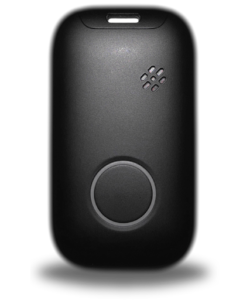
- Where it works. Life Assure’s Classic Home covers the home, with up to 600 feet of range from the base. For trips to the bakery or the shul, the Premium Mobile Plus uses cellular service and shares a GPS location.
- What your parent will actually wear. Both come with a water-resistant pendant, worn as a necklace or on the wrist. The best fall sensor is useless on a nightstand.
- Whether fall detection is included. On both Life Assure devices, it is an optional upgrade, so ask for it by name.
- What family can see. The StaySafe App sends notifications for emergencies, fall detection, and low battery alerts.
- What you are signing. Life Assure lists no long-term contract and no activation fees.
For a child in the United States, that app matters. You cannot drive over. You can still know quickly when something has happened.
Who Else Can Share the Mitzvah?
No single child can carry this alone, especially from another country. The obligation can be shared, and the circle is usually wider than families assume.
Consider who is already near your parent:
- A sibling or cousin who still lives in Montreal or Toronto.
- A neighbor in the building who has a spare key.
- Friends from synagogue who notice when a regular seat is empty.
- A family doctor who can assess balance and medications.
Moment has written about how honoring parents and elders now runs in more than one direction. Adult children carry much of it. A parent who agrees to wear a button is also doing something for the family, and saying so out loud helps.
Frequently Asked Questions
Does Honoring a Parent Mean Making Decisions for Them?
Not in the classic sources. Reverence asks children to respect a parent’s authority. Offer information and options, then let your parent decide.
Can My Parent In Montreal Use Life Assure if I Live In the United States?
Yes, the service is built for people living in Canada. Your parent is the user. You can still be listed as a contact and use the StaySafe App from home.
Is Fall Detection Standard On Every Device?
No. On Life Assure’s Classic Home and Premium Mobile Plus, fall detection is an optional upgrade. Ask for it when you order.
What if a Proud Parent Says No to the Pendant?
Respect the answer for now. Ask what worries them, whether it is looks, cost, or feeling watched. Then raise it again later with a trial in mind.
Where Does the Sunday Call Go From Here?
The call does not have to change much. It can still be warm and a little rushed. What changes is the silence between calls. With a plan in place, a parent who stays independent and a child who stays close are no longer competing goals. That balance is a fair reading of what the rabbis asked for.