
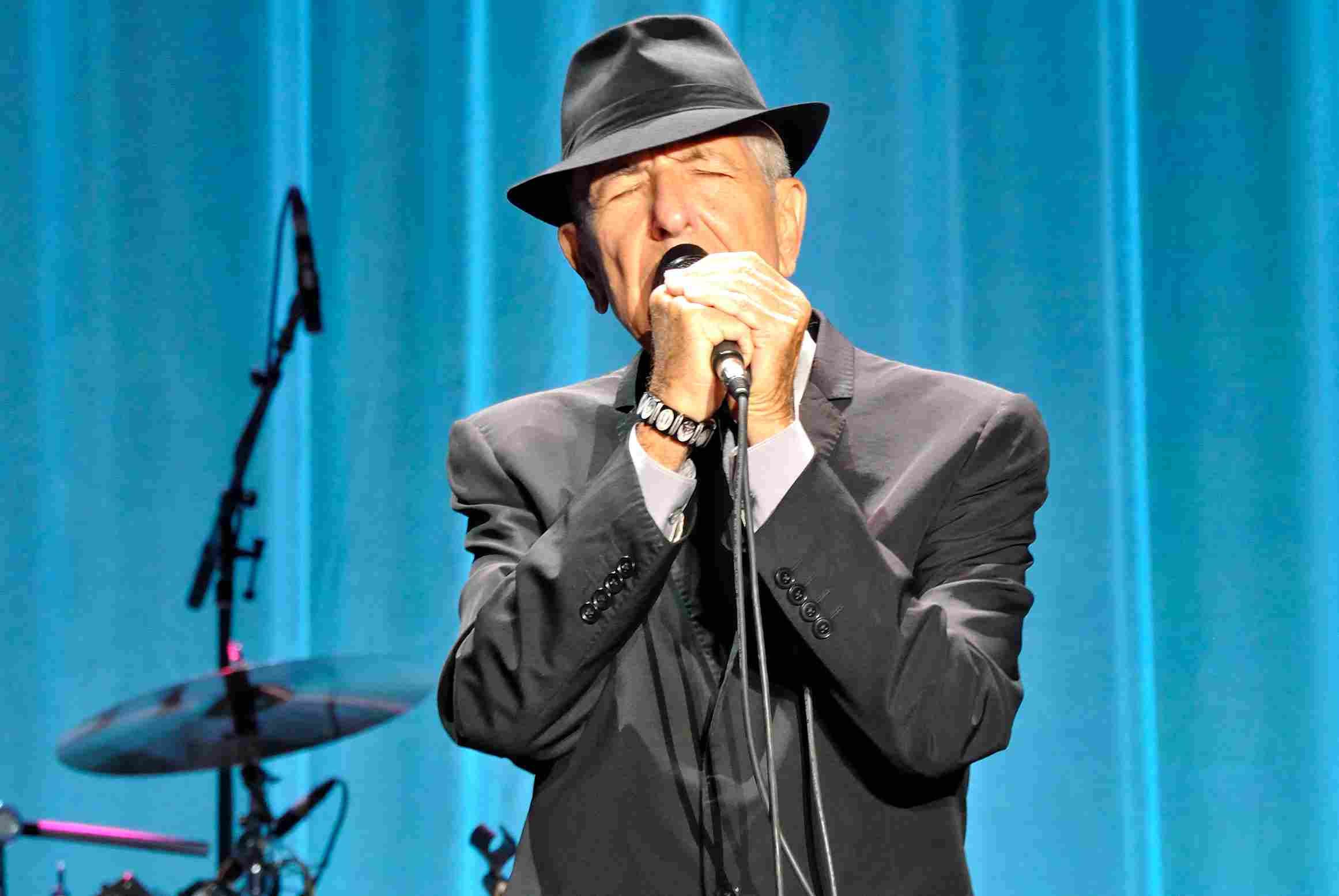
I first met Leonard Cohen at my wedding to Joni Mitchell. He and I hit it off immediately. I remember him saying, “This is the best wedding I’ve ever been to,” and when I asked why, he said, “I’ve just been sitting by this dish of caviar and ate almost the whole thing.”
That was Leonard. He had a great sense of humor.
We were friends from then on, but in the last ten or fifteen years of his life (he died on November 7, 2016), we became somewhat close friends. Leonard had a big life and a lot of good friends, but he also had a somewhat compartmentalized life; different people inhabited different quadrants of it. In my relationship with him, part of that quadrant was built around Jewish ideas and Judaism.
Leonard came to my second wedding, to Luciana Souza, one of the few people who attended both weddings. This one was officiated by Rabbi Mordecai Finley, with whom I had been studying for quite some time. Before the wedding, Mordecai asked me what I wanted him to do, and I said, “Just teach everybody here how to do this right.” He spoke extemporaneously, as always, and he was brilliant. He laid down what I remember as the ten contrarian commandments of marriage.
After hearing Mordecai speak, Leonard decided he wanted to study with him too. He joined Ohr HaTorah, the Los Angeles synagogue I belonged to, and Mordecai was his rabbi through the end of his life.
Leonard and I were also both listening to talks by this rabbi named Yakov Leib HaKohain, who was a very subversive character. He was kind of a Sabbatean rabbi, very irreverent, very contemptuous of a lot of traditional Jewish ideas and especially of other traditional rabbis. There was interesting stuff in there, but it was also funny as hell. Leonard and I would listen to him and then talk on the phone about what he had said, sometimes seriously and sometimes laughing.
And all of this leads, in a certain way, toward “Hallelujah.”
“The song does not ask us to choose between brokenness and praise. It holds both.”
Leonard grew up deeply involved in the synagogue his family belonged to in Montreal. He was very well read in Jewish texts: Talmudic material, Midrashim, all sorts of areas of Jewish tradition. But the area that I think most interested him, and the area that ended up governing or being the engine for a lot of his writing, was Lurianic Kabbalah.
That tradition is built around the impossible brokenness of the human condition. It has to do with the pain of divine breakage permeating reality. It is inside us and around us. I think that was part of Leonard’s inspiration as a writer.
He was also interested in this Sabbatean, subversive, almost heretical aspect of Judaism. But even more than that, I think he was drawn to the idea that the world and the human condition are products of this brokenness, and that try as we might to repair it, there is something tragic in the whole thing.
That is very much how I hear “Hallelujah.”
Leonard was very reticent about explaining his songs. He didn’t like talking about the meaning of them, because he wanted people to absorb them in whatever way applied to their own lives. Still, it’s a funny phenomenon that people listen to “Hallelujah” and think of it as a triumphant song. It’s anything but that. If I had to assign it a spirit, it would be sadness. That is the way he wrote it, at least as I perceive it.
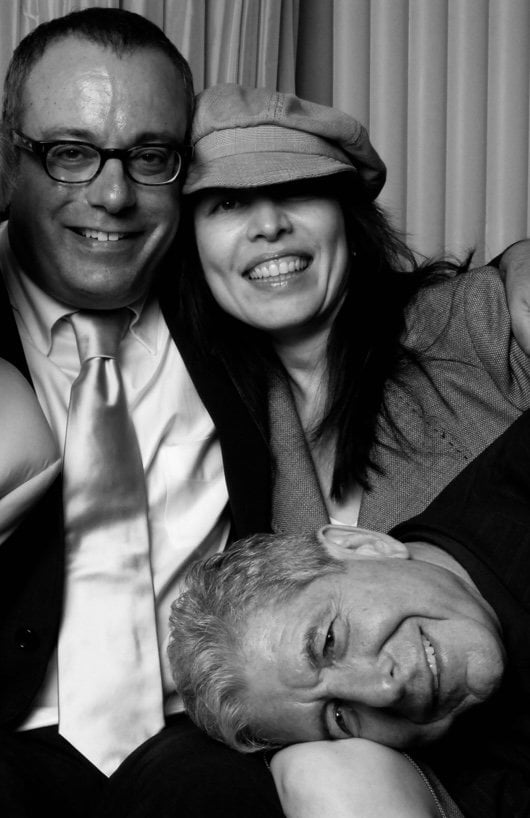
Larry Klein (left), Anjani Thomas and Leonard Cohen. Courtesy of Larry Klein.
“Hallelujah” took Leonard the better part of ten years to finish. I remember him saying he wrote about eighty or eighty-five verses, and then mercilessly edited it down. He would usually sing it with six or seven verses, but he could still recite any number of other verses by memory if he was of the mind to do it.
I heard him do that several times. Once, a woman came up to him at the synagogue and said, “‘Hallelujah’ is such a beautiful song. How did you come to write that and how long did it take you?” Leonard told her it took about a decade. She asked if he had written more verses, and he said yes. Then he started reciting maybe ten verses you’d never heard, all by memory, and they were all brilliant. They all had that same kind of sadness, that same inescapable bifurcation of sadness and resolve.
That, to me, is the song.
People may think of it as uplifting because of the word “hallelujah.” I understand that. There is something inspiring about it. But to me, the song basically deals with the inevitable vicissitudes of life. Life is a “cold and broken” hallelujah, as the song says. The spirit one aspires to in love or in life is found in this rub of sadness and ecstasy, where those elements meet.
That is true of a lot of Leonard’s writing, if not all of it. His songs come at it from different angles, but they are permeated with the inevitable brokenness of what it is to live in the world.
And in a certain way, this is a very important part of Judaism: retaining the quality of a circumcised heart. A heart that is torn open and therefore empathetic and kind, and sometimes strong because of it. But there is always an element of sadness to it.
Leonard wrestled with God. I think on some level he was an atheist, and yet he was intrinsically Jewish. The Buddhist part of his life was something he explored in order to deal with depression and to get past the dark vision that could sometimes be paralyzing for him. Zen Buddhism, in a sense, is not really a religion so much as a state of mind and a discipline. Living in that kind of monastic discipline can be a vehicle for setting aside depression.
The way Leonard put it was, “I tried pills, that didn’t work, so I tried Buddhism.”


To me, there is an intrinsic Jewish aspect to all of Leonard’s writing. Even when it is not overt or literal, there is some aspect of Jewish thought and Jewish philosophy that peeks out in different ways. “Hallelujah” contains the story of David, where David appears as a tragic character. In “Anthem,” the line about the crack where the light gets in is Kabbalah. It is informed by a Jewish sensibility. “You Want It Darker” has a deep Jewish aspect to it too, and probably a Sabbatean aspect in some way.
But “Hallelujah” is the song that entered American life in a profound way. People here sing it at weddings, funerals, memorials, religious services and public moments when ordinary language does not seem large enough. Maybe that is because the song does not ask us to choose between brokenness and praise. It holds both.
That is what Leonard did as a writer. He found the place where sadness and resolve meet, where the heart is torn open and still singing, where life is not whole and yet the word “hallelujah” can still be said.
Larry Klein is a four-time Grammy-winning producer, musician and songwriter whose work spans jazz, rock, pop and classical. His collaborators include Joni Mitchell, Herbie Hancock, Bob Dylan and Tracy Chapman.
Top image: Leonard Cohen performs at King’s Garden, Odense, Denmark, on August 17, 2013. Credit: Takahiro Kyono, CC BY 2.0, via Wikimedia Commons