

With the midterm election less than a week away, participants in our 2026 Jewish Political Voices Project (JPVP) are putting uncertainty aside and making hard decisions.
The arc of electoral politics may bend toward Democrats this year, but on our JPVP roster of 16, several Independents, and even a few Democrats, will vote Republican—a once-unthinkable choice, some of them say. Why? They cite growing hostility in Congress toward Israel. Surging antisemitism and the rise of the Democratic Socialists of America also have them frightened.
The Republicans in our JPVP ranks seem less troubled than the Democrats and more confident in support for Israel from GOP members of Congress. But they understand the known unknowns. President Trump may not be on the ballot, but his economic policies certainly are. High gas and diesel costs are rippling through local and state economies. Democratic control of Capitol Hill could result in greater pressure to sanction Israel—exactly what Jewish Republicans hope to avoid.
And then there’s the question of AIPAC, which raised $233 million to influence the 2026 elections and shore up support for Israel in Congress. While AIPAC recently announced they were going to cease making direct donations to candidates, the infusion of cash this cycle has come with a price tag of its own, as the American public’s support for Israel continues to drop. For example, Abdul El-Sayed, the Democratic Senate nominee in Michigan, consistently highlighted the $33 million his primary opponent got from AIPAC. Evidently, that helped him win the nomination.
Jewish voters make up 2.4 percent of the U.S. electorate, and about 70 percent are Democrats. It’s an open question whether frustration and dismay will lead a significant number of Jews to abandon the party they’ve stood by since the Great Depression and FDR. In the end, Jewish votes may end up counting the most in potential battlegrounds of Florida, Michigan, Texas and Ohio.
So what is the JPVP Class of 2026 thinking as Election Day draws near? We consulted seven of our crew. Here’s what they have to say.
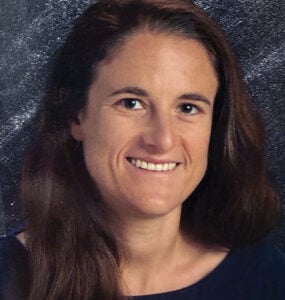
ANYA-MAE DAVIDSON
Age: 42
Location: Readfield, Maine
Party: Democratic
Occupation: School nurse
Family: Partner, two children
Jewish Denomination: Reform
2024 Vote: Kamala Harris
News Sources: The Free Press, The Times of Israel, CNN, Tablet, The Atlantic, WSJ, various podcasts and influencers
Are you still voting for Republican Senator Susan Collins, even though you’re a Democrat? Yes, my plan is still to vote for Collins. Speaking about “genocide,” Troy Jackson recently said that “It’s unfortunate that there are people here in Maine that don’t like to use that term only because…they’re Jewish, and what that means to them with the Holocaust.” He did apologize afterward, but the damage was already done. I don’t trust him as a genuine leader.
What are your top concerns about the midterms at this moment? I think my top concern right now is the division and polarization within politics, especially within the Democratic Party. I fear that it’s being taken over by people who don’t really hold democratic values. There are too many popular DSA candidates with agendas that aren’t good for anyone.
Have you experienced rifts within your Jewish community over the election? The synagogue I belong to really tries to steer clear of politics. I personally avoid conversations about politics with some people because I fear it will cause a rift. I know others I can be open and honest around, but there aren’t that many, unfortunately.
If Democrats take the House or even the House and Senate, what do you see happening over the remainder of the Trump presidency? Will it be “good for the Jews,” in your view? I definitely want Trump’s power to be challenged because I do not trust him. Nor do I trust a lot of the popular Democratic candidates, especially for the Senate. I am not only scared of the rise in antisemitism but also the acceptance of it, and I am disappointed by the majority of the Democratic Party not pushing back against antisemitism in their own party. I say this while also acknowledging the antisemitism on the right and in the Republican Party. In short, it’s a very difficult time as an American Jew who supports Israel.
Is AIPAC a positive or negative force for Jews in America? I wish candidates could succeed without big money from PACs. But the reality is they are here, and candidates usually need them to succeed. While I am not a member of AIPAC, I do not necessarily object to their agenda. I think they are kind of a mystery to many people. And unfortunately because of that unknown, the old tropes about Jewish money and control are easily fueled.
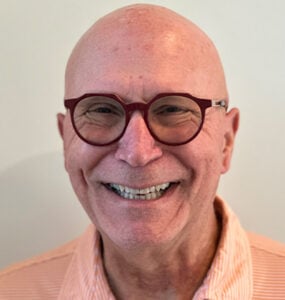 HARRY LEVY
Age: 69
Location: San Antonio, Texas
Party: Democratic
Occupation: Retired highway construction firm owner
Family: Married, three children, five grandchildren
Jewish Denomination: Reform
2024 Vote: Kamala Harris
News Sources: NYT, WaPo, San Antonio Express-News, The Texas Tribune, San Antonio Report, NPR, Haaretz, The Jerusalem Post, eJewishPhilanthropy
Are you pretty much set in your choice of Democratic nominee James Talarico, who is running a vigorous campaign against state Attorney General Ken Paxton in deep-red Texas? Yes, I will vote for Talarico. Will he win? I hate this question. Every time I have been asked to predict a Democratic upset in Texas, I have been sorely disappointed. My sense is, and the polls suggest, that Texas has a very good chance of electing a Democratic senator for the first time since the 1990s. I’m encouraged by anecdotal information from folks who normally vote straight Republican who have reluctantly said they will vote for Talarico.
Have you experienced rifts within your Jewish community over the election? Not personally. Most of the folks I feel comfortable discussing politics with are like-minded. Those that I know think differently, we discuss the weather for shalom bayit.
If Democrats take the House or even the House and Senate, what do you see happening over the remainder of the Trump presidency? I think inaction by Congress will still be the order of the day. In the very best scenario there won’t be a veto-proof majority. My biggest concern is that there is a huge pent-up demand for action against the president. I think that would be a waste of time. Will the remainder of his presidency be “good for the Jews”? If the predicted “end of democracy” doesn’t happen, things won’t be very different for American Jews.
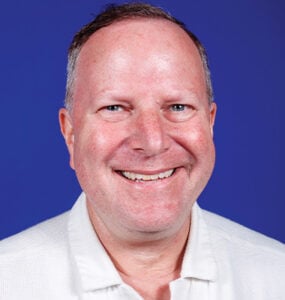 BILL LEVENSON
Age: 56
Location: Washington, DC
Party: Republican
Occupation: Contracts administrator
Family: Single
Jewish Denomination: Conservative
2024 Vote: Donald Trump
News Sources: WaPo, NYT, WSJ, Fox News, Times of Israel, JTA, JNS, Jewish Insider
What are your top concerns about the midterms at this moment? My top concerns about the midterms are with the economy, including the high prices of everything. Candidates from both parties campaign on lowering prices, but the economy is too large for any candidate to follow through on any promise to lower prices.
With loss of Congress a distinct possibility, are Republicans well served by President Trump on the campaign trail? President Trump, through his actions and policies, could certainly be more helpful to candidates in close races. It is important that the Republicans maintain control of the House and Senate to enact Trump’s legislative agenda. A Democratic-controlled House and Senate would result in a stalemate over the next two years. The pollsters are saying that scenario is likely, but pollsters have been wrong in the past. The good news about a stalemate is the liberal Democrats won’t be able to advance their anti-Israel priorities.
Would Democratic control of Congress be “good for the Jews,” in your view? In regards to investigations of antisemitism on college campuses, no. According to the Brandeis Center, Republicans are interested in investigating antisemitic incidents on college campuses; Democrats in the House and Senate are not. On the international front, Israel needs to finish the war with Hamas in Gaza, and hopefully finish the war with Iran. I am concerned that the loud leftists in the Democratic Party will try to block any legislation in Congress regarding support for Israel.
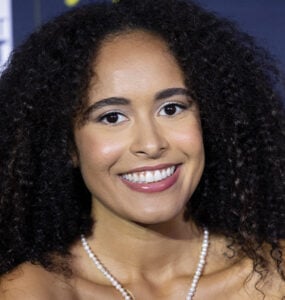 NOA FAY
Age: 25
Location: Glen Cove, New York
Party: Independent
Occupation: Politics
Family: Single
Jewish Denomination: Conservative
2024 Vote: Kamala Harris
News Sources: WSJ, The Free Press, CNN, The Jerusalem Post
Since we last spoke, you’ve moved from Massachusetts to Glen Cove, NY (Long Island). Will you vote to reelect Democratic Governor Kathy Hochul? No! I will be voting for the Republican, Bruce Blakeman, for governor.
You grew up in a left-wing Jewish family in the Boston area and you’ve been working on a Democratic election campaign. Is this your first time voting Republican? Yes, though it’s worth noting that at 25, I’ve only voted in three election cycles. My vote for Blakeman is about selecting a candidate who is strong, pro-America and not bigoted. Hochul’s willingness to align herself with Mamdani disqualifies her from receiving my vote. Not only is she okay partnering with someone who still cannot denounce calls to “globalize the Intifada,” she is liable to pander to any audience just so she can retain power.
“Domestically, I fear that a “blue wave” will increase the rapid normalization of antisemitism.”
What are your top concerns about the midterms at this moment? I am most concerned about two things: 1) the alliance between leftist socialist/communists and jihadists/Islamists; and 2) the Democratic Party’s unabashed acquiescence to this movement. Just below these items is Americans’ quality of life (i.e., affordability). Life is clearly very expensive and difficult for the majority of our citizens. That is the opposite of what our country is supposed to be for its people; Americans deserve far better.
What’s your assessment of AIPAC? Overall, I would categorize AIPAC as far more positive than negative for American Jews. Those who liken AIPAC to an invisible Jewish hand or point to it as an example of concentrated Jewish power reveal nothing about AIPAC and everything about themselves. There are myriad groups and industries that lobby the government and raise and contribute significantly more funds than AIPAC; the unique obsession with the Israel-related lobbying group is antisemitic, period.
Have you experienced rifts within your Jewish community over the election? Generally speaking, no. However, that is mostly because I made it a point after October 7 to involve myself in Jewish communities that 100 percent understand the threats Jews face right now and support Jewish Americans accordingly. That said, I am friends with some Jews who like to explain away the obvious dangers of figures such as Mamdani and Abdul El-Sayed. We discuss our respective opinions periodically, and it remains hard for me to understand how they reach their conclusions, but we are still friends.
Will it be good for the Jews if Democrats take the House (and/or Senate), and what will it mean for the remainder of Trump’s presidency overall? My assessment is that it would be better for Jewish Americans if Republicans maintain power for the duration of Trump’’s presidency. I do not expect that to happen, though, so the next best option is for a divided government to ensure some sort of balance. If the Democrats take control, I will not be surprised if canceling aid to Israel is first on the agenda; without proper preparation (i.e., Israel tapers off from its reliance on the United States), this is bad for Jews everywhere—especially in the current geopolitical climate. Domestically, I fear that a “blue wave” will increase the rapid normalization of antisemitism.

DON COHEN
Age: 67
Location: West Bloomfield, Michigan
Party: Independent
Occupation: Retired Jewish community relations professional
Family: Married, two children, one grandchild
Jewish Denomination: Conservative
2024 Vote: Kamala Harris
News Sources: WSJ, NYT, The Detroit News, Detroit Free Press, The Times of Israel, The Jerusalem Post, Moment, The Forward, The Free Press, Axios, JTA, POLITICO, CNN
When we last spoke you were leaning toward a vote for Republican Senate candidate Mike Rogers over Democrat Abdul El-Sayed, due to El-Sayed’s hostility toward the U.S.-Israel relationship. Has anything changed? I fully intend to oppose El-Sayed for Senate, so I will vote for Rogers to stop him. In the recent debate, El-Sayed couldn’t decide whether Iran or Israel was a bigger threat to the United States. He bobbed and weaved, falling back on his talking points.
Many Democrats would tell Democratic-leaning Independents like you that obtaining a Senate majority to foil the Trump/MAGA agenda is a must—no matter your objection to the particular Democratic candidate. Are they wrong? This is not about supporting the Democratic Party of Obama and Biden, or about the “big tent.” Watching Democrats suck up to El-Sayed is very hard, just like watching Republicans suck up to Trump. It’s pretty much the same thing. Today we have a Republican House and Senate, and Trump can hardly get anything passed. If the Dems take the Senate, it won’t be any different. Also, Trump has two more years and El-Sayed would have six. If the Dems win by a small margin and must maintain party unity through compromise, El-Sayed, Bernie Sanders and the DSA candidates will have outsize influence. They’d have to be satisfied before anything could pass. Why would I support that?
What are your top concerns about the midterms at this moment? My top concern is that the election results, particularly if El-Sayed is elected, will normalize anti-Zionist and anti-Jewish sentiment among Democrats. Israel is an important ally for the United States, and it is not only the Jews who will suffer if we turn our back on Israel. It would be a win for some politicians, but a real loss for our country, for Israelis and Jews around the world, and bode ill for the future. Some of my friends are voting for El-Sayed as an anti-Trump vote, and while I’m worried about Trump on many levels, he mainly governs by executive order, so I don’t see that changing, whatever the election results.

ADAM GRUMBACH
Age: 57
Location: Brooklyn, New York
Party: Democratic
Occupation: Lawyer
Family: Married, two children
Jewish Denomination: Unaffiliated
2024 Vote: Kamala Harris
News Sources: NYT, The Guardian, Substacks of Peter Beinart, Jonathan Katz
You are the only self-described (“Scandinavian-style”) socialist in our JPVP mix (although you are not a DSA member). I take it there’s been no dramatic shift in your voting choices? Nope, no dramatic shifts; I’ll vote for Brad Lander for Congress. I attended a fundraiser for Abdul El-Sayed and thought he was pretty fantastic. I wish I could vote for him. Alexandria Ocasio-Cortez was there; I’ll definitely be voting for her in the next election. It seems pretty certain she’ll either run for president or challenge Chuck Schumer in 2028. Win-win, as far as I’m concerned.
“The upside of Trump having an extended tantrum is that it will make it harder for Republicans to win in 2028.”
If Democrats take the House or even the House and Senate, what do you see happening over the remainder of the Trump presidency? Will it be “good for the Jews,” in your view? I think Trump will blame the American people for deserting him and will punish us all. He and Israel (Bibi or Eisenkot or whoever) will resume bombing Iran, with atrocious outcomes across the globe. Trump will unleash ICE à la Minnesota but in many more places. I think he’ll just create mayhem all over. The smash-and-grab will continue—with the brazen-corruption dial turned up even further. So, not good. Still, Dems need to retake Congress and begin oversight hearings immediately, mostly to make clear to those who are still thinking of breaking the law for Trump that there will be accountability in two years. The upside of Trump having an extended tantrum is that it will make it harder for Republicans to win in 2028.
If Democrats take back the House and Senate, is that good for the left? And can the left mend fences with pro-Israel Jewish Democrats? Absolutely, Democrats taking back the House and the Senate is a good thing for the left. I do think there will be a lot of pressure from the DSA, which is proving itself through solid organizing in all sorts of places, including Florida. I predict Trump’s immolation will continue but not before some pretty desperate moves to hold onto power. I’m not sure his forces are organized enough for the midterms, but there is no doubt 2028 will be ugly, and SCOTUS has left open lots of room for subverting the election.
What are your top concerns about the midterms at this moment? I don’t doubt that the vast majority of voters this cycle will attempt to vote against Republicans, and I’m pretty sure that will become apparent when the votes are counted. But I do worry about election interference by Trump and his sympathizers. It is an accepted fact that they have spent the last year attempting to rig the election—from changing U.S. Postal Service rules, to closing voting locations in Democratic districts, to threatening ICE presence at the polls, to attempting to purge voting roles of allegedly ineligible voters. And yet almost all the election coverage we read about is basic horse-race stuff, with zero mention of this accepted fact. So I’m most concerned about election interference influencing the outcomes. If the Dems don’t win big, I believe that will explain it.
Is AIPAC a net positive or negative for American Jews, and U.S. policy toward Israel? AIPAC is a disaster and always has been, for American Jews and U.S. policy toward Israel. It undermines democracy here in the United States (mostly by supporting reactionary forces, including the Republican Party), and it has enabled extremist right-wing forces in Israel by guaranteeing unconditional U.S. support. But it does feel like, finally, they have lost much of their power here. They spent millions upon millions this last round and many of their candidates lost. I disagree that it would be a positive for AIPAC to shore up support for Israel while it is losing support in Congress because it is committing genocide. It’s definitely negative for American Jews to conflate antisemitism with anti-Zionism.


 ROSA ERGAS
Age: 51
Location: Camden, Maine
Party: Democratic
Occupation: Epidemiologist
Family: Married, two children
Jewish Denomination: Unaffiliated
2024 Vote: Kamala Harris
News Sources: Maine Public Broadcasting Network, The Midcoast Villager, The Maine Monitor, NPR, NYT, The Guardian, The Times of Israel
You said you would vote for Democratic Maine Senate candidate Troy Jackson notwithstanding his support for denying military aid to Israel. Do you still stand by that decision? I still plan to vote for Jackson. I listened to an episode of Chutzpod that aired on October 7 that helped crystallize my decision-making process. I thought about all the things I value and which candidate fulfills more of my priorities. In my 30-plus years as a registered voter, it’s always been the Democratic candidate who wins my vote.
What are your top concerns about the midterms at this moment? Right now, I’m watching both the midterms here in the United States and the elections in Israel with some optimism for a better direction—I’m not expecting perfection but I’m hopeful that if the polls here are accurate, we’ll be in a better place than we are now in terms of democratic norms and social good. So I’d say my top concern is that the polls aren’t right!
If Democrats take the House or even the House and Senate, what do you see happening over the remainder of the Trump presidency? Will it be “good for the Jews,” in your view? I’m hopeful that if the Democrats take the House and Senate, there will be some effort to encourage Israel to meaningfully engage with a peace process. I am very worried about the rising antisemitism in the United States and globally. Israel’s right-wing nationalist party control, with unchecked support from the Trump administration, plays into the worst of the anti-Israel narratives. It would be good for the Jews if Israeli policies and actions were not divisive within our own communities. The best thing for both the Jews and the Palestinians is a path toward peaceful coexistence.