
The future of Israel has become a bitterly contested narrative. Among Israel’s fiercest opponents, predictions of the country’s imminent demise are commonplace. Many anti-Israel extremists—including the facile “love Jews, hate Zionists” crowd—insist that Israel will soon cease to exist. Such voices often belong to poorly informed, self-righteous false friends of Palestine. People cheerfully post on my social media feeds that my country is condemned to eternal shame and eventual extinction. They tend to stammer—or simply vanish—when asked how, exactly, that noble goal is supposed to be achieved.
At the opposite ideological extreme, Israel’s religious-nationalist camp offers a prophecy hardly more reassuring. The remaining supporters of the current coalition still peddle an eerily upbeat vision of Fortress Israel, unconquerable with no need of allies—what Prime Minister Benjamin Netanyahu recently called a “new Sparta.” It is a prospect both chilling and ludicrous, especially when this very government continues to exempt vast numbers of ultra-Orthodox citizens from military service.
Until quite recently, Israel’s moderate center and left were submerged under their own bleak forecast. The Hamas massacre of October 7 was followed by war, grief, mounting international hostility and growing anger at our own government’s handling of both the Gaza campaign and the hostage crisis. I have friends and colleagues who despaired. They came to regard Israel as a lost cause—for democracy no less than for peace. Around 200,000 middle-class professionals are estimated to have emigrated. These were people who loved and served Israel. They left feeling betrayed as well as heartbroken.
Yet something remarkable is happening.
As Israel finally stumbles toward long-overdue elections in late October, despair has begun to give way to civic confidence, political imagination and even guarded excitement. That shift has received remarkably little attention abroad. International observers remain largely unaware—or worse, dismissive—of the constructive energies now stirring among Israeli liberals and moderates.
Israel’s pro-democracy organizations, civic forums, legal associations and NGOs have quietly begun preparing for the day after.
Israel is at a low point. In the immediate aftermath of the Hamas massacre, not even members of Netanyahu’s own coalition expected the government to survive to its term’s end. Yet it clung to power, largely by denying responsibility for the military disaster, corruption and civic breakdown that occurred on its watch. The Gaza war failed to defeat Hamas, caused immense suffering and left a lasting stain on Israel’s reputation, regardless of the outcome of international legal proceedings. The fronts in Lebanon and Iran remain unresolved. Donald Trump—I am duty bound to credit him with the return of all hostages, living and murdered—still proved a profound disappointment to many gullible Israelis who once admired him. Government ministries have become populated by Netanyahu loyalists amid repeated allegations of corruption and bribery. Israeli society is more deeply divided along the nationalist-liberal faultline than ever before.
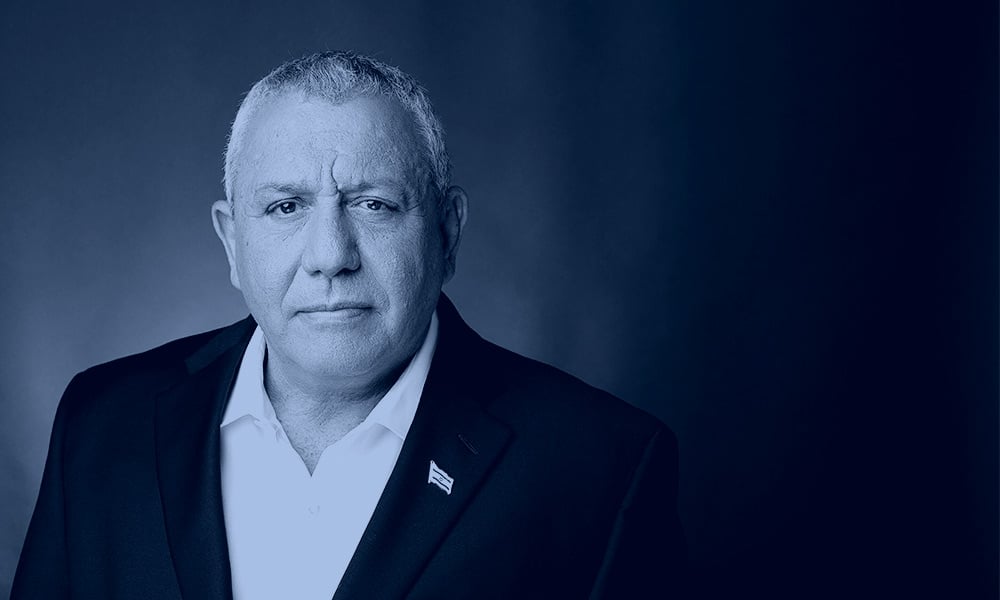
But the atmosphere is changing. Candidate Gadi Eisenkot has fired up the center-right, while Yair Golan and his colleagues have restored a long-lost spark to the center-left. Eisenkot currently appears the most likely candidate to become Israel’s next prime minister. He would almost certainly be joined in the coalition by Naftali Bennett, Yair Lapid and Avigdor Liberman, and, one hopes, by Yair Golan’s Democrats. Better still would be the participation of an Arab party.
That possibility has already provoked poisonous racist attacks across Israeli social media and parts of the political establishment. Yet here, too, there is genuine reason for optimism. Mansour Abbas and his party are still demonized by some because of their historical Muslim Brotherhood affiliation, but Abbas has repeatedly demonstrated that he can serve as a responsible coalition partner who has made his peace with the Zionist idea. More recently, three Arab parties, Hadash, Ta’al and Balad, have created a joint list for the Knesset, thus maximizing the voting impact of Arab citizens of Israel.
In a remarkably courageous move, former police commander and Knesset member Yoav Segalovitz seems about to join Abbas’s party as its first Jewish member. Their shared platform focuses on combating organized crime and the appalling epidemic of murders in Arab communities. It also represents a commitment to rid the Israeli police of Itamar Ben-Gvir’s vile legacy.
More heartening still, Israel’s pro-democracy organizations, civic forums, legal associations and NGOs have quietly begun preparing for the day after. Some are drafting proposals for the written constitution Israel has never had. Others are developing detailed plans for restoring integrity on issues from security and education to environmental protection and constitutional law. Jurists are studying the experiences of Poland and Hungary, two countries struggling to reverse authoritarian institutional capture. Poland has discovered how difficult it is to undo politicized appointments and legislation. Hungary has moved more aggressively against Orbán’s loyalists. If the Netanyahu regime is voted out, Israel may find itself somewhere in between.
The victims of October 7 will not return. Nor will the Palestinian civilians killed during the Gaza war. No election can erase those tragedies. But harmful laws can be repealed, democratic institutions restored, civic norms recovered. Corruption cases will have to be pursued and public trust rebuilt. Above all, the Supreme Court and the entire judicial branch must once again become immune to political capture. These changes are much needed, seriously planned and eminently doable.
The same applies to Israel’s relationship with the Palestinians. I believe that an Eisenkot-led government, supported by the center and the left, would reverse Netanyahu’s systematic hostility toward the Palestinian Authority. The moribund dialogue between Jerusalem and Ramallah could resume, this time with sustained international participation. Eisenkot is very likely to reopen political conversation—and with it, restore a horizon. Some critics argue that Eisenkot differs little from Netanyahu because of his current opposition to Palestinian statehood—perhaps a fair observation for now—but they also accuse him of indifference to Palestinian lives, which is simply false.
While Gaza urgently requires physical reconstruction and political renewal under a better government than Hamas, Israel needs political and ethical reorientation. Equally important is the restoration of civic solidarity. Eisenkot, Bennett, Lapid and Golan have all committed themselves to offering Arab communities greater protection from criminal violence and fuller participation in public and political life.


This promise of civic renewal has already drawn fire from both extremes. Netanyahu’s remaining loyalists portray opposition leaders as Hamas accomplices. At the opposite pole, anti-Israel activists abroad dismiss any attempt to repair Israel as morally meaningless after the Gaza war. Some still predict the country’s inevitable collapse into permanent disgrace. They dismiss Golan as merely another wolf in sheep’s clothing. Above all, they accuse Israelis of believing smugly that all will be forgiven and that everything will soon be fine again.
We do not believe any such thing. Israel’s next government—barring the increasingly unlikely prospect of another Netanyahu victory—will inherit an almost overwhelming burden. The task is Herculean. At stake is not only survival, but also moral responsibility.
The atrocities of October 7 and the devastation of Gaza can and must be investigated. Israel must finally establish the official state commission of inquiry that Netanyahu has consistently resisted. The dead—Jewish and Arab alike, including Eisenkot’s son—cannot return to life. But the living, in Israel as well as in Gaza, deserve greater security, relief, accountability and perhaps some measure of healing.
The Hamas massacre of October 7 was Israel’s greatest calamity. The elections of this October 27 may prove to be Israel’s last great opportunity. And if a new Israel (or, in Theodor Herzl’s phrase, an old-new Israel) can indeed emerge and restart the engines of optimism, I hope that other countries struggling under populist regimes may take heed and follow the trail.
Fania Oz-Salzberger is a writer, historian and professor emerita of history at the Faculty of Law, University of Haifa.
(Top image credit: Gadi Eisenkot by Yahav Studio, CC by SA-3.0)