
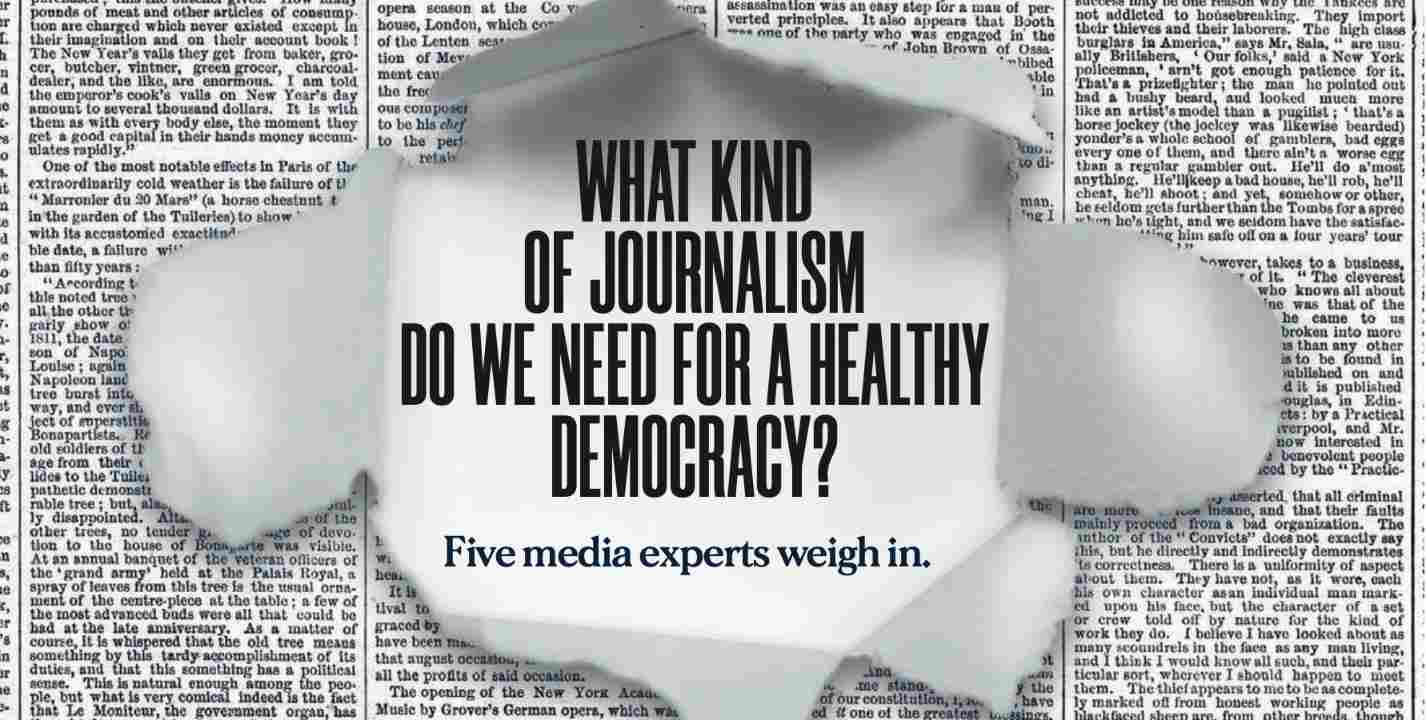
Can trust in the media be restored?
Will the basic ethics of journalism hold in the era of AI?
What about media monopolies? Reviving local journalism?
Who’s reading what, where and how?
FEATURING
VIVIAN SCHILLER
MARK OPPENHEIMER
MARTY BARON
MARGARET SULLIVAN
TOM ROSENSTIEL
SYMPOSIUM EDITOR: Jennifer Bardi
INTERVIEWS BY: Jennifer Bardi, Nadine Epstein
VIVIAN SCHILLER
 There’s a quote from The Elements of Journalism by Tom Rosenstiel and Bill Kovach: “The primary purpose of journalism is to provide citizens with the information they need to be free and self-governing.” It’s a bit reductive, but it gets to the point. A lot of people in the profession, and I say this with all the affection in my heart, are focused on the idea that journalists are needed because we do important work. But it’s actually not about the journalists, and it’s not about the news organizations. It’s about the public. Journalists are merely a vehicle for citizens to have the information they need to be free and self-governing, which of course ties directly to your question of democracy. Because without that, I don’t know how people can make decisions for their own lives but also for their communities and their country.
I’ve always looked at how the latest technology can get people that information, can advance public interest. As to what kind of pivot we need to make today, first we need to resist the knee-jerk reaction that we like things the way they are. And if I hear “What happened to the good old days when we all watched Walter Cronkite?” one more time! (By the way, the good old days weren’t as good as you thought they were, but that’s a whole other story.) Absolutely, each technology has brought problems, but they’ve also brought incredible opportunities to the public service mission of journalists, and that includes AI today.
I don’t think the ethics of journalism have really had to change very much; longstanding principles about transparency, fairness and rigor have stood the test of time. The question is how we apply them to the current moment. So, for example, investigative journalists can use AI for extracting themes or patterns from large datasets. Local news organizations can utilize digital recordings and AI to cover school board meetings or town halls if they don’t have the reporters. But even in those cases, you should never put something out unchecked. You’ve probably heard the cliché “human in the loop” in discussions of AI. I think a better expression is “human at the helm”; we should always be in charge.
“Principles about transparency, fairness and rigor have stood the test of time. The question is how we apply them to the current moment.”
In terms of building trust, survey after survey shows people trust their local media more than they trust a generic concept of the media, because local journalists are actually of the community, even if you don’t see them out and about. Of course, local news publishers have been more disadvantaged by the collapse of advertising. Some have had success hosting in-person meetups or other events in the community, and their business model has, by necessity, moved toward membership or subscriptions or donations. Something I observed in my years at NPR is that if somebody is financially supporting you, they’re invested in your success and feel as beholden to you as you are to them.
Another adaptation we’re seeing is when, for example at nytimes.com, a reporter will jump into the top of the comments section of their article to discuss the process of writing it, or what they’ve learned since. I love it. It’s the epitome of transparency, and it also shows that there’s an actual human being behind the story. The reporter might say, “I missed something.” They’re showing their work, so to speak.
Thinking about bias, we’re all guilty of wanting to read things that comport with our preconceived notions. That’s just human nature. But a good news organization will find a way to get audiences interested in things they might not have thought they cared about and also open their eyes to different ways of thinking. Debates are one way to bring in other points of view. Sure, there’s an element of the reader or viewer wanting a cage match, but I think we underestimate the curiosity and interest of the news-consuming public. Adding value to the discourse should be the goal, not simply feeding a voracious algorithm that wants conflict.
You know, Twitter (now X) was supposed to change everything. It was going to be the public town square where we could actually have debates. It would democratize information. Unfortunately, it hasn’t lived up to that. I’m still on X because I want to hear what people are saying, but I don’t think social media generally has delivered us a superb news experience. And yet, the reality is, people are getting news there, so I think to the extent we can keep trying to work with the social media providers on their curation, so much the better.
In terms of covering politics, I’d first say that most administrations don’t like the press. If you’re a politician, you’re pursuing a particular message, and you know that the news media are not there to be your willing messenger but to report what’s going on. That tension is healthy for democracy. But the Trump administration’s aggressive interference with journalists and media outlets, including pressure campaigns and lawsuits, has been novel for how far it’s willing to go in testing the outer limits of what the First Amendment provides.
It sounds somehow ridiculous to say out loud how much of a supporter I am of the First Amendment, but it is heartening to see so many good news organizations fighting for it. And again, it’s not about protecting journalists. It’s about rigorously defending the public’s right to know.
Vivian Schiller has served in executive roles at CNN, The New York Times, NPR, NBC News, Twitter and the Aspen Institute. She is currently CEO of the Patrick J. McGovern Foundation.
MARK OPPENHEIMER
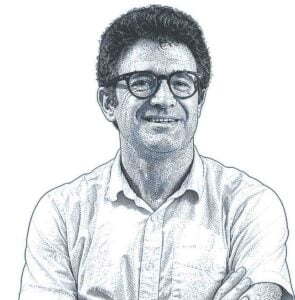 It all comes down to localism, localism, localism. If you look at the purges in American journalism over the past 20 years, it’s actually pretty encouraging how much international and national news we still get. Most of us can still quickly find out what’s happening in foreign countries, especially ones in conflict, or find out what’s happening in national elections, because there are still large outlets covering these things. But the closure of small and regional newspapers has simply hollowed out the ecosystem for local news.
This has a couple of consequences. Number one, most people haven’t the faintest idea what’s going on in their city council or their state legislature, and that’s where most of the laws that affect us day to day are made. State laws are much more consequential for all sorts of important things—schools, traffic, zoning regulations, etc.—than what’s going on in Congress, and yet most of us have no idea who our state representative or state senator is.
The other consequence is that because there are so few local reporters, people will never meet a reporter, so they don’t trust them. When I was a child, the Springfield Daily News in my hometown in Massachusetts had 30 or 40 people covering the city, not to mention reporters in many of the surrounding towns. We saw those reporters at our sports games, at local theater productions. If you happened to go to a zoning meeting or a town council meeting, there would be a reporter there. They were your neighbors, which meant that journalism was a community that you wouldn’t jump to conspiracy theories about and that you would generally trust. Now, reporters are either names you hear on NPR or a podcast—Nina Totenberg, Michael Barbaro—or bylines that have been shared on your Instagram or Facebook feed. They’re a little bit like celebrities who you might love or hate, or who you might love to hate, but you wouldn’t say that you have high social trust in them. When a politician says that the news is fake, that’s a lot easier to believe if you don’t know a reporter.
Moreover, we’ve had a major cultural shift into polarization with the breakdown of the old model of a common media culture—where you had your local paper, maybe you got a national news magazine like Time or Newsweek, and you watched one of the three networks’ news shows. Part of the story of the last 15 years is the dissolution or fragmentation of that common culture.
“Reporters have to have a romance with uncovering the news, not a romance with changing the world.”
Media went into a debt spiral when ad revenue shrank. Climbing back out of this will require, to some extent, figuring out how to get people to pay for it again. Improving the product is a challenge that can be addressed partly by nonprofit funding and partly by, frankly, underpaid or volunteer labor. Independent legacy publications, like Moment, are going to find ways to innovate and pull people in. But it’s a real struggle.
Thinking about the role of AI in regard to the kind of journalism we need for a healthy democracy, it’s worth pointing out that machine learning has been used for a long time to find information really fast, at least as far back as the search engines of the 1990s. So I don’t know that there’s any reason not to use AI as a better search engine and to help do tasks like transcription faster and more efficiently. But at the end of the day, there has to be a human being who is accountable if articles get stuff wrong. I also think we’re a long way from AI being able to replace the human labor that goes into reporting, like going to events and deciding who in a crowd to interview. If newsrooms state that “all our writing is done by humans” and provide bylines, that’s a pretty clear line of accountability. Because if people think that there are just machines interviewing other machines and then writing articles that they send out to our machines, then the trust will go down to zero, and journalism becomes a massive multiplayer game you watch on a stream somewhere.
I also believe in fighting bias in reporting, trying to be as objective as possible. There’s no such thing as a bias-free story, but people want you to try. Rejecting objectivity as a goal, the way that Fox News or MS NOW does, is really bad for trust in the media. That’s not to say that newsrooms that strive for objectivity can’t become ideological echo chambers. I mean, I’d be very skeptical if someone claimed that more than 5 percent of the reporters at The New York Times or NPR are Republicans. You don’t want homogeneous newsrooms.
One problem is that very few young people in general want to go into journalism, and those who do are overwhelmingly liberal. But it’s not that we need more conservatives, per se. We need people who believe that their job is to be a reporter rather than an activist. When I taught journalism, I always said to young people, if you think you’re going into journalism because you’re going to help protect a woman’s right to choose or helpfight climate change, please don’t go into journalism. Because you might be working on a story about Planned Parenthood or an environmental advocacy organization and discover something that makes them look bad. I don’t care if a given reporter is left-wing or right-wing, as long as they believe that it’s their job to get the story straight. They have to have a romance with uncovering the news, not a romance with changing the world.
Mark Oppenheimer is the executive editor of Arc Magazine. He is the former “Beliefs” columnist for The New York Times and co-hosted the podcast Unorthodox from 2015 to 2023.
MARTY BARON
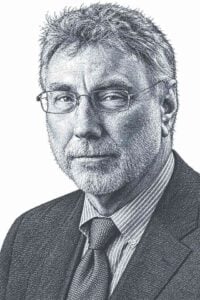 I would start with why the founders of this country wrote the First Amendment to specifically provide for a free press. They felt that the press should serve as a watchdog on the government—the so-called Fourth Estate checking the three official branches: the presidency, the courts and the legislature. And so the first thing that we need to do is to fulfill that mission.
Number two is to give the public information it needs and deserves. It’s not our job to decide who should govern or exactly how the country should be governed, although we can certainly express opinions on that in certain forums. Our fundamental job is to provide information so that people can make the decisions for themselves.
The third thing I would mention is that journalists need to be more impressed with what they don’t know than with what they do know—or think they know. We have an absolute duty to tell people what we know to be true, and tell it to them directly and honorably. But we must first approach our work with a willingness and eagerness to look at all of the available evidence, talk to all of the relevant people. It’s been said that journalism is the first rough draft of history. Sometimes you’re only at the beginning when you’re working on a story. You see something through a keyhole. Over time, with additional work, you can crack the door open and see more. And if you’re lucky and you’re skilled, then you can swing the door wide open and see the entire picture. But that doesn’t happen every time, and sometimes getting that door wide open requires years, maybe even decades. That’s why we have historians: Once people have passed away, once more documents become available, you can see a lot more of what actually transpired. As I said, “first rough draft of history” is not a bad phrase to describe what we do.
Traditional media has been in a state of general decline for some time and therefore under the most severe financial pressure. Mergers are largely a response to that. At the same time, I think the dominant trend is the exact opposite, which is fragmentation of media. You’re seeing so many influencers of various types: podcasters, YouTubers, people on Substack or similar platforms. Consumers of information are going to those places for various reasons, one being they feel those voices are more authentic. We in traditional media have always focused on our authority. That’s understandable; our highest priority should be to get the facts right. But communicating authenticity—even faked authenticity—is a form of communication, and we need to understand that. Certainly there are also influencers who are experts in their field and are doing significant reporting.
“Journalists need to be more impressed with what they don’t know than with what they do know.”
Much more concerning is when news consumers seek out new media just to hear points of view that align with their own, whether they’re rooted in fact or not. Interestingly, when the country was founded, a lot of journalists were mere partisan pamphleteers, opinion-mongers pressing various causes who weren’t doing any reporting and, in fact, were spreading a lot of news that happened to be untrue. (Samuel Adams was one of them. Stacy Schiff’s book The Revolutionary Samuel Adams goes into how a lot of things he wrote about the British, while for a good cause, were simply false.) Things really changed in the 1950s with the biggest news organizations, but we’re kind of moving back to that original media environment: pamphleteers, albeit using digital devices. This includes journalists with traditional news organizations who rush to judgment, who make impulsive comments on social media, who seem to suffer from too much certainty and too little curiosity.
The use of technology, namely artificial intelligence, to deliberately disseminate fabricated information is a huge danger to our democracy and a huge challenge to the press. We have to detect these falsehoods and get the evidence disproving them in front of the same people who saw and believed the misinformation. At the same time, more people are turning to chatbots to get the news. Research suggests that people may have more trust in that approach because they see the AI as gathering information from all the outlets out there, rather than relying on any one outlet with its particular bias. That poses a financial threat to media outlets. And often enough, if the AI response links to sources, they’re out of context or even off topic. So, it’s a threat to people’s perception of reality. I don’t think we in the press are well equipped to confront it, and I don’t think our democratic institutions and our society as a whole are either.
Remember when, as a close adviser to Donald Trump in his first term, Steve Bannon said the media was the opposition party and suggested the answer was to “flood the zone with shit”? Well, the zone is pretty well flooded right now, so the press has to figure out a way to separate fact from fiction and build trust in our efforts to do so. We need to be radically transparent, almost like a lawyer in a courtroom, presenting the full evidence. So, if there’s a court document referred to, we need to show the whole thing and annotate what we refer to. If there’s a data set, we need to take people to the data set. If there’s a video or audio, we need to share it, not just a fragment of it. The message to the public should be: You have the right, and we’re giving you the opportunity, to check our work.
Marty Baron was the editor of The Boston Globe from 2001-2012, after which he served as the editor of The Washington Post until his retirement in 2021.
MARGARET SULLIVAN
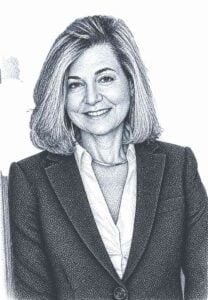 Most of all we need journalism that isn’t afraid to say the truth about elected officials or others in power. It’s not that journalism itself holds power to account; it assists citizens in holding power to account by digging deep, revealing the truth, helping us decide how to vote and, to a broader extent, helping us decide how we want to live our lives.
Talking about big journalism—some call it legacy journalism or mainstream media—I think it should stop being afraid of its own shadow, operating in a defensive crouch and trying to avoid criticism. For example, stop using euphemisms like “baseless claims” when what you mean is “lies,” or “freewheeling” instead of “unhinged.” Stop creating false equivalency in airing both sides of a controversy even though one side may be lying or 100 percent wrong. Constant soft-pedaling has a tendency to normalize things that should not be normalized. There’s a phrase you see a lot in stories: “Critics say,” where a news organization is afraid to actually contend a thing, so they put the claim in the voice of critics, which tends to undermine it. It turns whatever you’re talking about into mere opinion when there are actual facts and evidence to support it. We should be reality-based.
In terms of legacy media and new media, which includes social media, newsletters, podcasts and video journalism, I’m someone who has one foot in each. Incidentally, I’m not using legacy pejoratively—these are outlets, for example, The Washington Post, NBC News, that have been around; they have similar standards; we understand what they do. And I think we need both types of media, because a lot of what you see on Substack, for example, is opinion about things that have been revealed by, say, The Wall Street Journal, The New York Times or Reuters. At the same time, some of the newer voices are more willing to be forthright and set aside the practices of “both-sidesing” and false equivalency.
“Stop using euphemisms like ‘baseless claims’ when what you mean is ‘lies.’”
Undoubtedly, the loss of local journalism across the country is devastating to democracy. At The Buffalo News, myhometown paper, I started as a reporter,then became a columnist and then the editor. That kind of mentoring has dwindled because local papers are so much smaller, or they don’t even exist anymore. Everybody’s in DC, New York and California. But what about Tuscaloosa, Alabama? What about Akron, Ohio? Moreover, the idea that we and our neighbors are functioning with the same set of facts, even though we may have very different opinions about those facts, is largely or at least partially lost because local journalism is so diminished.
Thinking about the kind of journalism we need also requires contending with the reality that our attention spans have atrophied with everything we do on our phones, by the constant scrolling and by the constant stimulation. It’s one reason that headlines are so important. We know that people scan them, so you can’t just say, “Oh, well, the headline was kind of misleading, but the 15th paragraph of the story makes it abundantly clear.” And if people are getting their news on social media, say, through TikTok, then news organizations need to adapt and allow that maybe we can do more with video or graphics or podcasts. Present our good reporting to people in a form that they’re most likely to consume.
I do love the power of print. A front page, for example, with a great headline, a great photograph, where everything works together. And there’s a serendipitous effect when you’re turning pages of a print magazine or a newspaper. “Oh, here’s a page full of obituaries I might end up reading just because they’re in front of my eyes, or international coverage that might not be crossing my feeds.” Maybe you stumble across something cultural or quirky. Yet, it’s not where most people are. So I hope print never disappears, but I also think we have to recognize that it’s niche these days.
Another reality we have to contend with is consolidation. As you know, CBS News and CNN have been absorbed into big media conglomerates. More and more consolidation means less and less competition, which is absolutely counterproductive to what we’re talking about. There are policy measures that can be taken that should have been taken already, but you’re not going to get them with Trump’s FCC appointee Brendan Carr.
I’ve taught in several different journalism schools, and as I see my students go off into the world, I think about the qualities that the best of them have. They’re endlessly curious. They’re very persistent in digging out the truth. They try very hard to avoid conflicts of interest and situations in which their independence is compromised. Perhaps most important, they’re mindful of the public service element of journalism. Even if they’re not putting it in those terms, it’s in their heads. They’re interested in doing the work that our democracy needs to exist, which, again, means holding power to account, being brave and willing to challenge the status quo, and not being overly careerist. Not just doing something as a step up to the next biggest news organization, but really caring about the work itself. I know a lot of people who have that dedication to the public good, and I admire them a lot. They’re not the people who come to mind when you ask, “Who are the most prominent journalists in America?”
Margaret Sullivan writes for The Guardian US and produces the Substack American Crisis. She is the author of Ghosting the News: Local Journalism and the Crisis of American Democracy and was previously the media columnist for The Washington Post and public editor of The New York Times.
TOM ROSENSTIEL
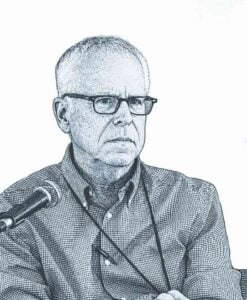 The first thing journalism has to do to serve democracy is become sustainable. The question is, what will it take to create journalism that has enough value for people that they will pay for it? Because the advertising model that financed journalism in the 20th century is gone. That model was to get people’s attention and then rent that attention to advertisers. And so, the customers in that old model weren’t the consumers of news but the businesses that bought advertising. (Platforms today play the same game.) At the same time, there were elements in the news product that were indispensable for people. You couldn’t buy a house or rent an apartment or sell a bike or know what was on television or get a coupon for the grocery store or know what the weather was going to be tomorrow morning without that news package. Now people get all of that elsewhere. And so, we need to better understand people’s needs and interests and those of their communities in order to provide content they value.
Moreover, we can’t just write off people who are suspicious of us. Honoring and respecting where someone starts is important because then they don’t feel disrespected. They don’t feel like you’re telling them they’re stupid. For example, in writing about a vaccine controversy, you should say that many people have been persuaded that vaccines cause autism, that, in fact, there are a handful of studies that have suggested that, but they have been discredited, and there are far more studies that have shown this not to be true. In other words, show people the evidence, but don’t dismiss out of hand how they arrived at their misconception. Provide some understanding that what they believe is not invented out of whole cloth. It may seem laborious, but it’s necessary.
Another lesson, although a challenging one, is that repeating information is important. We tend to think in the newsbusiness, “Well, we reported that already.We don’t need to repeat it.” There’s a phenomenon known as the illusory truth effect, whereby things that you’ve heard more often and more recently seem truer to you. There was even a study done in Indiana that showed you can persuade people that Scottish men wear saris, not kilts, if you repeat it enough. If we are in the truth business, battling falsehood, we need to employ some of the techniques that the amplifiers of falsehoods are using. Something else psychology tells us is that simpler language is more memorable. (Remember the old Mark Twain line, “I’m sorry I wrote such a long letter. I didn’t have time to write a shorter one.”)
“If we are in the truth business, we need to employ some of the techniques that the amplifiers of falsehoods are using.
Journalists operate by a kind of professional ideology and a set of bedrock norms that we have elevated as part of our professional obligation: 1) We make society better by pointing out what’s wrong with it; 2) power corrupts, so we have to watch people in power; 3) society should be as transparent as possible; 4) we need to elevate the voices of the less powerful in society; and 5) the more facts about something you have the better. No one entirely disagrees with these concepts, but people are often skeptical of them, and, as it turns out, people who have more conservative instincts tend to be even more skeptical.
I organized a study to test those five bedrock ideas of journalism. First we tested them with a variety of journalists, who endorsed them. When we tested them against the American public, it turns out that only one—that the more facts you have, the better—has majority support among most Americans. The one that has the least support is that we make society better by pointing out its problems; participants were more inclined to think that we make society better by celebrating what’s working and what’s good about it, by offering models for people to copy. When you state that the powerful in society need to be watched or else they will do bad things, a lot of people will respond that we need to give these people some space to be able to do their jobs. So journalists need to rethink the assumption that these so-called bedrock values are universal.
There’s a movement among some journalists today that journalism needs to become pro-democratic or pro-democracy. When you dive deeply into the argument, you see that a core contention is that the Republican Party has become counterfactual or anti-democratic. Proponents of this movement argue that it’s wrong to amplify ideas from people in that quarter. But if you run that to its logical consequence, you end up with a journalism that is not pro-democracy but pro-Democratic Party, writing off virtually everyone who’s in the Republican Party and alienating a large number of Americans. In the end, I think it will make journalism into exactly what Trump accuses it of being—a biased institution, and not one that is open-minded.
Journalism, by its nature, is inherently democratic, because it takes information that was once held by a few and makes it more widely available to the many. The term “public opinion” began to emerge after the printing press and after the first newspapers began to take information and make it more widely available. In England, journalists had to sue to be allowed to report on the activities inside Parliament, because initially under British law that was private. The whole movement toward democracy, the whole movement in journalism, is to report more information to equip people to be civic actors. If we decide skeptical audiences are fact-resistant and should be written off as crazies or as a lost cause, we shrink our audience by half. We hasten our own ruin. When done properly, journalism serves democracy by finding a way to earn the trust of those audiences.
Tom Rosenstiel is on the journalism faculty at the University of Maryland and is a senior fellow at the University of Chicago’s National Opinion Research Center. He previously held leadership roles at the American Press Institute and Pew Research. His latest book is The Next Journalism: How the Press Must Change to Serve Democracy.
Moment Magazine participates in the Amazon Associates program and earns money from qualifying purchases.