

Jewish Politics & Power is published every other week. Sign up for our newsletter for updates.
1. Trump calls the shots
Usually, when two world leaders have disagreements or engage in a tense exchange, their staff rushes in to extinguish the fire and present the public with a sanitized version of the events. Words like “frank” and “honest exchange” are used to disguise disagreements, accusations and harsh words.
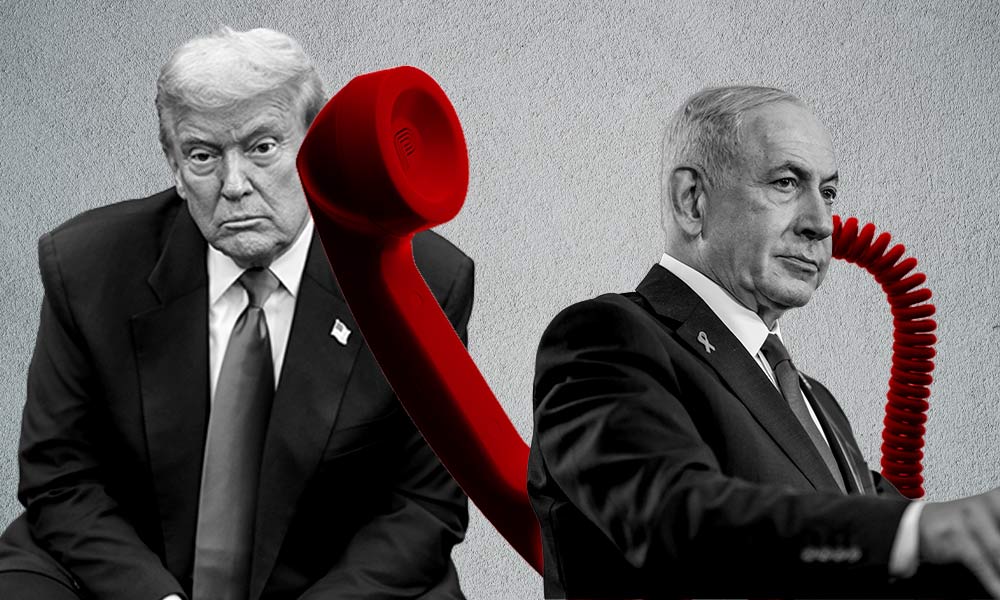
But the phone conversation between U.S. President Donald Trump and Israeli Prime Minister Benjamin Netanyahu last week was so tense and so loaded, neither side even bothered trying to spin it.
The conversation took place after Israel escalated its attacks on Hezbollah in Lebanon, endangering the fragile ceasefire between Iran and the United States. and threatening negotiations between the two countries aimed at ending the war.
Shortly after, Axios reported that Trump did not mince words in expressing his frustration with Netanyahu. “You’re fucking crazy,” Trump yelled at the Israeli leader. “Everybody hates you now. Everybody hates Israel because of this.” When asked about it a day later, Trump confirmed that he called Netanyahu crazy. “I was a little bit perturbed at his constantly fighting with Lebanon, you know. At some point I said, ‘Bibi, we’ve got to stop this. We gotta stop it.”
Hours later, I spoke with Trump briefly by phone. He said that now he and Netanyahu are on the same page again: “We have a great relationship.”
But by Sunday, the differences between the two leaders resurfaced.
Hezbollah attacked Israel’s northern region, Israel responded by launching an attack in Beirut, and then Iran, for the first time since the ceasefire was declared, launched ballistic missiles at Israel. Israeli officials were quick to announce that a harsh Israeli retaliation is imminent, but moments later, Trump, in a series of phone calls with reporters, made clear he doesn’t want Israel to retaliate. “I think Israel has responded enough,” he said. He then spoke with Bibi on the phone and conveyed the same message.
This time he said the call was more cordial, and Trump was more open to listening to his Israeli counterpart and to allowing him a little more room to operate. Hours later Netanyahu did order an attack on Iran, but it was relatively limited in scope—a kind of middle road between Trump’s call for zero response and Israel’s promise to hit Iran hard. After staying silent during several rounds of missiles, Trump took to social media, demanding that Netanyahu and the leaders of Iran “immediately stop shooting.”
Trump himself summed up the dynamic playing out between him and Netanyahu in an interview with the Financial Times. “I call the shots, I call all the shots. He [Netanyahu] doesn’t call the shots,” he said.
2. The end of a beautiful friendship? Not so fast
“Lovers have spats. They may have had a little lovers’ spat this week. It’s okay. When we’re so close, we’re going to have conversations that sometimes are heated.” This is how Israel’s ambassador to Washington, Yechiel Leiter, chose to describe last week’s acrimonious call between Trump and Netanyahu, and that may very well be the most accurate description of this volatile relationship.
Netanyahu and Trump aren’t necessarily the best of friends, but they get along well. They both share the desire to reframe Iran’s role in the region (Netanyahu because of the threat it poses to Israel, Trump because of his passion to undo any agreement or settlement reached by his predecessors Obama and Biden). Both walked open-eyed into the military campaign against Iran, believing that toppling the regime and dismantling Iran’s nuclear plan would credit them with making the world a better and safer place.
Hours later, I spoke with Trump briefly by phone. He said that now he and Netanyahu are on the same page again: “We have a great relationship.”
But now, over 100 days since the launch of this war, it is clear that these goals will not be reached, and this is where Trump and Netanyahu’s paths diverge. The U.S. president is ready to cut his losses and sign a deal, while the Israeli prime minister would like to see more military action to further degrade Iran’s military capabilities.
It’s a lopsided relationship. Netanyahu and Trump have different goals now, but they are not equal players in this game. Netanyahu can present his case, try to convince, and sometimes even succeed, just as he did Sunday night when he turned Trump’s “no retaliation” request into an agreement on a measured response, but the final word belongs to Trump. Understanding this asymmetry is the key to Trump and Netanyahu’s relationship. Trump likes Bibi but doesn’t feel obliged to accommodate all his wishes; Netanyahu admires Trump, but understands this is more about dependency than about partnership.
3. Bibi gets slammed from both sides
The heated exchange between Trump and Netanyahu last week, as well as their differences Sunday regarding an Israeli response to Iran’s attack, did not go unnoticed by Bibi’s political rivals.
It was a rare moment in which left and right united in claiming Netanyahu had been exposed as a weak leader. “We’ve become a full vassal state,” said opposition leader Yair Lapid. Naftali Bennett, considered Netanyahu’s main challenger in the upcoming elections, said that the government has “lost control over Israel’s sovereignty.” And Gadi Eisenkot, who is also running against Netanyahu, argued that never in Israel’s history was there a prime minister who surrendered to such an unreasonable demand.
From the far-right, Itamar Ben-Gvir, who is a member of Netanyahu’s coalition, urged the prime minister to “say no to our friend Trump.”
This isn’t a great look for Netanyahu, and Trump may be aware of that. Cutting Bibi some slack Sunday and allowing Israel to carry out a retaliatory attack, could be Trump’s way of helping the Israeli prime minister show his critics from both sides that he’s not as weak and dependent as they make him out to be.
4. A little posturing never hurt anyone
While these latest spats between Trump and Netanayhu are attention-grabbing, they aren’t necessarily as damaging as they seem.
Trump has been accused by progressives on the left and isolationists on the right of allowing Netanyahu to lead him by the nose into the Iran war. Making sure that the world knows how tough he was on Bibi in their phone conversation and leaking juicy quotes of him lashing out at the Israeli leader helps counter these claims. Trump saying that he “calls the shots,” and that Bibi doesn’t, was likely meant to have the same effect
Netanyahu, too, can gain from Trump’s semi-public outburst. Israelis may be accusing him of being Trump’s lackey, but these recent rounds of confrontations help Netanyahu demonstrate to the Israeli public just how tough Trump is with him and how he can succeed in standing up to Trump.


5. What to watch for next
As of this morning, the situation is extremely volatile, and an escalation in fighting and completion of a deal are both equally plausible.
Both outcomes hold the potential for more friction between Trump and Netanayhu.
If the war escalates, Trump might decide to limit U.S. involvement and to rein in Israel, even if Netanayhu would like to extend the military campaign.
And if a final deal is reached, Netanyahu is likely to push for stronger measures against Iran, while Trump would prefer to finalize a deal, even if not perfect, and put an end to the war.
(Top image credit: The White House)