MOMENT IN THE NEWS!
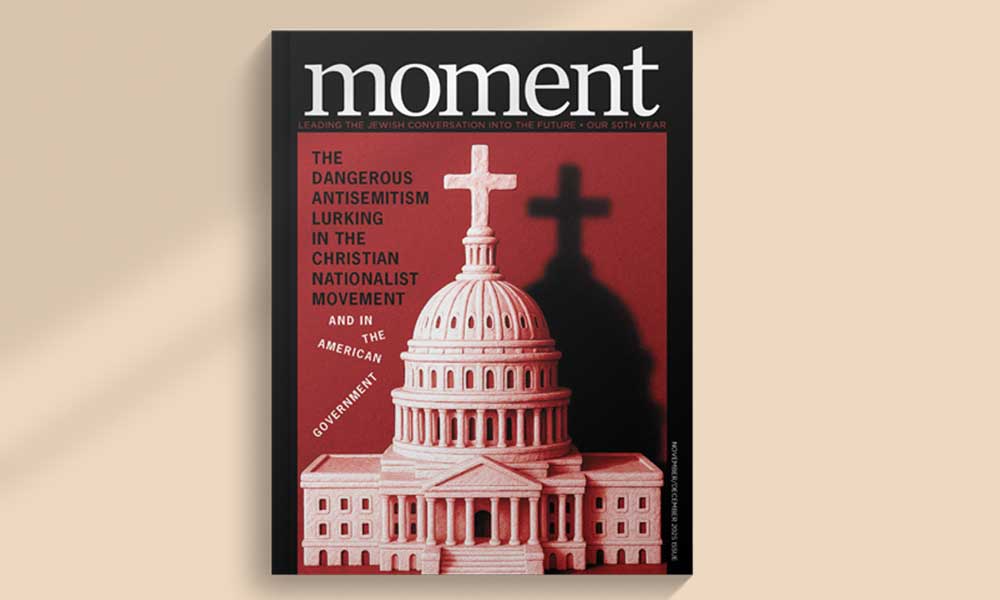
On December 19, PBS’s Amanpour & Company aired a segment with Moment Senior Fellow Tom Gjelten on his November/December 2025 cover story, “The New Christian Right, Antisemitism & U.S. Democracy.” During the 18-minute interview, Gjelten spoke with journalist Michel Martin about how Christian nationalism has become the dominant force in American conservatism and what that means for the future of the country. Gjelten pointed out that one fundamental change is the rejection of the Judeo-Christian tradition: “They believe that America was founded as a Christian nation and should be a Christian nation.” When Martin asked how widespread this belief was, Gjelten pointed to a speech by Vice President JD Vance where he “emphasized that America is a homeland for people with ties here, and explicitly rejected the idea that anybody could become an American by simply believing in the American dream.” Gjelten noted that “this calls into question a lot of democratic principles that have been the foundation of the American identity for a long time.”
Comments on the video, which has been viewed over 140,000 times online, overwhelmingly expressed the need to preserve the separation of church and state. One noted the irony in a Christian nationalist movement that strays from Christ’s teachings, and another noted that, in fact, “it’s never been Christian. It’s a giant con, and it’s only about greed and power.”
Others were dismayed but not surprised, noting that Donald Trump’s first administration, which was filled with antisemitic incidents and journalists and pundits rebranding Nazis as “the alt-right,” laid the path for an even more extreme second term. One wrote that any Jewish person aligning with Trump is going against their interests, and “to hear people speak of this as if it is surprising is astonishing.” More succinctly, one commenter said, “The world is living in the Age of STUPID and America is leading the pack.”

Michel Martin (left) interviews Tom Gjelten (right) about his Moment cover story.
CHRISTIAN NATIONALISM
NOT EXACTLY NEW
That the right in America has somehow branded antisemitism as a purely left-wing problem is deeply concerning, as Christian nationalism has been a far more pervasive danger to us. Consistent with the thesis articulated in Tom Gjelten’s recent cover story, JD Vance raised the specter of Christian nationalism explicitly in his remarks on December 21 at Turning Point USA’s annual conference, AmericaFest. “I’m not saying you have to be a Christian to be an American,” he said, “I’m saying something simpler and truer: Christianity is America’s creed.” Vance also got in his thinly coded crack: “Wouldn’t you rather lead a movement of freethinkers who sometimes disagree than a bunch of drones who take their orders from George Soros?”
Christian nationalism has real consequences not only in terms of American support for Israel but in daily life. As an elementary school student in Philadelphia, I recall well the day the Jews were accused of ending prayer in public schools, a consequence of the Supreme Court’s 1963 decision in Abington School District v. Schempp. Confused by the anger of the other children and the vitriol we heard whispered among adults, we realized perhaps for the first time in our lives that we were different—and unwelcome. A year later, when moments of silence became commonplace, our second-grade teacher insisted that we sit quietly with our fingers crossed “like good Christian children.” Some of the Jewish students folded our hands and the ruler came crashing down on our knuckles. That’s what Christian supremacy looked like then, and I have no reason to think it will be any less vicious today, given the views espoused by Christian nationalist leaders and politicians in Gjelten’s article.
Christian nationalism has been with us all our lives: we are only just now waking up to it after years of thinking that this sleeping dragon had been slain by the Supreme Court.
Craig Hanoch
Highland Park, NJ
YE OF LITTLE FAITH
I’m a Jew who is richly blessed with no small number of Christian friends, not one of whom has so little faith in Jesus as to believe he requires the endorsement of petty, wretched sinners temporarily elected to public office.
Richard Walter
Los Angeles, CA
ISLAMIC NATIONALISM?
Tom Gjelten’s article about the growing influence of Christian nationalism was interesting and concerning, particularly given the current administration’s embrace of this movement’s leadership. From a historian’s perspective, this most recent iteration could be viewed as part of an ongoing dynamic, a response perhaps to other groups moving further to the left on the political spectrum. While reading the article, it occurred to me that another religious movement is also attempting to exert its power over public policy. Jewish college students all over the country have recently experienced the antisemitism perpetrated by extreme Islamic groups. Their influence has been very significant in academia and continues to filter into other institutions as graduates move into politics and business. This religious “nationalism” is just as concerning and maybe even more sinister as some call for the eradication of Jews from coast to coast. One must only look to growing tensions for Jews in European cities to recognize its influence and power over government policies.
Ed Wittenstein
Glenview, IL
LETTY & GOD
PRIVATE MIRACLE
I found myself absolutely floored by the newest piece from Letty Cottin Pogrebin (“The God I Believe in Now,” November/December 2025). To be candid, I can’t recall a column of hers that didn’t make me irritated. Seeing her answer yes to the question “Do you believe in God?” gave me hope. I am about as far from the writer as one can be politically, and in my experience, those as far left as she is typically answer no to the foregoing question. Pogrebin’s answer means we can find a way to discuss anything, because we now have a shared starting point: “God is.”
Thank you, Letty. Your column was my own private “Hanukkah miracle.”
Bill Dahlin
Prescott, AZ
BY ANY OTHER NAME
When Letty Cottin Pogrebin says that God is unknowable and that our words about God describe only our relationship to God, she makes a very important point. People sitting in our congregations who take the prayer book literally may leave the congregation, saying, “That is a God in which I do not believe,” and never return.


If we say that God is unknowable and that all we have are metaphors to express the way we relate to God, the prayer book takes on great meaning, and Jews are not forced into a belief system, which is alien to our tradition. There are a multitude of metaphors about God from which we can choose. They may not all resonate, but at least some will mean a great deal to us.
Adam Fisher
Port Jefferson Station, NY
ODE TO THE UNKNOWABLE
Thank you for this thoughtful reflection, Letty. Since the long-white-bearded God of my Christian youth whom I left at the altar years ago, I have moved into the unknowable connectedness of the natural world, which can be felt and adored but not understood…yet.
Jane Alexander
Lockeport, Nova Scotia
50 BOOKS
WANTED: SHELF SPACE
Although I am generally an enthusiastic reader of Moment and have been for nearly your entire history, Amy E. Schwartz’s recent list (“50 Books in 50 Years, November/December 2025) was simply a disaster for my personal library. I currently only have 33 of these volumes; as my wife ruefully noted, where am I supposed to find space for the other 17? I dread what you’ll publish in 25 years (but hope that I and the magazine are still going strong).
Jack Shlachter
Los Alamos, NM
MOMENT DEBATE
ADL’S NARROWING FOCUS
Regarding the last issue’s “Moment Debate” (“Is the ADL Right to Narrow Its Mission to Focus More on Protecting Jews?” November/December 2025), Jonathan Jacoby’s “no” argument is good; however, David L. Bernstein’s statements are short-sighted.
“It becomes untenable to both argue against antisemitism and anti-Zionism on the radical left and at the same time have an education arm that promotes a softer version of that same ideology,” he says, adding that the ADL “was at war with itself, and the more mainstream Jewish voice may be winning out.” He talks about the “radical left” in the same way that Trump does, without any nuance or explanation, and references the “mainstream Jewish voice” as if there were one.
And in all the discussion of politics, ideologies and organizational strategies, Bernstein never once mentions the true danger of antisemitism: violence. Jews must form strong alliances with other targeted groups because prejudice and ignorance breed violence—against Jews, LGBTQ people, undocumented immigrants and people of color. Each has suffered violence and economic harm at the hands of the rich and powerful in societies, no matter that some members of the targeted groups have surely succeeded despite those prejudices.
Batya Lee
via momentmag.com
MOMENT DEBATE POLL
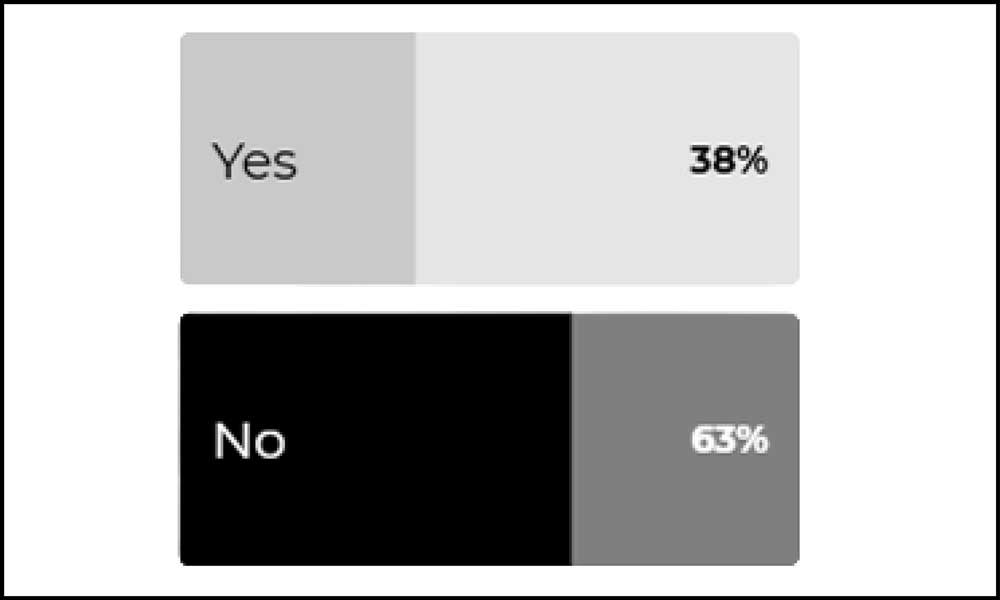
Moment readers weighed in on last issue’s Moment Debate question, “Is the ADL Right to Narrow Its Mission to Focus More on Protecting Jews?” The majority answered “No.”