
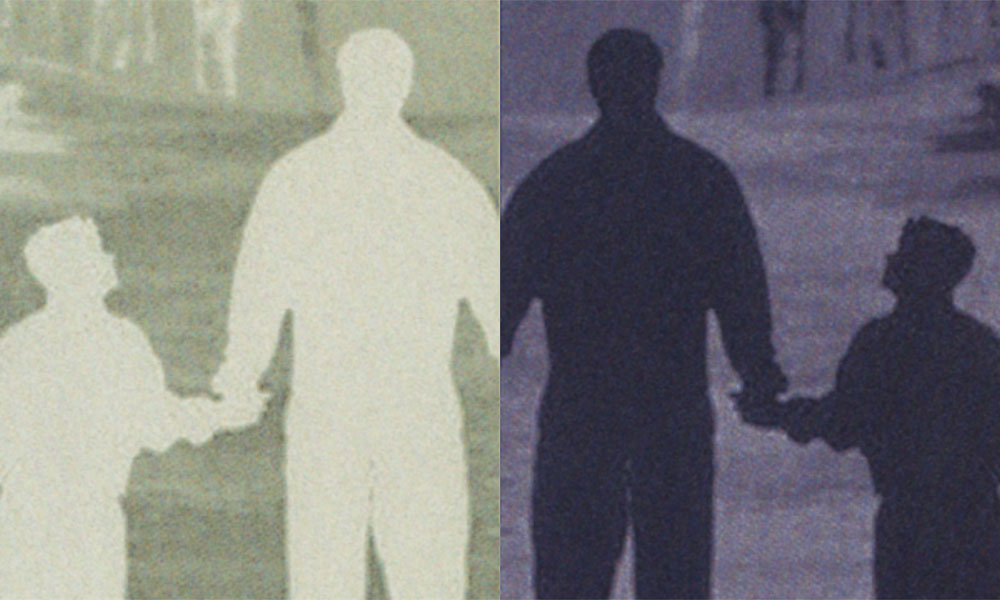
The following story won First Place in the 2003 Moment Magazine-Karma Foundation Short Fiction Contest, which was founded in 2000 to recognize authors of Jewish short fiction. The 2003 stories were judged by Harvey Grossinger, Joyce Kornblatt and Jon Papernick. Moment Magazine and the Karma Foundation are grateful to Grossinger, Kornblatt and Papernick and to all of the writers who took the time to submit their stories. Visit momentmag.com/fiction to learn how to submit a story to the contest.
To see the story in its original context, click here.
My mother tells me stories at bedtime. I tell myself stories after she leaves me in the dark. My father is Solomon Wolinsky, and he is the hero. He saves my mother, Esther Wolinsky. First he has to save himself. We live in Philadelphia in 1923, but when my father was a little boy like me, he lived outside of Odessa.
“Could he walk to the Black Sea?” I ask.
My mother sits on the edge of the bed, next to me and my pillow. “Yes,” she answers. “But he could not see across.”
“Did he keep his knives sharp?”
“Yes, Abraham. He had to.”
In the old world, he had an old name. He was Shlomo Woliyniec. He was going to have an important job. Kosher slaughterer. He would kill animals cleanly so everyone could eat. There were rules to follow and he had to learn them all. He had to practice. Rabbis damaged his knives to see if he could make the blades perfect again. He could. When he passed their tests, the rabbis gave him official letters. Then his parents told him to take a boat to America.
“They told him to run away?” I ask.
“It was dangerous to stay,” my mother says. “He carried his knives and his letters in his coat.” She tucks my blankets tight around me. There is no gray in her black hair. Many people tell her she looks too young to be my mother.
“You ran away from Kishniev,” I say.
“You know I did,” she says. “I had my three older sisters. I watched them marry and grow pregnant. One after another, they lost their babies, Rachel before giving birth, Leah while giving birth, Miriam a few weeks after giving birth. I was fifteen. My mother told me to go to the new world and have her healthy grandson. I listened to my mother.”
“I am her healthy grandson.”
“You are, but only because your father caught me. I was walking on Market Street—”
“You were hungry.”
“I hadn’t eaten in almost three days and I started to fall forward. Everyone was rushing by. I didn’t have the strength to put my hands out in front of me. Instead, I used them to cover my face. Then I felt other hands under my shoulders, keeping me from hitting the ground.”
“I know what he said.”
“You do?”
“He said, ‘I am Solomon Wolinsky. I will feed you.'”
“That’s right, Abraham,” she says, kissing my forehead and standing up. “That’s just what he said. Now, what do I say?”
“You say it’s late.”
“I say close your eyes. I say listen to your mother and go to sleep.”
I do not fall asleep right away, but I do listen to my mother. Our apartment is small and I can hear her talk with my father. I know they are sitting together in the kitchen, sharing a glass of red wine. My mother has the glass by herself when my father works late. On those nights, I fall asleep fast because there are no voices. Tonight they are discussing tomorrow—a Sunday, one week after Rosh Hashanah. Since I’m seven and since I asked and asked, I will follow my father to synagogue in the morning. I have been before, but never for the whole day and never just with my father.
“He was tired,” my mother says.
“I’m tired, too,” my father says. “Lipkin and Hess won’t let up.”
“Did you talk to them?”
“I avoided them. Same as yesterday. I stayed in the sanctuary and then I walked home the long way.”
“Is there anybody else?”
“Just a few, but only Lipkin and Hess matter.”
“Maybe Abraham shouldn’t go tomorrow,” my mother says.
I hear my father’s footsteps. He’s pacing. His hands are probably behind his back, his head tilted down toward the floor. “I told him I’d take him,” he says.
“Just let him sleep. He’s tired.”
“It will be all right.”
A chair is pushed back. Water runs in the sink, drowning out their talk. More footsteps. They’re going to their bedroom and they’ll close the door and after that their voices will be murmurs. The last words are my mother’s, from further away. I try to hear them all. “He doesn’t know,” she says. Their door clicks shut.
What don’t I know? What do I know? I know about the High Holidays. A little. Sometimes people don’t behave. They do things that are wrong. God keeps track. Every year, during the ten days between Rosh Hashanah and Yom Kippur, He sits high above with three giant books open on His desk: the Book of Life, the Book of Death, and the Book of Those-Who-Are-In-The-Middle. God writes the names of the people who behaved all year in the Book of Life and they live for another twelve months. He writes the names of the people who misbehaved in the Book of Death and they die, maybe not right then, but soon. “Most of us,” my father told me, “are in-the-middle. We have these ten days to repent. God will listen and inscribe us in the Book of Life.”
I know my father sold his knives years before I was born. He showed the rabbis’ letters to people all over the city, but no one would hire him. They didn’t need him. I’ve seen those knives only in my dreams. Hidden in his black overcoat. Some are longer than others. He used them to kill and kill again, but the blades were so sharp that the cows and chickens did not suffer. That’s what my mother says. My father told people he needed a job to make money because he had no money. He showed them his open hands, turned up in front of him. Empty. He was eighteen. They could see how his fingers bent strangely from holding his knives for hour after hour. If they shook hands with him, they could feel how his fingers pressed into their palms at odd angles. Like a fortune teller.
I know about one morning, a long time ago, when my father stopped by a tiny slaughterhouse he hadn’t seen before. The owner almost hired him. They talked about money and time. Then a chicken darted out from a cage. It had only one wing. One huge wing. It zipped past the smocked workers. My father says it was a blur of white that ran toward the street. “Grab that chicken!” the owner shouted, but my father stood still and let the unclean bird go free. Who knew how far a one-winged chicken could run? Would someone else catch it? Would another young slaughterer chase it? My father didn’t care. “I suppose I’ve done enough killing,” he said. He went right to a pawn shop to sell his knives. “There must be other ways to make a living,” he told himself. He decided to be someone different.
I ask, “Why? Why did you let the chicken go?”
“You want to know,” my father says, “why I let the chicken cross the road?”
“No, no,” I say. “No jokes. Why did you change? Why did you sell your knives? Why did you stop killing?”
Then he tells me about the angel born with only one wing. He kept trying to fly. He jumped up with all his might He leapt off of mountain tops. He wanted his wing to lift him high into the air. But he fell and he fell and he fell. He broke his legs. He broke his arms. Some people who found him wondered how an angel could look so terrible. Kind people nursed him back to health, and he wandered off to try again. He fell, he hurt himself, he got better.
“But tell me why you changed,” I say to my father. “I need to know. I need to know more.”
“Imagine that poor angel,” my father says. “Wandering, falling, hurt, healing. Wandering, falling, hurt again.”
I am awake before my parents. I make my bed and get out my dress clothes. When I hear my father in the bathroom, I go to keep him company while he shaves. The mirror fogs from the steam. It squeaks when my father wipes it clean. The closed toilet is my chair.
“So,” he says, “you’re up.”
“I dreamt about the chicken again,” I say. I like the way his face comes out from underneath the shaving cream. I watch and hope he won’t cut himself. But if he does, I’m ready to hand him a piece of toilet paper.
“Is it a scary dream?” he asks.
“I don’t think so.”
“You know,” he says, “I had a scary dream.”
“Really?” Sometimes he worries about the wrinkles on his forehead and the sparkles of silver in his hair. He says he’s almost closer to forty than to thirty. But I’ve never heard him talk about a bad dream.
He turns to look at me for a moment. I’m looking right at him and he smiles. There are dots of foam near his ears and on his neck. “No,” he says. “I can’t even remember the dream. I was really thinking that I should have caught that chicken.”
“Caught it?”
“I could have brought it home. It could have been our pet and you could have taken it for walks. That would have been something to see.”
“Would it have laid eggs for us?”
“Maybe.”
I imagine making a nest in my bedroom. I’d like to hear clucking in the mornings. “Do you think the baby chickens would have just one wing?” I ask.
My father rinses off the razor, then his face. “I don’t know,” he says, “but I do know it’s time for you to wash up and get dressed.” I throw him a small towel and he catches it. “Your mother is probably waiting for you,” he says.
She is in my room. “You don’t have to go if you don’t want to,” she says. “We could spend the day together.”
“I want to go,” I say. I put on the white shirt and button it up to the top. Everything else is brown—the woolly pants, vest, and jacket. The tie and shoes and socks. My mother’s fingers fuss with them all. “Breathe in,” she says, tightening the vest.
She follows us to the front door. On her tip-toes, she reaches up to kiss my father. She squats down to get me. “Stand up straight, Abraham,” she says. “Obey your father.”
We’re out of the house before sunrise, walking together in the dark, up Ellsworth Street to 60th, then down Walnut Street toward Temple Beth Am.
“Father,” I say, and my voice seems too loud for the quiet streets.
“Shh,” he says. “Think about earning forgiveness.”
We walk in silence for a few minutes. Almost everyone must be asleep. “Why do we need to be so early?” I whisper.
“You want to know about the early bird?”
“No, no.”
“All right,” he says. I’l tell you why.”
“I’ll listen,” I say.
“What’s my job?” he asks.
“You get things for people.”
“Yes. People pay me and I get them the things they want. But sometimes they pay me and I can’t get them what they want right away. They might want their money back But I don’t keep their money. It does me no good to hold it in my hands. I can’t just give it back because I use it to buy other things. Then people can get angry.”
My father never talks so much about his work. I want him to keep going. He’s looking around while we walk. I try to make sure my questions are good questions. “Do you ask them to wait?”
“I ask them, but they usually don’t want to wait. And it can take a long time. So I need to pray for forgiveness. It’s important to be generous during the High Holidays. Patient, too. It’s not a time for meanness. You know we’re not the most Jewish family, but everyone wants to be in the Book of Life.”
“How angry do people get?” I ask.
“That’s a good question, Abraham. It depends. There seems to be more anger lately.”
When we turn onto Walnut Street, I see a few people. Two men work in a bakery, carrying trays of dough. The El runs above our heads. An old man pushes a cart full of shiny apples. I look for anger in his face.
We’re the first to arrive at Temple Beth Am and we go right to our seats in the cold sanctuary. The walls must be thin or full of holes. The wooden chairs are not comfortable. I think our religion is nicer at home because we don’t have to dress up. People don’t come and go there. In our kitchen, my mother lights the candles on the Sabbath. My father says the blessing for the wine and I say the blessing for the bread. But I do like watching what happens on the bimah. The rabbi will carry the Torah above his head. The cantor will sing. The rabbi will spread his arms wide to welcome us.
My father says I can take a nap while we wait for services to begin, but I don’t want to. I fight to stay awake. I want to remember everything I did wrong. When I was yelled at. When I lied. The handful of nickels I took and hid. The times I pretended to be asleep.
My father’s head tilts down and he closes his eyes. He’s thinking. When I stand up to go use the men’s room, he says, “If anyone bothers you, here’s what you tell them. You tell them you are not permitted to make promises for me.”
There are people in the lobby. I walk quickly past them. In the bathroom, I have my choice of urinals. Then two men come in behind me. They are older than my father, and bigger. They make the room feel crowded.
“There he is,” the first one says.
“The little Wolinsky,” says the second one, laughing.
I inch closer to the white porcelain. I’m not completely done, but I stop and zip up. “Good yontif,” I say, on my way to the sink.
“Yes, yes,” the first one says. “A good yontif to you too.”
“And to your father,” says the man who is no longer laughing.
“Of course,” says the first, “if you’re going to give him our good wishes, you’ll need to know who we are.”
They are blocking the door. The first man keeps talking. His voice is almost kind, like a teacher’s. “I’m Mr. Phil Lipkin and that’s Mr. Ronald Hess. We’d like a chance to speak with your father, but we know from experience that will be difficult. So, we’re speaking to you. We’d like to ask your father to return something of ours. And we know he’ll be generous for the next few days, with so much at stake.”
“The Book of Life is open to those who seek forgiveness,” says Hess. His voice is not kind. It is rough and strong, like a truck engine.
“What do you say, little man?” asks Lipkin.
“I can’t promise you anything,” I answer.
“You just tell him you saw us,” Lipkin says. “We’d speak with him ourselves if he’d step outside the sanctuary.”
“He’s busy,” I say.
“He can’t stay in there all day long again,” Hess says.
“I hear he has a special diet for the High Holidays,” Lipkin says.
“I hear a lot of things,” Hess says, stepping closer to me at the sink. I step back and wonder if I’m fast enough to lock myself in one of the stalls. Hess turns on the hot water all the way. I see anger in his face, especially in his thick, black eyebrows, so heavy that he has to squint. “How long do you think he would stay out there if you didn’t come back?” he asks.
I watch the hot water. It rises up in the sink, but it does not overflow.
“Cut it out, Ron,” Lipkin says.
“Thirty minutes? An hour? Eventually, he’d have to come looking. How long has it been?”
“We wouldn’t hurt you,” Lipkin says. “No one’s saying that, so don’t worry. We just might make you comfortable somewhere for a while.”
“What do you know about your father?” Hess asks.
“I know he’s a hero,” I say.
“Sure he is. If heroes steal. If heroes are weasels. If heroes don’t keep their word.”
“That’s enough, Ron.”
“Let me tell you this, little man. Your father—”
“I said that’s enough.”
“Your father is in trouble. That’s all I wanted to say.”
“This is a small boy,” Lipkin says. “This is two days before Yom Kippur. You decide how far you want to go.”
Hess puts his hands up, just above his shoulders, like someone being robbed. “I’m standing here talking,” he says. “I’m checking the temple’s hot water. I’m not going too far.” He drops his hands and picks up a few cloth towels from a pile by the sink.
The bathroom door finally swings open and two more men walk in. Lipkin and Hess give them space, watching me closely. Nobody says anything. The new men look away. I wonder if it would be better for me to shout or run. I could do both. Then my father comes in. He sees me and holds out his hand. “Let’s go, Abraham,” he says.
He’s standing between Lipkin and Hess. Lipkin takes a step back. Hess dips his hand, wrapped in the towels, down into the sink and he splashes my father with the hot water. In his face and all over the front of his suit. My father reaches inside his jacket and I wait for one of the knives to come out. The perfect blade will shine. The men will rush toward the door. But my father pulls out a white handkerchief and dries his face, red like it is after shaving. He folds the handkerchief carefully before putting it back in his pocket. “Let’s go, Abraham,” he says again. “We’re done in here.”
“You may be done in here,” Hess says, aiming off the water. “But you’re not done.”
“We’re leaving,” my father says. “See me after Yom Kippur. You know I run my business alone. My son has no part in this.”
“That’s one way to look at it,” Hess says. “But here’s how I see it. You take something of ours. We might take something of yours.”
The two men who came in before my father stand with their backs to the urinals. They are ready to leave, but they can’t get to the sink or the door. “This is not the time,” one of them says. “This is not the place. Services are about to start.”
“The Book of Life and the Book of Death,” Hess says. “The Book of Pain and the Book of Suffering.”
“All right,” Lipkin says. “We’ve made our point.”
“For now,” says Hess.
“Let’s go, Abraham,” my father says.
“I need to wash my hands,” I say.
Hess moves toward the door. “Go ahead,” he says, and then he turns his back, walking out behind Lipkin.
My father’s clothes are still wet when we walk across the lobby a few moments later. We enter the sanctuary. People are quiet when we pass by.
I want to understand more. There are prayers I wish I could sing together with my father. There are prayers that seem to go on forever.
The rabbi tells a long story about a place on the other side of the world. I listen as closely as I can. He says that everything in the world has a heart, and that the world itself has one very large heart and this large heart beats at the top of a high mountain, near where a clear spring flows from a gigantic rock. To keep beating, this heart needs to see the spring. It also wants to move closer to the flowing water. But whenever the heart begins to move, it loses sight of the spring and it stops beating. At that moment, the whole world starts to die. Then the clear spring sings to the heart. The heart of the world sings back. Their singing echoes and echoes, and shining threads grow out of the songs and reach every living thing, connecting one heart with another. And then there is one just man who is chosen by God. He wanders through the world, gathering the shining threads from every heart. He weaves the threads into time. When he has woven a full day of time, he gives it to the heart of the world. Then the heart of the world begins to beat again.
I look at my father and he knows that I have questions. “It shows how fragile we are,” he says.
“How precariously we are balanced,” says the rabbi. “Without forgiveness, we cannot last.”
I stand and sit beside my father. Again and again, I tell God I’m sorry for not being better. I pray that He’ll keep us away from death. I imagine visiting the other side of the world, the mountain, the rock, and the spring. Would it be different from the world of the Black Sea, Odessa, and Kishinev? When I grow up, I want to be a surgeon, but I’d like the job of gathering everyone’s shining threads. I’d carry each one carefully and people would always be happy to see me. I look at the crowd around us, trying to find Hess and Lipkin. I think they’re gone. I wonder if they’re
praying.
We don’t leave the sanctuary until long after the end of services. The whole temple is empty when we start to walk home in the dark, through backyards and parking lots, avoiding the streets. As soon as he can, my father unzips in a secluded corner, behind a closed pharmacy.
“No rest for the middleman,” he says to me as I piss with him.
I’m done before he is. He goes on for minutes and maybe the sound gives us away. We hear footsteps and a voice behind us. “Good evening, Solomon. We had more to tell you.”
My father knows who it is without looking and he does not stop what he’s doing. “All right,” he says. “My heart is open. I’ll have it for you tomorrow, holiday or no holiday.”
“I’m glad to hear that,” Hess says. “Still, I have to give you this message. Phil asked me not to. But I feel it’s necessary. So we reached a compromise. He’ll take your son home while you and I have our discussion.”
My father has finished at last. He turns to face Hess and Lipkin. He stands up straight and I follow his example. I press my feet into the ground. “Is this the way it has to be?” he asks.
“It is,” Hess answers.
“All right,” my father says, and then he puts a hand on top of my head. He looks down at me and says, “You go with Mr. Lipkin, Abraham. He’ll take you home and you tell your mother I’ll be there soon.”
“I can wait,” I say.
“I know you can, but I want you to go. I’ll meet you there. I’ll be fine.”
Lipkin steps closer to me. “Forget those things we told you in the bathroom,” he says. “I’ll take you right home. I give you my word.”
“Go on,” my father says.
I obey him and walk in front of the store, back to the street. I turn around once before we’re out of sight. I see Hess and my father standing side-by-side in the dark, as if they were best friends who wanted to be left alone.
We go down Walnut Street and Lipkin says, “You spent the whole day in the temple, little man. Do you want to be a rabbi when you grow up?”
“I want to be a surgeon,” I say.
“I see,” he says. “Medicine’s a good business to be in.”
“I’ll have a scalpel,” I say. “I’ll keep it sharp.”
“You’ll be able to make sure your mother and father stay healthy.”
“What will happen to my father?”
“He’ll be all right today,” Lipkin answers. “You know, I have a son, older than you, and I wonder what will happen to him. It’s hard for me to be sure. His name is Charlie. I’ll tell you this, a son can do a lot to change a man. Maybe your father will surprise me.”
“What will your friend do to him?”
“I’m thinking of getting a different job myself,” Lipkin says, as if he didn’t hear my question. “It’s a bad business we’re in, your father and I. It’s no way to raise a family.”
“Is he hurting my father?”
“I’m not going to he to you, little man,” he says, putting his hand on my back and giving me a push with his fingers. ‘There’s Ellsworth Street. You can make it home from here. Go on and tell your mother not to worry.”
I run the rest of the way. I am faster than ever.
My mother gives me a hug and we pretend. I think if I cried, she would too. “Mr. Lipkin walked me home,” I tell her. “Mr. Hess had a message for Father. I wanted to stay with him, but he told me to go. He said to tell you he’d be home soon.”
We have our dinner and we hardly talk at all. I eat more than she does. We want to hear the door open.
“Did you like the services?” she asks.
“Yes,” I say. “I asked for forgiveness and I didn’t take a nap.”
“Are you tired now?”
“Yes.”
“Why don’t you go get ready for bed,” she says. “After your father comes home, I’ll tell you a story.”
In my room, I take off my dress clothes and put them neatly on my chair. I stretch out in bed and I listen. My mother does the dishes. She paces. I fight to stay awake.
When I hear my father’s voice, I sneak out of my room to make sure I’m not asleep. I stay close to my door and they don’t notice me. “That bastard,” my father says. “He didn’t have to do this.” He’s sitting by the kitchen table. My mother is standing behind him, washing blood from his face and hair. “Shh,” she says. “We’ll be all right. Don’t wake Abraham.” She leans over him and holds him up in the chair with her hand on his shoulder. After the blood is gone, I can see the bruises and the cuts. His face is the wrong shape, the skin puffy, red and purple and dark. One eye is black, swelling shut. I stop staring and run toward him. It seems to take a long time. He turns to me, we’re growing closer and closer, and I know he’ll never look the same again.
Edward Schwarzchild teaches at the University at Albany, SUNY, where he is an assistant professor with a joint appointment in the English Department and the New York State Writers Institute. He was a Helen Deutsch Fellow in Creative Writing at Boston University and a recent Wallace Stegner Fellow at Stanford University. His work has appeared in such publications as Virginia Quarterly Review, Southwest Review, River Styx, Seattle Review, and The Yale Journal of Criticism. He won the Robie Macauley Award for Fiction from StoryQuarterly in 2001.