
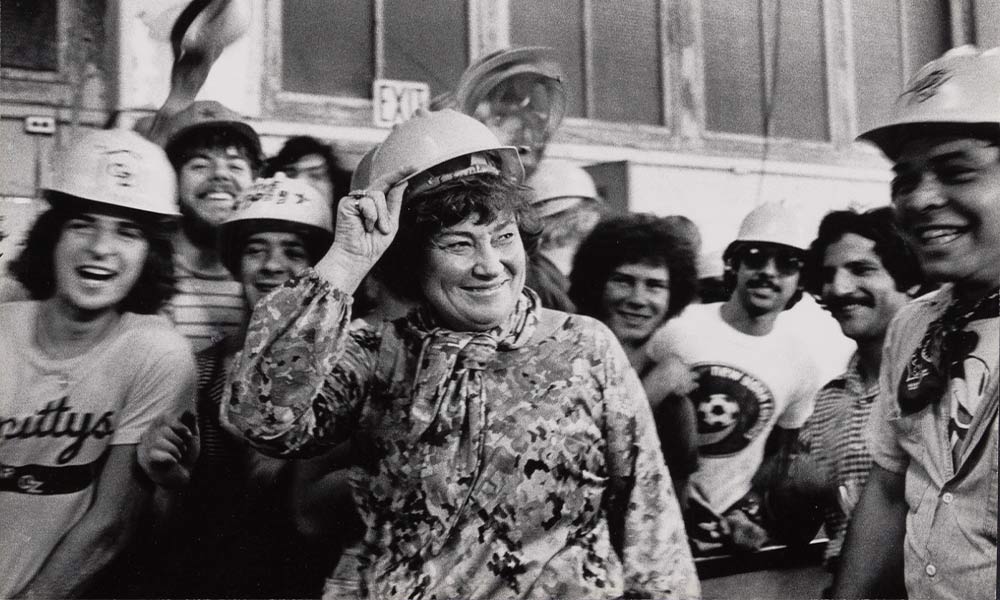
In her iconic big floppy hats and pearls, Bella Abzug was a strong, fierce, feminist force of the 1970s and beyond. Jeff Lieberman’s documentary film Bella! This Woman’s Place Is in the House, part of the PBS American Masters series, gives a full picture of Abzug’s life and accomplishments.
The film starts out with clips from her political and activist career, from lawyer to congresswoman to activist, then dives chronologically into her personal life.
Abzug was born Bella Savitzky in 1920 in New York to an Orthodox Jewish family. As she relays in a voiceover in the film, she had a close relationship with her grandfather, who taught her Hebrew and Yiddish. But having to sit in the women’s section of synagogue, and saying Kaddish for her father as a woman, was the start of her feminist journey.
Bella married Martin Abzug and had two daughters, Liz (executive producer of the film) and Eve, both featured interviewees. But Abzug never intended to be a stay-at-home mom, as was typical of women of her demographic in the 1950s. Instead, she went to law school—Columbia, after learning Harvard wouldn’t accept a woman—and began a lifelong career in politics. It was her first job as a lawyer that brought her to her signature hat—the client didn’t believe a woman could be a lawyer, and the hat made her feel more professional. It soon became part of her iconic look. In 1970, she ran for U.S. Congress for the first time and won the Democratic seat in her New York district.
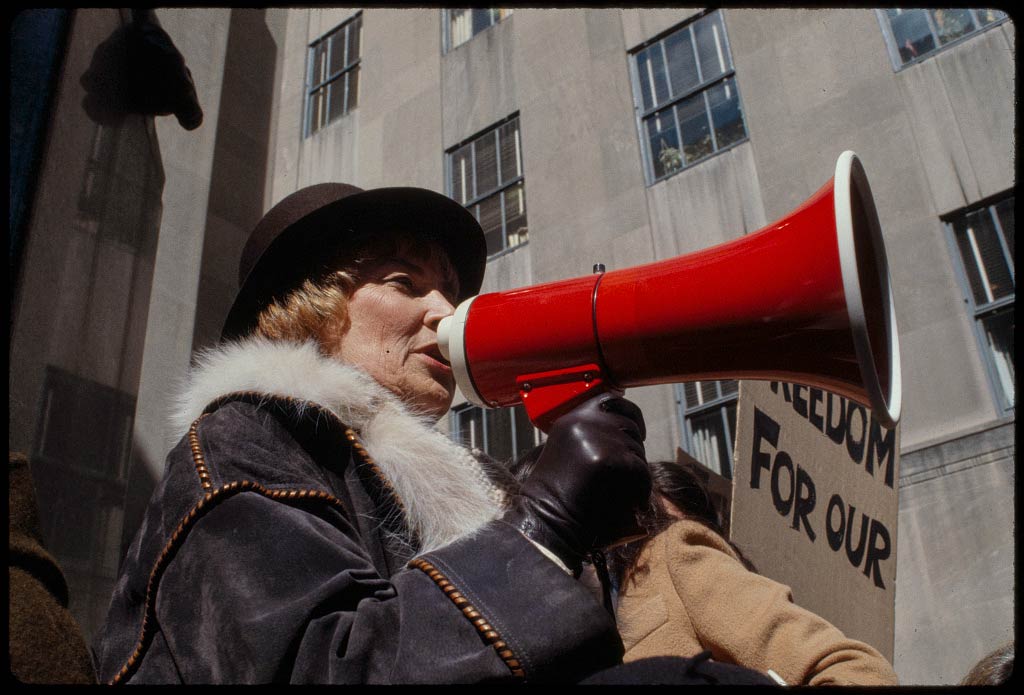
As one of only 11 women in Congress at the time, Bella had to be loud to be heard. Considered a strong liberal, she yelled about rights for women, gay people and minorities. She spearheaded legislation that was slightly ahead of her time, paving the way for what was to come—most notably, she sponsored the first federal gay civil rights bill, the Equality Act of 1974, which never passed. One of her best-known accomplishments is the Equal Credit Opportunity Act of the same year, allowing women to apply for credit without their husbands’ approval.
After her third term, Abzug turned her sights to the Senate in 1976 but lost her bid. She followed a year later with a run for mayor of New York City and lost again. But she remained a feminist activist whose close friends and colleagues included Barbra Streisand, Nancy Pelosi, Hillary Clinton, Gloria Steinem, Marlo Thomas, Letty Cottin Pogrebin and many more interviewed by Lieberman in the film.
Abzug was an activist until the day she died in 1998 at 78 years old. According to her daughter, she felt she still had more to do. Bella! This Woman’s Place Is in the House premiered last month on PBS and is available to stream until April 15.
What inspired you to tell Bella Abzug’s story?
I felt that Bella was someone people needed to know more about, and I was inspired by her bravery and her effort and her commitment to all that she was fighting for. So I thought, if I could pay tribute to her, it’s sort of also my way of carrying on her legacy. What I was striving to do, and strive to do in all my work, is just to pay it forward and keep fighting the fight for equal rights and social justice and democracy.
She was considered to be a very strong liberal. How do you think she’d be perceived today, especially her Jewish background and views on Zionism?
I think nothing was ever black and white for Bella; she saw the nuances in a lot of issues. She definitely would be a strong liberal, a strong progressive, today, fighting for the same issues that she was fighting for in the 1970s and the new ones that have cropped up in the last 10-20 years.
With Israel, I don’t want to speak for her because her views may have changed over time, but to me it was clear that she was very peace-focused throughout her life. War was never the answer, and I think she found that there was great strength in negotiation, finding common ground and reaching across the aisle. I believe that she would still be a strong Zionist today, and care a lot about Israel and its existence and its place in the world, but that its existence would need to be achieved in a peaceful way and not in a combative way.
What would she think of the political climate today?
She would be horrified. I don’t think she could have ever imagined Donald Trump in her lifetime. She saw men or people who were close to being this damaging to our democracy, to our society—certainly Nixon was pretty devastating to the country in many ways. But I think she would see the current political climate as just so depressing. I mean, she fought so hard for so many of the rights that this current administration is trying to peel away, or has already peeled away, that she would be really disappointed and angry.
You portray her Jewish childhood, growing up Orthodox, as the catalyst for her feminism. What does this say to Jewish women today?
It’s tricky. I have my own viewpoints about equality in the synagogue, and I do believe that men and women should be equal in all aspects of life. And it pains me a little bit to think about women having a secondary place in the synagogue. But I also know that there are many women who see that traditional role as important and symbolic and meaningful in its own way, and don’t necessarily see it as being as a second-class citizen. Bella didn’t feel like it was a place of equality. And it was not only the mechitza that bothered her, but it was her being prevented from saying the Kaddish for her father when there was no one else to say it. If she had been a boy, there would be no question, so in her mind, it was completely a decision based on gender.
Abzug was a pioneer for LGBTQ+ legislation, though not much of what she introduced got passed. How do you think she would find today’s world, and the legislation passed since her time?
I think she’d be overjoyed that gay marriage is legal across the United States. That really was part of what she was trying to achieve with the bill she introduced in the 1970s. And there are more protections for LGBTQ people in terms of housing and jobs today, that’s what she was fighting for. So I think she’d be quite happy to see that what she started, or what she helped continue (it really started with the activists, and then she was able to bring it to Washington), that it’s achieved great milestones since that time.
Bella had the bravery to introduce legislation at a time when gay rights were not being spoken about in public outside of the gay world. She was the one who said, “This needs to be done. These are our constituents. These are our fellow citizens, and they deserve the same rights that everyone else does.” She always saw, as hopefully you see in the film, that there’s no democracy when only certain people get full rights.
The film includes many insightful interviews from friends and colleagues who speak highly of Abzug, but women as outspoken as she was were often seen as aggressive and abrasive. How did the general public see her?
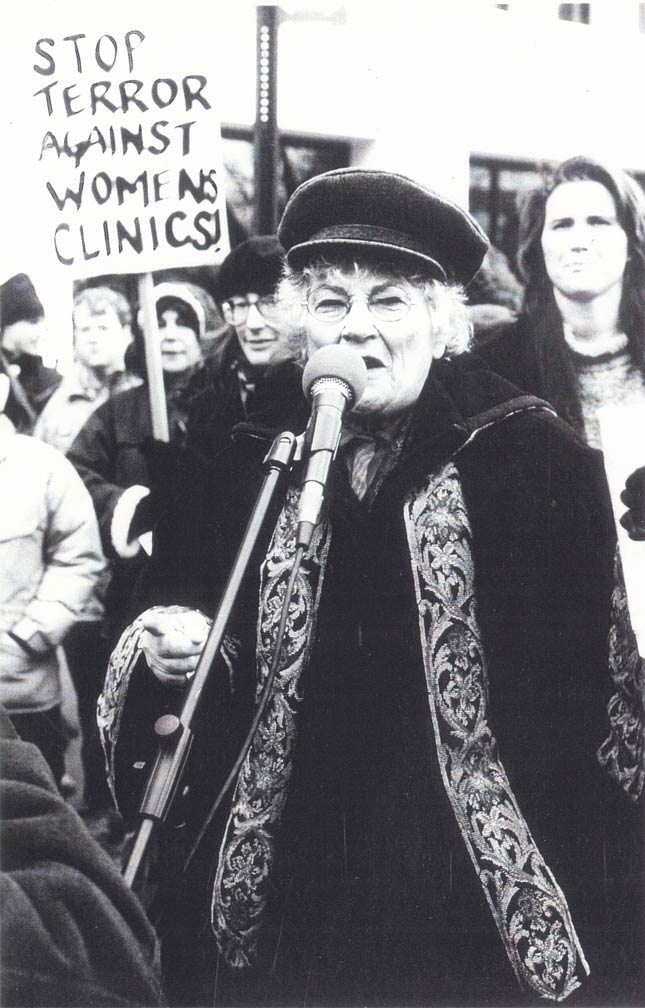
The public saw Bella filtered through the press of the 1970s, which, to me, was extremely sexist and painted Bella in a very one-dimensional light. They saw her as a loudmouth, almost a caricature because of the hats, and so the public never really got to know Bella through the press in an accurate way. They’re seeing her in this film through a much broader lens. They’re hearing from the people who knew her and who knew the real Bella, and knew how much she cared and how she had so many dimensions to her personality. Yes, she could be loud, but she could also be soft and caring, and she could be thoughtful, and she could be strategic, and she could be so many different things that were never shown in her time.
The whole goal of the film was to give people a new sense of who she was and to introduce younger generations to her as well.
As a recent college graduate, I was surprised never to have heard of Bella Abzug before, though I’ve taken courses in gender and women’s studies and have learned extensively about the movements and issues she worked on. The end of the film touches on Abzug’s wish to be remembered for her work. Why is she not talked about as frequently as other feminist icons like Nancy Pelosi, Hillary Clinton and Gloria Steinem?
Bella was a great strategist, and she knew, as well as the other women that she was working with, that if they put Gloria Steinem to the front as sort of their mouthpiece, that they would get better press. Steinem says she went along with this even though it wasn’t her primary choice to be the spokesperson. So people are much more familiar with Gloria Steinem than they are with Bella Abzug because Steinem was the face of the women’s movement.
But on top of that, Bella was not portrayed in the press accurately. She had a lot of achievements in three short terms in Congress, but they never gave her her due at that time. So it doesn’t get into textbooks, and it doesn’t get into college courses.
So my great, great hope is that this film will be taught and included in classes and referenced and provided to students, and that this history will be taught.
Do you have a favorite scene or interview?
I always love the scenes that make me laugh, because in all this strife and combativeness and defeats and disappointments, there are so many moments in the film that are funny, and Bella is such a larger-than-life character. The story of activist Allen Roskoff taking her to the Continental Baths is a favorite. [The film shows photos from a newspaper article of Abzug at the gay bathhouse on New York’s Upper West Side and features Roskoff telling how the men threw their towels at her after she delivered a speech to them]. I knew Bella was courting gay votes and really connecting with different communities, but that was a surprise that she would be so comfortable to go that far. So that’s probably my favorite moment.


Why is this an important story to tell right now?
When we started making the film, Hillary Clinton was running for president, and our idea was: When Hillary is elected, people are going to want to look back and see who blazed the trail ahead of her. Obviously, that never happened, nor did Kamala Harris become president, but the story is relevant in so many ways, just based on the fact that we don’t have gender equality in boardrooms, in Congress, in so many leadership positions.
But also, Bella was such a staunch defender of democracy and really wanted to protect it in every single way possible. Now, we’re seeing that democracy has big holes in it that can be exploited. And so it’s an important reminder to everyone that we need to figure out how these holes exist and where they can be exploited, and try to sew them up for the next administration, so that somebody even worse doesn’t come in and exploit the Constitution, enrich themselves or seize power.
So it’s a good reminder that democracy requires everyone’s involvement, whether it’s simply voting or campaigning for someone—licking envelopes, texting would-be-voters, signing people up to vote. Democracy only works if everyone participates.
What do you hope audiences will take away? Who is the target audience?
My target audience is everyone, truly. I feel like, at least in the United States, everyone needs to see this film just to know the history of the values that it’s describing, the ideals and the gaps of where we need to do better.
I also feel like every single Jewish person should see this film, because Bella is an unsung hero in the Jewish community. She cared deeply about Judaism and was knowledgeable about Judaism and achieved one of the highest offices in this country. The fact that people don’t celebrate her as a Jewish hero is disappointing to me, and the fact that we have so few Jewish female heroes is all the more reason why she should be celebrated.
Also, all LGBTQ people should know this history. They should know that there was a straight woman who was their ally, who sacrificed her own ambitions to better their lives today.
And all young women who have credit cards and use a debit card or credit card on a daily basis or are thinking about getting a mortgage should know about Bella—that right shouldn’t just be taken for granted. It’s only 50-60 years old and could disappear, theoretically, so, when you know that these things were hard-fought, they become so much more precious and valuable.