

As a teenager in West Hempstead, NY, on Long Island, Oliver Paneth loved spending time at their family’s shul and was a popular babysitter in the Orthodox community. They also attended Yeshiva University High School for Girls in Queens. “I was never the girlie girl, I was way more into sports,” recalls Paneth, whose gentle round face is fringed with a wispy brown beard. “I thought I was gay, and that was what was different about me, and then I went to college and met other trans people. Before that I didn’t know that being transgender was a possibility. Once I heard their stories, I realized that is how I felt my entire life.”
It was easier for Paneth, now 27, to navigate the heavily Orthodox Jewish hamlet of West Hempstead when they identified as a female and a lesbian. Paneth, who uses they/them pronouns, could go to their family’s shul and even participated in a Birthright trip to Israel for religious girls. But once they medically transitioned and developed physical male attributes, they no longer felt welcome. Many people in the community stopped speaking to them. “I thought they were good friends,” says Paneth. “It turned out their friendships were conditional.”
Paneth’s few remaining friends from high school are all LGBTQ+ and only one teacher remains in contact with them. “She is one of the sweetest humans alive and she would never want me feeling weird or outcast,” they say.
Fortunately for Paneth, they have come out and transitioned at a time in history when their choices aren’t as limited as they would have been even two decades ago. No longer are the options marrying against their needs and the needs of the person they marry, staying single and celibate or leaving the Orthodox world. Their parents, with whom they live while working at a children’s museum and finishing college, have stood by them. At first it was hard, says Paneth, “but they have come to realize that they haven’t lost their child, although it does mean I won’t be marrying [the kind of] person they had imagined.”


Paneth gives credit to the Jewish organization Eshel for saving their relationship with their parents, who joined one of the organization’s virtual support groups and have attended retreats with other parents of LGBTQ+ teens and adult children. The nonprofit, which focuses on the Orthodox community, also helped Paneth with surgeon contacts, information about fertility and freezing eggs and was more generally a lifeline, “because a lot of times, especially within the [Orthodox] Jewish community, when you are coming out, you don’t have many places to reach out to.” Jewish Queer Youth (JQY), an organization founded by a group of Yeshiva University students offering support and mental health services to queer teens and young adults in the Orthodox, Hasidic and Sephardic communities, also provided Paneth with invaluable resources. “There are so many LGBTQ+ people we work with who want to remain Orthodox but do not have a place where they can do that and live fully and belong,” says Miryam Kabakov, Eshel’s co-founder and longtime executive director.
As many as 50 to 70 percent of young LGBTQ+ Jews flee Orthodoxy today for more liberal Jewish denominations, according to Eshel. Paneth knows that is an option, yet says it doesn’t feel right. They want to remain in familiar Orthodox spaces, even though for trans people, worshiping in Orthodox shuls can be especially fraught, given communal biases and separate roles, seating and expectations for males and females. In synagogue, on which side of the mechitza (separation barrier) should they sit? What rules apply to them? While many trans people care deeply about assuming a new religious identity coinciding with their chosen gender, Paneth has said that one obstacle to attending their family’s shul is the rabbis’ decision that they should now sit on the men’s side of the mechitza. Paneth would prefer to sit in the women’s section with their mother. “It’s weird, but I don’t view my relationship with God as a man, because I spent the first 20 years of my religious life as a Jewish woman, and those are the rules that I resonate with,” they say. They are not interested in serving God as a man because that would mean that they are “different from the person I have always been.”
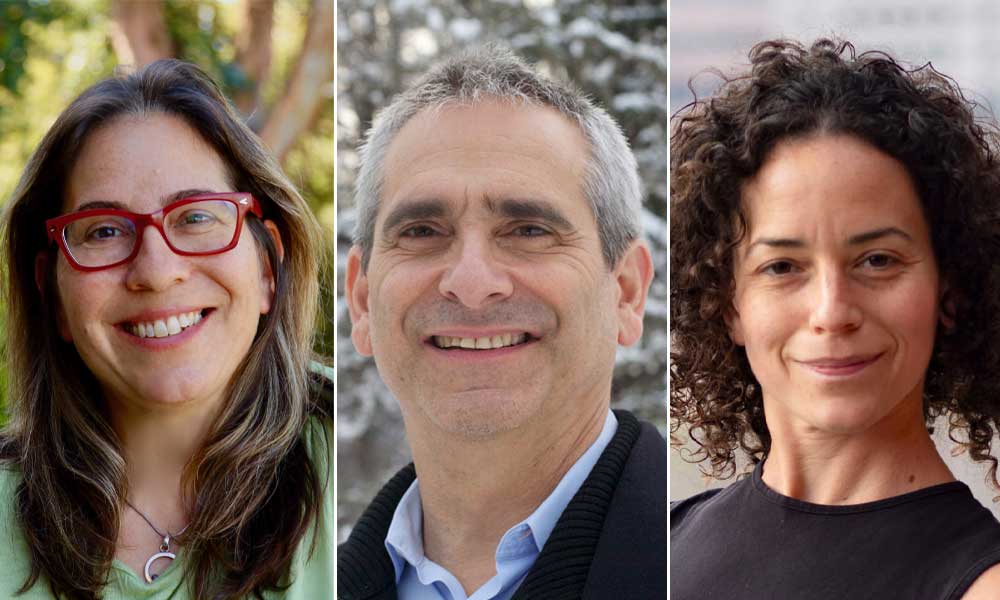
Miryam Kabakov, Steven Greenberg, Abrielle Fuerst
Just a few years into their journey as a trans male, Paneth says they are the same person, “just happier and healthier.” And yet they are unnerved by growing intolerance on both the right and the left in the United States. Right-wing Americans—and the federal government—are actively challenging reforms and safety nets that have made transgender people’s lives easier and less perilous. Experts are expressing concern that the Trump administration’s attacks on the LGBTQ+ community, especially on trans people, are exacerbating the existing mental health crisis among today’s youth.
“The idea that somebody has to choose between a religious identity and a queer identity is a false binary.”
At the same time, the rise in antisemitism and virulent anti-Israel activism has made LGBTQ+ spaces on the left more difficult to navigate. For Paneth, this makes finding the right Orthodox community more critical. But the goal has proved elusive so far. “We had a little LGBTQ shul in the neighborhood that was run by a lesbian couple, but the community made a lot of threats to the kosher restaurant that was hosting it, and we had to disband,” Paneth says. Currently, Paneth and their girlfriend travel to Crown Heights in Brooklyn each Friday to spend weekends and share Shabbat meals with a group of Jewish LGBTQ+ friends that they helped establish. But it requires commuting and they don’t know if this informal community will hold together.
Paneth’s dream is to find a welcoming Orthodox shul close to home.
While more liberal Jewish denominations began opening their gates to gays and lesbians beginning in the 1970s, the doors to Orthodox Judaism remained firmly shut. In the fall of 1993, an essay that appeared in Tikkun magazine began to sway opinion among the Orthodox. “Gayness and God” was written by a gay Orthodox rabbi under the pseudonym Rabbi Yaakov Levado, which means “Jacob alone” in Hebrew. He borrowed the name from the biblical verse recounting Jacob’s arrival in Canaan and the detachment and loneliness he feels as he battles an angel—or perhaps a demon.
The author of the essay was Steven Greenberg, who at the time was wrestling with his commitment to living an Orthodox Jewish life and the realization that he was gay. “If I have any argument, it is not to press for a resolution, but for a deeper understanding of homosexuality,” he wrote under his pseudonym. “Within the living Halacha are voices in tension, divergent strands in an imaginative legal tradition that are brought to bear on the real lives of Jews. In order to know how to shape a Halachic response to any living question, what is most demanded of us is a deep understanding of the Torah and an attentive ear to the people who struggle with the living question. Confronting new questions can often tease out of the tradition a hiddush, a new balancing of the voices and values that have always been there.”
These hopeful words were heard by an Orthodox community that, like much of American society, was just beginning to understand that homosexuality was not, as long thought, a deviant behavior. In 1999, Greenberg took the first of many steps toward destigmatizing LGBTQ+ people in Orthodox circles, coming out publicly as the first openly gay Orthodox-ordained rabbi. Two years later, he was featured in the groundbreaking documentary Trembling Before G-d about gay men and lesbians raised in the Orthodox world. In 2004, he published his book Wrestling with God & Men: Homosexuality in the Jewish Tradition, which evolved out of his personal struggle. In 2010, he co-founded Eshel with Kabakov, who edited the anthology Keep Your Wives Away from Them: Orthodox Women, Unorthodox Desires. She shared Greenberg’s commitment to make room for LGBTQ+ people in Orthodox institutions after finding coming of age as a lesbian in the Orthodox world to be a painful and isolating experience.
In the ensuing years, there’s been a significant shift in the acceptance of gay people in Modern Orthodox and other more liberal Orthodox circles. Case in point: The reception that the Orthodox comedian Modi (real name, Mordechi Rosenfeld) received when he officially came out as gay three years ago at 53. Known in part for his comedic commentary on Orthodox Jewry, Modi never hid that he was gay and had quietly married a man in 2020. He broke the news publicly via a Variety profile. “Rather than it coming out in an ultra-Orthodox magazine as ‘Did you know that Modi’s gay and how horrible it is?’ we took control of the narrative and made it a nice thing,” says Modi. “There was almost no negativity.” He received overwhelmingly positive responses from Orthodox fans and venues. Modi says he is also blessed in another way. He lives within walking distance of the Sixth Street Synagogue in the East Village in New York, a thriving, diverse and welcoming Modern Orthodox shul.
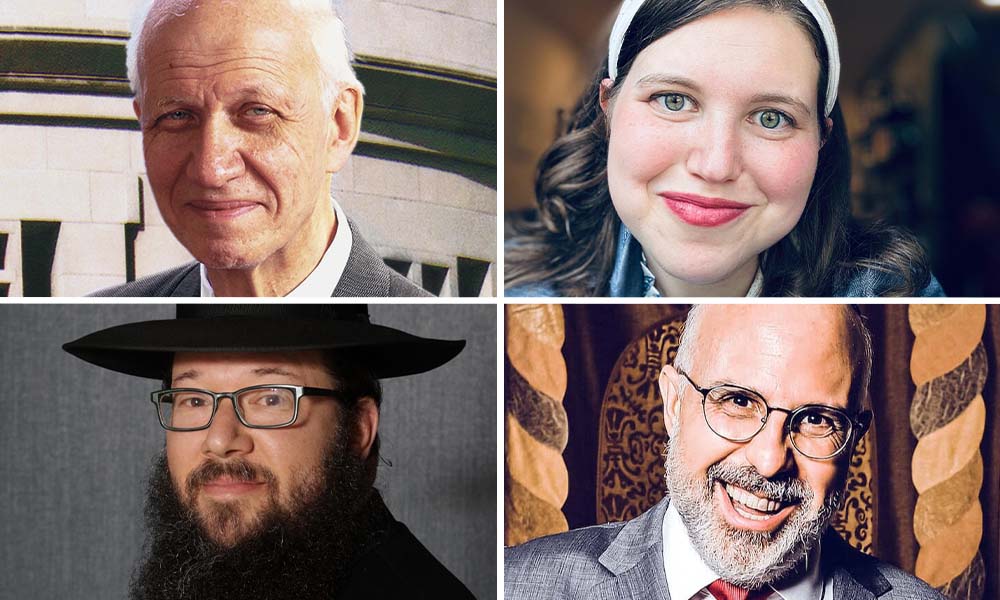
From top left, clockwise: Irving “Yitz” Greenberg, Dasi Fruchter, Hyim Shafner and Michael Moskowitz.
Modi, of course, is an entertainer with a certain level of fame, but the ease of his coming out and his life as a gay Orthodox Jew is still a reflection of broader social developments. Approval of same-sex marriage has increased significantly with the heightened visibility of LGBTQ+ individuals in society and the landmark 2015 Supreme Court ruling Obergefell v. Hodges, which legalized same-sex marriage nationwide. “Studies show that the thing that impacts people’s opinion of queerness most is actually knowing a person who identifies as queer, and so the more people come out, the more there are people in the community who know one of them,” says Rachael Fried, executive director of JQY. This, she explains, leads to “an interesting divide between the leadership in Orthodox communities and the people, where the young people of Modern Orthodox communities all tend to know a queer person.”
As a result, younger generations of Orthodox Jews hold generally more inclusive views on LGBTQ+ issues and have played a key role in changing opinions. Greenberg says an increasing number of LGBTQ+ Jews are saying to their congregations, “I am not leaving. I love Torah, I love Shabbat. I love chagim [holidays]. I love my family. I’m so committed to the tradition and don’t know how I can figure this out, but it doesn’t matter. Here is my husband, my wife, my kids, my family, and we are staying. You’re just going to have to figure this out too.”
Increasing numbers of parents are doing just that, adds Greenberg, who performed his first same-sex wedding in 2010. He says that not only do Orthodox families come to their LGBTQ+ children’s weddings today but they dance and invite their friends. “The community has moved, and while rabbis aren’t always permitting people to go, people aren’t always asking rabbis whether it is permissible to go. They’re just going.” Even parents who don’t attend want their children to find love, he says. “Nobody wants their kid to be alone in the world.”
The ascendancy of millennial rabbis and congregants has brought more inclusive and accepting generational norms into Orthodox institutions, says Rabbi Hyim Shafner, an outspoken advocate of LGBTQ+ inclusivity and spiritual leader of Kesher Israel, a Modern Orthodox shul in Washington, DC, that has a high percentage of young professionals as members. “This means more rabbis and shuls can no longer ignore the presence of LGBTQ+ people in their communities.” If they do, he says, they risk losing them as members, as well as their parents, who are increasingly unwilling to accept a community that doesn’t include their children.
After decades of grappling with same-sex relationship issues, Orthodox communities are now wrestling with transgender inclusion.
One of the most powerful motivators for acceptance within the Orthodox community is the high suicide rate among LGBTQ+ youth. “Everybody knows somebody or knows somebody who knows somebody who died by suicide because of lack of acceptance,” says Saundra Epstein, who heads Eshel’s Welcoming Shuls Project. “People are realizing, as someone in their family comes out or as someone they care about comes out, that nobody’s immune to this.” Surveys have shown that a significant segment of LGBTQ+ youth, in particular transgender and nonbinary young people, have attempted suicide or seriously considered doing so. JQY reports that an even higher proportion of Orthodox LGBTQ+ youth are at greater risk for suicide: 58 percent of their participants report having thought about suicide, and 24 percent had attempted it.
In 2019, Rabbanit Hadas “Dasi” Fruchter founded the South Philadelphia Shtiebel, a small Orthodox shul in the city’s East Passyunk neighborhood, and it quickly became known for its inclusive atmosphere. Fruchter grew up in Silver Spring, MD, in a Modern Orthodox home. When she was 14, her oldest sister came out as a lesbian. After Fruchter completed her studies at Yeshivat Maharat in New York City, the first yeshiva to ordain women to serve as Orthodox clergy, she started the Shteibel, in part inspired by her sister.
“The connection between my leadership as a woman in the Orthodox world and LGBTQ folks is an aspect of shared otherness,” says Fruchter.
“We’re all strangers, and God is also a stranger in this world, so the best way for us to connect to God is to connect to our strangeness.” Fruchter tries to make sure that her halachic thinking is informed by communal needs but not solely determined by them. In sensitive areas where she believes she needs to draw a line, she treads carefully. “The world is still changing around these halachic questions connected to marriage and sex, and I need to figure out what it looks like for people within my community to create lives together.”
Since its inception, attendance has skyrocketed. The Shtiebel has drawn people such as Abrielle Fuerst, 34, who moved from Houston to Philadelphia in search of a welcoming Orthodox congregation. Fuerst grew up in a variety of black hat communities where she felt compelled to hide her sexuality and did what many lesbian Orthodox women do: “I dated a man and lied to myself that one day I would fall in love with him,” she says. “I did that for many, many years.” Finally, just a few weeks before her 27th birthday, she packed up her belongings in her car and headed for Philadelphia. “My intent was to completely start over on my terms, claim my own new beginning and throw caution to the wind,” she says.
Fuerst joined the Shtiebel, and for the first time in her life she is living authentically as both a lesbian and an Orthodox Jew. “The Philadelphia community is very unique in how weirdly gritty, zany and open and diverse it is, while still maintaining the feeling of observance,” she says. When she’s invited over for a meal, for example, she knows that the food will be kosher. At the same time, “people respect the choices that I make in my life.” With so much of Orthodox life based around the nuclear family, it is a relief for her, she says, to find a place that is welcoming to people in all stages of life.
The Shtiebel is considered a “high-welcoming” shul by Eshel. The group’s Welcoming Shuls Project, founded about a decade ago, reaches out to Orthodox rabbis to encourage them to make their shuls places where LGBTQ+ people will feel comfortable. There are more than a thousand Orthodox shuls in the United States (the exact number is hard to pinpoint since in addition to hundreds of synagogues affiliated with the Orthodox Union, many smaller, independent Orthodox congregations exist). Around 300 of them now adhere to some of Eshel’s principles of inclusion, which include accepting LGBTQ+ Jews as part of the community and rejecting the recommendation of mandatory celibacy and conversion therapy, the widely discredited practice of attempting to change an individual’s romantic, sexual or gender orientation or expression. Eshel divides shuls into high-welcoming, medium-welcoming and low-welcoming categories, and about three-quarters of them are high-welcoming. Of these, 30 are willing to be included on Eshel’s website, says project director Epstein. There are many more, she notes, “that don’t want to be public but are still happy to have LGBTQ+ people come to their synagogue and to figure out ways to make them feel comfortable. That’s progress.”
High-welcoming shuls such as the South Philadelphia Shtiebel and the Sixth Street Synagogue in New York’s East Village, where Modi belongs, are explicitly inclusive. While holding traditional services with separate seating and adhering to kashrut, Shabbat observance and other hallmarks of observant Judaism, the rabbis, board and congregation do everything they can within Jewish law to embrace LGBTQ+ households as full members and generally recognize and include them in all life cycle events. This includes nonbinary and transgender individuals, who are allowed to sit in the gender space where they feel comfortable. At medium- and low-welcoming shuls, efforts are also made to work within halachic parameters, although to a lesser extent, and may be a work in process. Overall, the vast majority of welcoming synagogues are Modern Orthodox, although some more traditional and Chabad synagogues also fall into this category.
Most Orthodox shuls do not fall into any of these three categories, effectively practicing a “don’t ask, don’t tell” policy and accepting only closeted members. Opposition to the inclusion and integration of LGBTQ+ people in the Orthodox world remains strong. For example, the Coalition for Jewish Values (CJV), an organization representing more than 2,500 traditional American rabbis, has been adamantly opposed to a negotiated agreement at Yeshiva University to allow an LGBTQ+ club on campus, due to “the Torah’s prohibition of homosexual conduct, its exclusive promotion of marital relationships between a man and a woman, and its rejection of the false notion that a person’s desires and preferences are immutable identity characteristics that are inherently legitimate and must be accepted by Jewish society.” On its website, CJV calls itself the largest rabbinic public policy organization in America and says the group leads “the fight against those who cloak their own secular, left-wing ideals in the mantle of ‘Judaism,’ misrepresenting Judaism’s actual beliefs and values.”
That acceptance of LGBTQ+ members varies widely from shul to shul reflects the diversity of Orthodoxy and its decentralized nature. “We don’t check out what people are or what they’re doing; we treat everybody the same once they come to the synagogue,” says Shafner of Kesher Israel in Washington, DC. “We certainly have members who are gay. There’s one member who sometimes brings his boyfriend to synagogue, and nobody bats an eye. This person is as present and as engaged in prayer and study and the community as anybody else.”
On the other side of the country, Gershon Albert, the senior rabbi at Beth Jacob Congregation, a liberal modern Orthodox synagogue in Oakland, CA, hired a young Yeshiva University-ordained rabbi, Shua Brick, in 2020 as director of family learning, knowing he was gay. He supported Brick’s decision to not hide his identity, and in 2023 Brick came out publicly as the first openly gay rabbi to serve an Orthodox congregation. Albert believes in “the importance of making space for all Jews, including those from the LGBTQ community, in the Orthodox community within the bounds of halacha,” he says. In part, Albert was motivated to bring on Brick because he had a gay friend growing up who hid his identity for years, struggling alone. “We all deserve a place to deepen our learning of Torah and our observance of mitzvot, and Rav Shua has contributed meaningfully to our community in this regard.”
The presence of Brick, who will be leaving Beth Jacob soon, has been a draw for LGBTQ+ families. “We never would have considered being part of an Orthodox community, even though in terms of observance and practice, that’s where we’re most closely aligned,” say members Stephanie Kennedy and Michelle Raskins-Kennedy. “Everyone there has been welcoming, but having Rav Shua in rabbinic leadership there made it feel like it wasn’t just something they were saying.”
Most Orthodox Jews send their children to religious day schools, which can also be complex places for families with LGBTQ+ members to navigate. Although this has begun to change, sexuality can be a thorny subject. Gay advocate Gidon Feen, who attended religious day schools in the 2000s, says he first heard the word “gay” in middle school, used as a slur, and still remembers how his high school principal compared being gay to being a murderer. “Much like God’s given the murderer the inclination to kill, and he has to resist that, so too should you resist these urges,” he was told. Similarly, Ely Winkler, Eshel’s development director, describes how community leaders and rabbis from whom he sought counsel recommended he “get married to a woman right away or undergo conversion therapy.” These attitudes are still baked into some Orthodox communities, although the consensus among medical professionals is that conversion therapy is both ineffective and harmful—not to mention being banned in 27 states (plus the District of Columbia and Puerto Rico) and more than 100 municipalities.
There are still clinicians who offer conversion therapy framed as therapy for sex addiction. One such group, called Jewish Family Forever, says its goal is “to avail communities and individuals of accurate scientific and Torah information on the topics of attraction, desire and relationships, with the ultimate aim of helping each individual realize their full potential as Jewish husbands, wives, fathers, mothers, males and females the way the Torah clearly prescribes.” In early January, 75 liberal Orthodox rabbis and rabbanits published a psak, or ruling, that it is forbidden according to halacha to recommend conversion therapy.

Leviticus 18:22 says: “You shall not lie with a male as one lies with a woman; it is an abomination.” Leviticus 20:13 says: “If a man lies with a male as lying with a woman, the two of them have done an abhorrent thing; they shall be put to death—and they retain the bloodguilt.” These two sentences are the primary validation for anti-LGBTQ+ beliefs, part of a “gender-essentialist” view that also holds that God mandates fixed male/female roles within heterosexual marriage.
In Wrestling with God & Men, Steven Greenberg challenged Orthodoxy to reject this absolutist language in the Torah and argued for halachic space for LGBTQ+ Jews. He argued that “trans and gay and lesbian identities have been seen as external to the ideals of the community,” but “once we accept queerness as part of the human condition, halacha must respond.”
The preeminent Orthodox rabbi and theologian Irving “Yitz” Greenberg (no relation to Steven) believes it is time that the Orthodox community change its thinking about Leviticus. “Yes,” he says, “Leviticus is a very severe and negative prohibition against LGBTQ+ in the Torah. No question about it. The Torah speaks about putting people to death for homosexual behavior. It’s extreme and it’s very hostile.” (He adds that today, even the ultra-Orthodox wouldn’t consider putting someone to death for gay relations.) The fundamental change, says Greenberg, is that we’ve learned in the last generation that homosexuality is not simply some perverse insistence or unnatural behavior that goes against God and tradition, nor can it be summed up as a gross violation of religious values. “We now know that at least the substantial majority of [LGBTQ+] behavior is natural, physical, genetic and hormonally based,” Greenberg says.
He says one could argue that the Torah prohibition is only directed toward a certain kind of homosexual pattern that was widely practiced, particularly by the Greeks in ancient times.
It was anti-family and promiscuous. “Today, most Orthodox LGBTQ+ Jews are prepared to live by the standards that traditional Orthodoxy applies to heterosexuals, that is, to be in a committed monogamous relationship. They want to get married and have children. That should be respected as a positive,” says Greenberg. “And one could legitimately argue that this kind of homosexuality is not what the Torah opposes, and it should be, in fact, treated respectfully like any other natural behavior.”
Another voice in the theological conversation on LGBTQ+ issues today is that of Michael Moskowitz. A rabbi with three ultra-Orthodox ordinations might seem an unlikely champion for LGBTQ+ rights, yet in his own words, he stands as a “deeply traditional and radically progressive advocate for trans rights and a vocal ally for LGBTQ+ inclusivity.” After learning that he had a trans family member, Moskowitz spent seven years as a scholar-in-residence for trans and queer Jewish studies at Congregation Beit Simchat Torah, a nondenominational, pluralistic, progressive and LGBTQ+ synagogue located in New York City. He says that the lack of understanding of the experiences of LGBTQ+ people leads to harmful interpretations of religious texts. “Judaism is about the application of wisdom to the reality of the world,” he says. “Transphobia and, more broadly, queerphobia, is a function of not understanding reality.”
Like both Rabbi Greenbergs, Moskowitz opposes the traditional interpretation of Leviticus. He argues that the verses can be read as condemnations of infidelity or rape, rather than of homosexuality. Moreover, he asserts, “homophobia is the real abomination.”
The body of Jewish text and commentary is vast, and Leviticus is not the only source relevant to the acceptance of LGBTQ+ people in the Orthodox world. “The idea that somebody has to choose between a religious identity and a queer identity is a false binary,” says Moskowitz. Judaism has always had more than a one-dimensional approach to gender, says Shafner. The Talmud describes four genders, he notes, and “halacha is most interested not in the moral or social implications of gender but in practical halachic questions,” such as would a person who has both male and female genitalia be permitted to blow the shofar for a man, a woman or another intersex individual? Another question the Talmud addresses, he adds, “is for whom a tumtum, one whose gender is either male or female but we are unsure of which, may blow the shofar.” And while being an Orthodox Jew means that you feel obligated to follow the 613 commandments of the Torah, “it doesn’t mean that you keep all of them,” Shafner says. “Orthodoxy dictates that one should pray three times a day, but many Orthodox Jews don’t,” and are still considered part of the community.
When asked if he could have imagined the changes in thinking and practice that have occurred in pockets of the Orthodox world for LGBTQ+ people since 1993, when he published “Gayness and God,” Steven Greenberg, who now has a husband and a daughter, pauses for a moment. “I would like to say that I was confident that the tradition could manage what was human. But when you ask if I could have imagined it happening so quickly in my lifetime, so dramatically, no.”
After decades of grappling with same-sex relationship issues, Orthodox communities are now wrestling with the realities of transgender inclusion. For example, what constitutes gender transition? asks Shafner. “Is it hormones? An operation? That becomes very complicated. There might be lots of Jewish legal grounds to say someone who had an operation has changed their gender, but what if they are just changing their pronouns? In terms of synagogue prayer and mitzvot, some rabbis make a distinction between trans people who have had operations versus those who have had hormones alone.”
Most welcoming Orthodox shuls allow trans people to sit on the side of the mechitza corresponding to their chosen identity, but Shafner stresses that interpersonal issues also need to be considered. “[A transitioning person] must realize that something they have been thinking about for a long time may be new for people on their new side of the mechitza,” he says. Generally, he would also allow a trans man to have an aliyah “since the Talmud says that women can have aliyot,” but he would not count a trans man in a minyan. “There are certain parts of prayer I would allow them to lead and not others. All of that being said, it does need to be decided case by case since there are community and public policy nuances in each situation.”
Oliver Paneth is less concerned with halachic distinctions than with living their life. When they finish college, they want to get married and have children. “I want to raise my children Jewish, so I will need to figure out a way to do it,” they say. This is very important to them and they say their girlfriend knows that.
Paneth would love for their future family to be welcomed at their childhood shul, but they believe it’s highly unlikely that the community will change. They have a very clear vision of the Orthodox shul they are seeking. It will have three sections, all separated by mechitzas: one for women, one for men and the third for people who don’t fit into the first two. In addition, it will have a separate room that is not sectioned off where services will be more explanatory and educational. This space won’t be just for LGBTQ+ people but for “everyone who likes a different kind of davening [praying],” Paneth says. “People will say the same prayers but will be able to sing and to dance, and be more loving.
It’ll be a safe place within Orthodoxy where you can bring people who don’t feel connected. A place where people feel safe and loved is something this world needs right now,” says Paneth. “It will be beautiful.”
Additional reporting by Jacob Forman
Moment Magazine participates in the Amazon Associates program and earns money from qualifying purchases.
One thought on “When Leviticus Is Not the Last Word”
What you are doing is amazing!!