
Dr. Nechumi Yaffe is a political psychologist and faculty member of the Department of Public Policy at Tel Aviv University, as well as a member of Haredi (ultra-Orthodox) society in Israel. She started out teaching history in Haredi girls’ schools. After soon realizing that the curriculum was not relevant to today’s world, Yaffe wrote a new curriculum and textbook focused on modern history, critical thinking, and the community’s place in modern society, both of which are now used in all Haredi schools. Known for her research on Haredi society, poverty, identity and social norms, Dr. Yaffe is unique as the first woman from Israel’s Haredi community to earn a PhD, bridging worlds between traditional religious life and secular academia. She graduated with a BA in sociology and social policy from Tel Aviv University and received her PhD in social policy at Hebrew University, followed by a post-doctoral fellowship at Princeton University. Dr. Yaffe has written twelve academic articles and edited three books. She is married and has three children.
I interviewed her in Israel in early November 2025. Below is an edited version of our conversation.
Do you self-identify as Haredi?
The Haredim are my family and my identity. My mission and that of the Haredim is to follow a religious lifestyle that preserves the Jewish people. I do not completely agree with everything that Haredi leadership says or how they connect with the rest of Israeli society, but this is who I am, the way I was raised, and how I raise my family. But we must be willing to adapt to change. If we don’t adapt, then we cannot go on. In fact, I struggle between tradition and change. At the same time, in my profession I am deeply committed to knowledge, scholarship and research.
What is happening in terms of schooling of Haredim?
In 2012, the government opened a new type of school–part of the public system, that serves Haredi children but also offers the standard curriculum, including math, science and English. Until last year only 4 percent of Haredi children were attending this program. This year, 8 percent, twice as many as before, are attending. More and more parents want their children to study secular subjects. Also, while Haredi women used to prefer to marry Talmudic scholars, they are now increasingly likely to seek spouses who are educated and have a potential for economic success. I predict that 15 years from now the core curriculum will be accepted in the vast majority of Haredi schools. I’m not sure how deep, good, or professional it will be. But the change will be rapid. This is not a “scheme of secular people,” as some accuse, but rather what will enable Haredim to function in a modern world.
How do you see the fertility rate changing over the next 10 or 20 years?
It recently dropped from 7 to 6.5 children per woman. I don’t think it will go all the way down to the secular level of 2.0. We still need large numbers of observant Jews, even though it is really hard to provide for large families. I estimate that fertility will remain at around 5. The Haredi community was created to rebuild the Torah world in response to the Holocaust. We will continue to meet this need.
I once visited a course in coding in the Haredi neighborhood of B’nai Brak for young men who had finished secondary school without studying any secular subjects, not even arithmetic. Are these kinds of programs growing? And are Haredi men beginning to enter the IDF?
I have written about the challenges faced by the small numbers of Haredi men who enter the IDF. Their morale is very, very low and they suffer emotionally and mentally from alienation from their society. The current approach is not working. The army must develop creative solutions to meet their needs.
One relatively successful program offered by the army could help.. Young men enter a form of military service and learn to do coding and other computer skills in their neighborhood. They serve without wearing IDF uniforms and keep their black and white clothing.
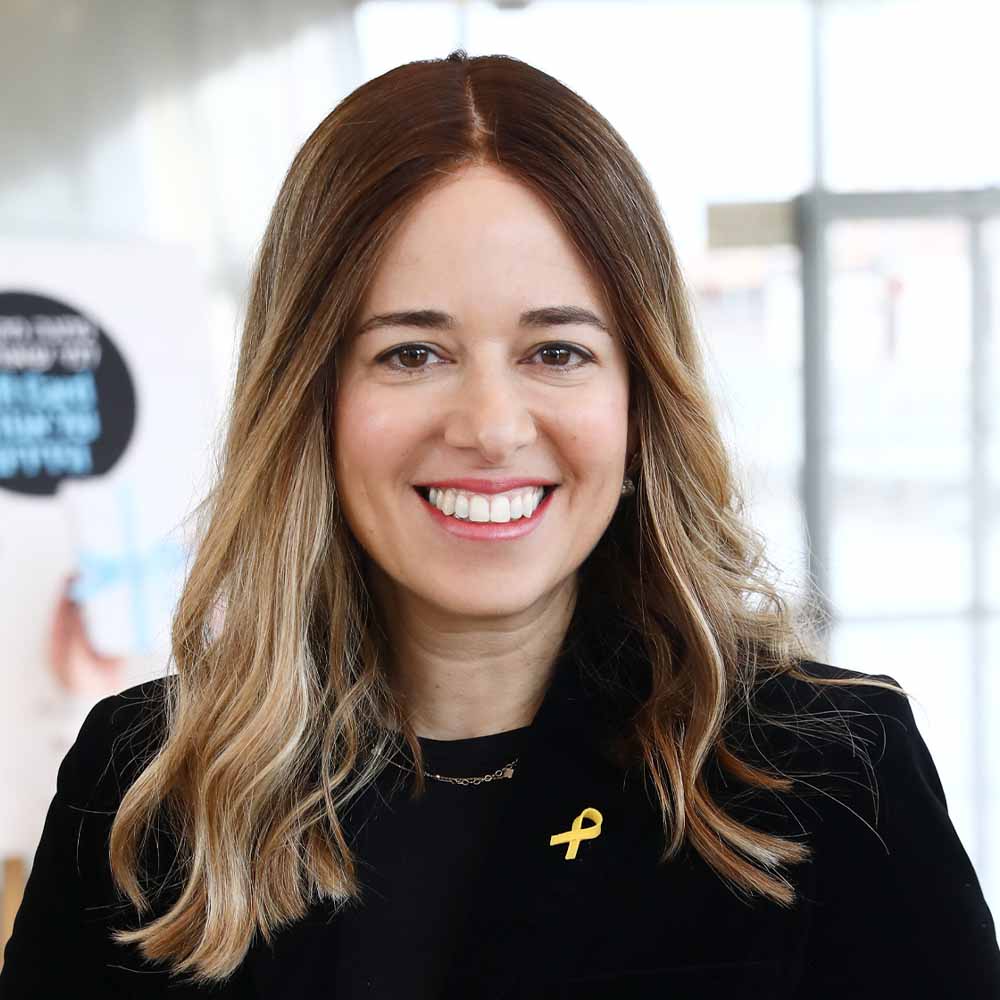
Dr. Nechumi Yaffe
President Rivlin ten years ago said that Israel was a divided country with “four tribes” (secular, religious, Arab, and Haredi) who disliked and/or hated one another. This is well known and getting worse. How can this hatred be overcome?
I don’t have a simple answer. I believe that Haredim should earn more money in order to contribute to the state and the economy through the payment of taxes. At the same time, secular people should give up the idea that religion is a lie or fantasy and that all the Haredim should become secular. The bridging of the communities will happen. But today everyone is upset, angry, threatened, enraged by the other, and believing in their own moral supremacy.
One approach would be for more Haredim to work in mixed environments and live in a mixed community. The workers and families would learn about the secular and the secular would begin to understand the Haredim. The more you create contact, these issues can be resolved. But much needs to be done.


I have been told that Haredi women in the past had little or no power in Haredi society. What is the situation now and where is it going?
Haredi women know how to get around in the world and have many opportunities to express themselves—83 percent are working, so they have increased access to money. Most of the support staff in Haredi government is female. But as of today, Haredi women are completely ostracized from political and rabbinical power. Someday this will end.
The fact that women run so many things makes men feel that they have nowhere to go, no way to develop. Sure, everyone talks about women being discriminated against, but men are losing because they don’t have the opportunities to live full lives. This problem is similar to what is happening in the rest of the world. Women are gaining power; men can’t compete and don’t like it.
Is the Haredi community diversifying?
The community used to be very homogeneous. It is not so now. People are now negotiating the boundaries. Some of them want to be part of the secular world, while others want to remain as Haredim. Now they can be hybrid‚ Israeli and secular in some ways, Haredi in other ways. In fact, the community can be divided into four types: (a) ultra-conservative, (b) modern, (c) conservative but still willing to engage with the secular world, and (d) disengaged from the Haredi world but refusing to join the secular “Israeli” system.
Is the Haredi leadership fearful of change?
Yes. For example, the large anti-conscription demonstration held in Jerusalem in November had fewer participants than the leadership expected. There were so many rifts inside the community that the leadership could not articulate their objective. The demonstration failed because it lacked coherence or vision. The leadership used to come up with very clear messages, but they can’t do it now. They are frightened by these trends. There will be a whole new generation of leadership. We don’t know what they will be like, but positive changes could help to break down the barriers between the Haredim and the rest of society.
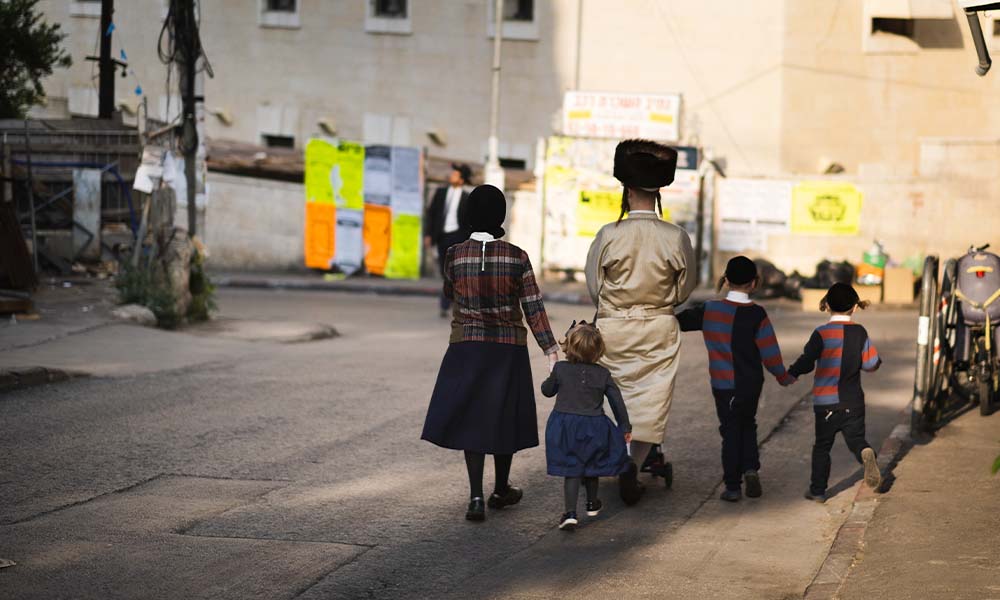
(Top image credit: WomEOS, CC BY-SA 2.0)